Youth Sports Cost Calculator
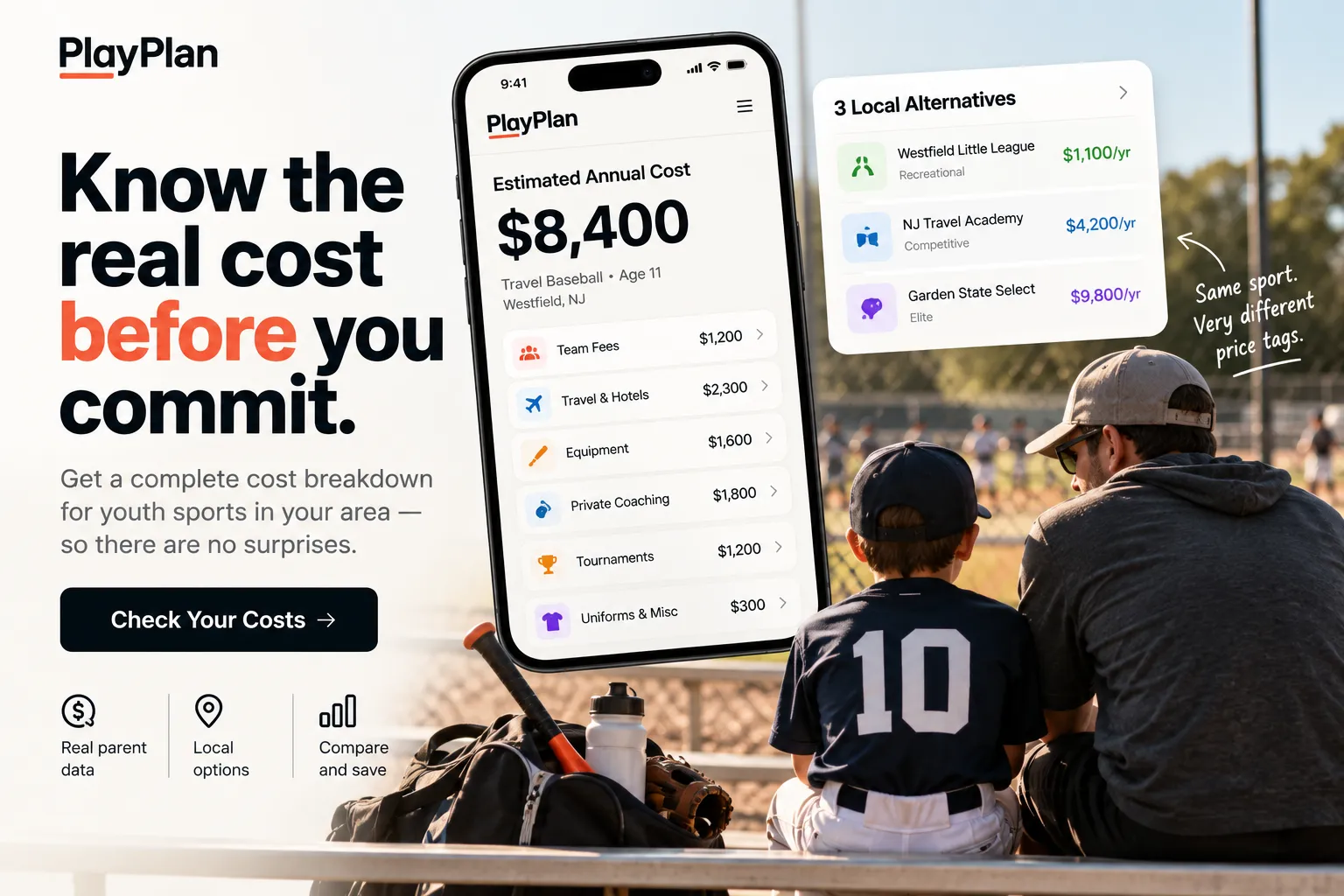
Parents sign their kids up for sports based on a registration fee, then slowly discover the real cost through travel, hotels, private coaching, tournament fees, uniforms, camps, and increasingly expensive equipment. Build a true-cost calculator for youth sports that shows families what they are likely to spend before they commit. Enter a child’s age, sport, ZIP code, and competition level and get an expected annual cost, travel schedule, gear budget, coaching expenses, and cheaper alternatives nearby. This matters now because youth sports are becoming expensive enough to resemble major household financial decisions while families still make those decisions with almost no upfront cost transparency. Imagine a parent considering travel baseball learning that the $1,200 team fee is likely to become $9,000 over the year—and seeing three local options that deliver a similar experience for half the cost. That’s a product that needs to exist.
Description
No additional description provided.
The Pitch
Youth sports has quietly become one of the least transparent consumer markets in family life. The person making the purchase is not just buying an activity; they are buying hope, identity, belonging, and the possibility that a child might be unusually good at something. That emotional mix makes families unusually vulnerable to cost creep, because every additional expense arrives framed as commitment rather than consumption. A business that makes the full price visible would not simply be a budgeting tool; it would introduce adult financial discipline into a category that has learned to avoid it.
The most interesting part is that the hidden cost is not random. It is patterned by sport, age, ZIP code, competition level, tournament circuit, coaching culture, and even the social expectations of a specific team. Once those patterns are collected, the product becomes more than a calculator. It becomes a map of an informal economy that parents currently understand only through gossip, regret, and late-night group texts. The defensible asset is not the math; it is the structured knowledge of what participation actually costs in thousands of local youth sports ecosystems.
This business would also work because the moment of highest need happens before money and emotion are fully sunk. Families are most persuadable before tryouts, before joining a travel roster, before buying specialized gear, and before a child’s friend group becomes tied to one program. After that, many parents rationalize almost any expense to avoid disappointing their kid or losing status among other parents. The product’s power comes from reaching families at the rare moment when transparency can still change behavior.
The comparison layer is what turns information into leverage. A family does not only need to know that a path is expensive; they need to know whether the expense buys meaningfully more development, competition, convenience, or enjoyment than alternatives nearby. In a market full of vague claims about exposure and elite training, showing “similar experience, lower total cost” is unusually clarifying. It gives parents permission to choose the sane option without feeling like they are shortchanging their child.
If this company existed, it could become the default consumer reference for a category that has outgrown casual decision-making. Youth sports now competes with vacations, tutoring, childcare, and college savings for household dollars, but it is still sold like a weekend hobby. The gap between how it is marketed and what it has become is the opportunity.