Wirelessly Adjustable, Dissolvable Medical Implants Innovate Healing
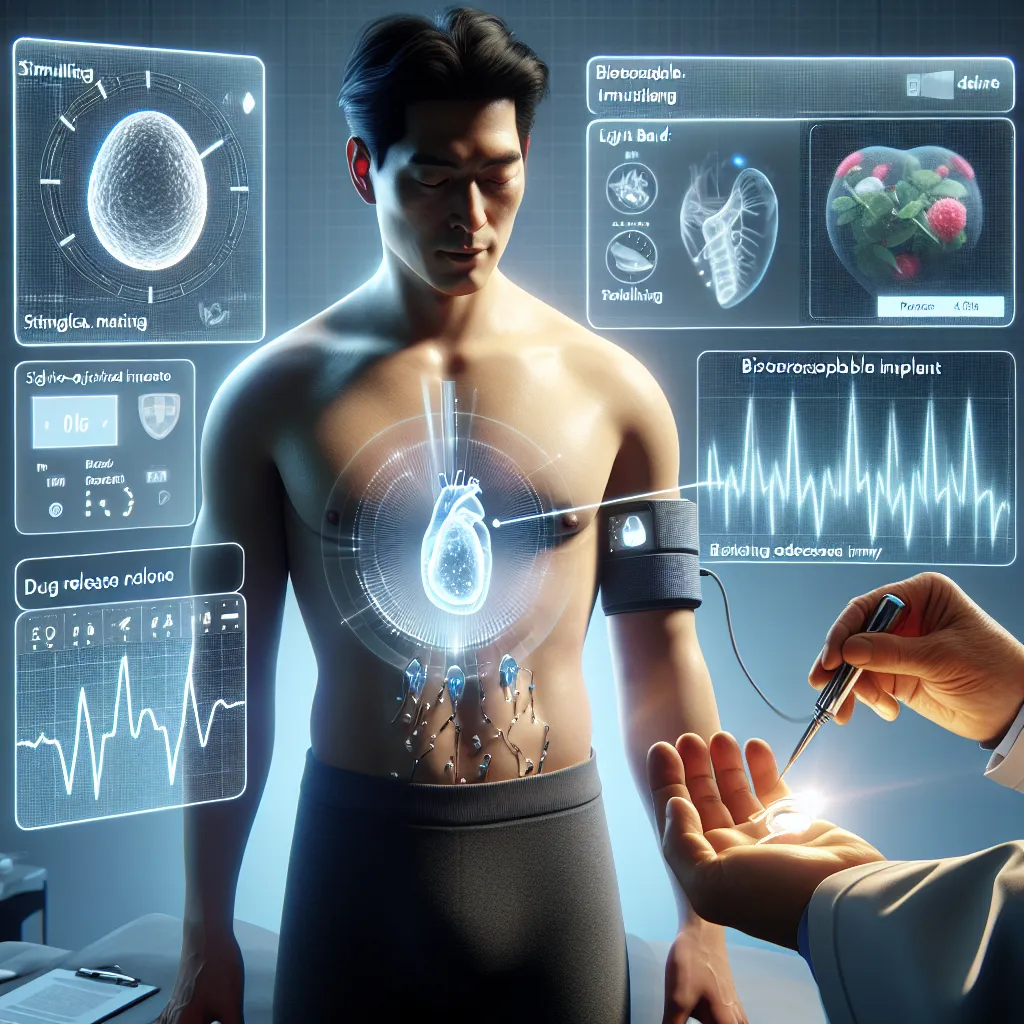
Most implanted medical devices are either permanent or set-it-and-forget-it — they can’t be adjusted once inside the body. That’s a big problem when healing isn’t linear, and patients’ needs change post-surgery. Devices like pacemakers, nerve stimulators, or drug-delivery implants often require surgical removal or invasive follow-up to tweak settings. LightScript solves this with a new class of programmable, bioresorbable implants. These rice-sized devices are injected into the body and activated or adjusted wirelessly using specific light wavelengths. Physicians can fine-tune stimulation, pacing, or drug release in real-time — then, once healing is complete, the implant safely dissolves. This wasn’t possible before. But recent breakthroughs in light-activated bioelectronics and dissolvable materials (like the Northwestern pacemaker) now make it viable. Imagine a trauma patient receiving a dissolvable nerve stimulator: doctors increase or reduce stimulation post-op using a wearable light band, then let the device vanish. No wires. No surgery. No trace. Total control, without the complications.
Description
No additional description provided.
The Pitch
In the medical field, the evolution of implantable devices has long aimed at enhancing patient outcomes and reducing surgical interventions. Traditional implants like pacemakers, nerve stimulators, and drug-delivery systems are designed to last, offering consistent support over time. However, these devices are largely inflexible once implanted, posing challenges when a patient’s healing process deviates from the expected trajectory. The need for surgical removal or invasive procedures to adjust these devices can lead to complications and prolonged recovery times. LightScript introduces a groundbreaking solution that not only addresses these issues but also ushers in a new era of patient-specific, adaptable medical care.
**Background and Problem Statement** Medical implants have been restricted by their permanent nature and inability to adapt post-surgery. The static configuration of traditional devices makes it difficult for healthcare providers to accommodate changes in a patient’s condition without employing invasive methods. Adjusting device settings typically means additional surgeries, increasing the risk of infection and other complications. As healing and recovery are rarely linear processes, this limitation significantly affects patient outcomes and satisfaction.
**Solution** LightScript offers an innovative solution through its development of programmable, bioresorbable implants. These miniaturized, rice-sized devices can be injected into the body and manipulated wirelessly using specific light wavelengths. Physicians can dynamically modify the settings for stimulation, pacing, or drug delivery based on the patient’s evolving needs. Once the treatment course is complete, these implants harmlessly dissolve within the body, eliminating the need for surgical retrieval and leaving no trace behind.
**Product Details** LightScript's technology leverages recent advancements in light-activated bioelectronics and bioresorbable materials. The devices are constructed with materials that naturally disintegrate in the body over time. The wireless programming facilitated by specialized light wavelengths allows real-time adjustments, providing a level of control and adaptability not previously attainable in medical devices. The process is akin to a trauma patient receiving an adjustable nerve stimulator; doctors can modulate the stimulation intensity using a non-invasive wearable light band, ensuring optimal healing conditions throughout the recovery phase.
**Tools for MVP Launch** To streamline the journey from concept to market-ready solution, LightScript can use the following tools and platforms:
1. **Prototyping and Design Software:** Programs like SolidWorks or AutoCAD for detailed design and simulation of the implants. 2. **Biomedical Testing Platforms:** Utilize laboratory solutions for material testing and biocompatibility studies. 3. **Wireless Technology Development:** Leverage platforms for developing the light-based wireless control system. 4. **Clinical Trial Management Software:** Tools such as Medidata or Castor to track clinical trial progress and data collection.
**Go-To-Market Strategy** 1. **Strategic Partnerships:** Collaborate with leading hospitals and research institutions to validate the implant efficacy and build credibility in the medical community. 2. **Regulatory Approvals:** Navigate FDA and international medical device regulations to ensure compliance and obtain necessary certifications. 3. **Awareness Campaigns:** Engage with key opinion leaders in medicine through webinars, conferences, and publications in high-impact journals. 4. **Pilot Programs:** Launch pilot programs with select medical centers to gather user feedback and iterate on product design and functionality.
**Business Model** LightScript proposes a hybrid model comprising direct product sales and a subscription service. The subscription would cover ongoing device adjustments and upgrades facilitated through a specialized light delivery system. This model ensures a continuing revenue stream while providing consistent support for patients and healthcare providers.
**Conclusion** LightScript stands at the forefront of a transformative approach to medical implants, addressing long-standing challenges with innovation and precision. By focusing on adaptability and patient-centered care, LightScript not only improves clinical outcomes but also enhances the quality of life for patients worldwide. Combining cutting-edge technology with strategic partnerships and a comprehensive business model, LightScript is poised to redefine how we think about healing and recovery in the 21st century.