Wellness Loop: Boost Employee Health with Accountability
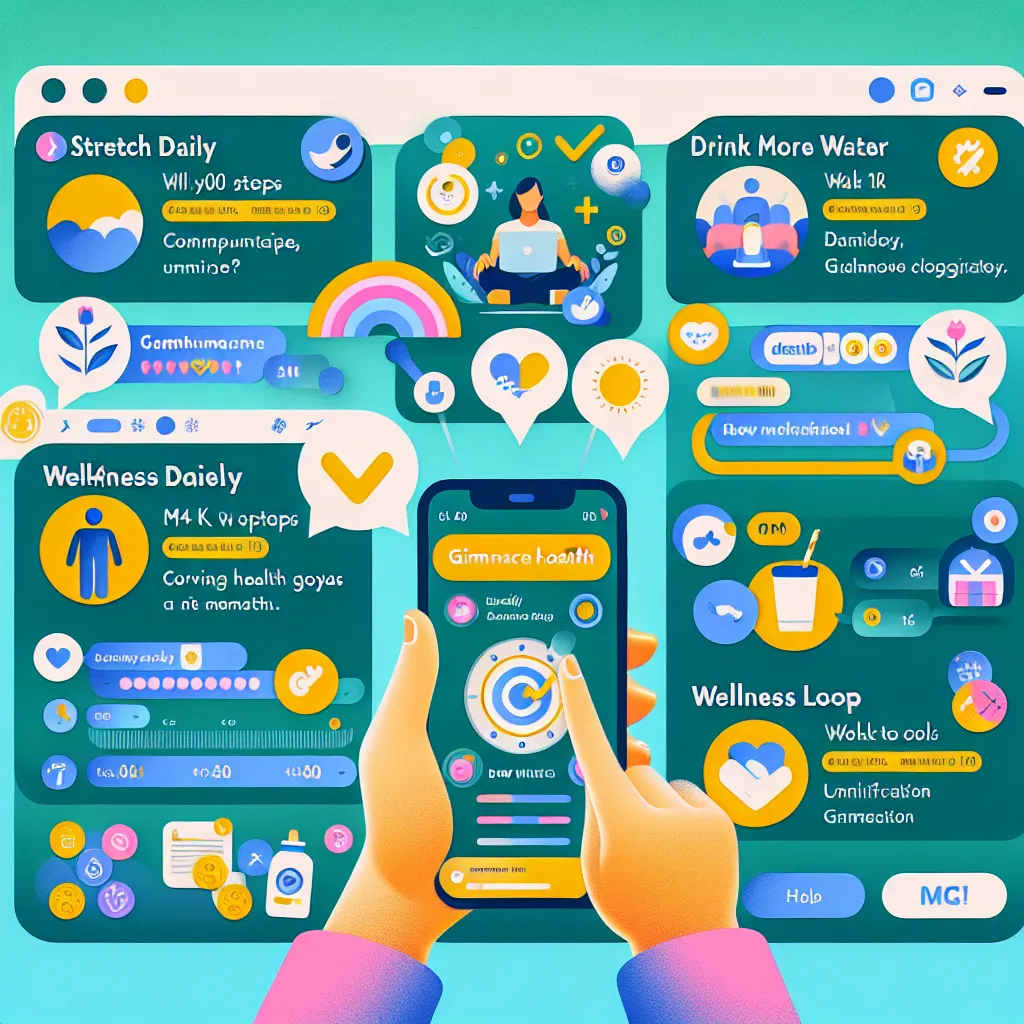
Many companies offer wellness perks like meditation apps, step challenges, or digital coaching, but most go unused—not because employees don’t care, but because there’s no accountability or social reinforcement. Wellness is personal, but change sticks better with community. The problem is that most wellness tools are solo, passive, and easily ignored. The solution is Wellness Loop, a lightweight Slack-integrated tool that creates peer accountability circles within teams. Employees opt into 1–3 small health goals per month (e.g., stretch daily, drink more water, walk 10k steps), and the tool pairs them with 2–4 coworkers. Each circle gets a private channel, daily check-in prompts, celebratory shoutouts, and gentle nudges. It’s habit-building with peer support baked in. No fancy dashboards, no external apps—just social accountability inside Slack. The trend is clear: companies are prioritizing well-being, but crave low-cost, high-engagement tools. Wellness Loop can be built with no-code tools like Slack APIs and Airtable, costs almost nothing to launch, and could go viral inside orgs.
Description
No additional description provided.
The Pitch
In the modern workplace, companies are increasingly recognizing the importance of employee wellness. Many offer perks such as meditation apps, step challenges, or digital coaching. Despite these efforts, a significant problem persists: the majority of these tools remain underutilized. It's not due to a lack of interest from employees, but rather the absence of accountability and social reinforcement. Wellness relies on personal commitment, but lasting change often emerges more effectively within a community. The core issue here is that most wellness tools are designed for solo use, making them passive and easy to neglect.
Enter Wellness Loop, an innovative solution designed to tackle this challenge. Wellness Loop is a lightweight tool that integrates directly with Slack, creating peer accountability circles within teams. The approach is straightforward yet impactful. Employees can opt into pursuing one to three small health goals each month, such as stretching daily, drinking more water, or walking 10,000 steps. Once they select their goals, the tool pairs them with two to four coworkers, forming a personal accountability circle.
Within these circles, participants are provided with private channels, daily check-in prompts, celebratory shoutouts for achievements, and gentle nudges to keep them motivated. This setup fosters habit-building with peer support inherently embedded in the process. The beauty of Wellness Loop lies in its simplicity: there are no complex dashboards or external apps to manage. Everything operates seamlessly within Slack, leveraging the existing communication platform many teams already use.
To build Wellness Loop, developers can leverage no-code tools such as Slack APIs and Airtable. This approach not only simplifies the development process but also minimizes initial costs, making it an ideal candidate for a minimum viable product (MVP). The potential for viral growth within organizations is significant, given the increasing prioritization of employee well-being and the demand for cost-effective, high-engagement tools.
For a go-to-market (GTM) strategy, focusing on direct outreach to HR departments and wellness program coordinators in companies can be effective. Given that the integration occurs within Slack, targeting companies already using this platform offers a seamless entry point. Additionally, offering a free trial or a freemium model can entice companies to try the tool, showcasing its benefits before committing to a paid version. Pricing models could include a tiered subscription based on the number of users or a flat fee per organization.
In summary, Wellness Loop presents a promising opportunity to enhance workplace wellness through community-driven accountability. By addressing the gaps in existing wellness initiatives with an easily implementable solution, it aligns well with both employee needs and corporate wellness objectives.