Wearable Device Expands Human Sensory Perception
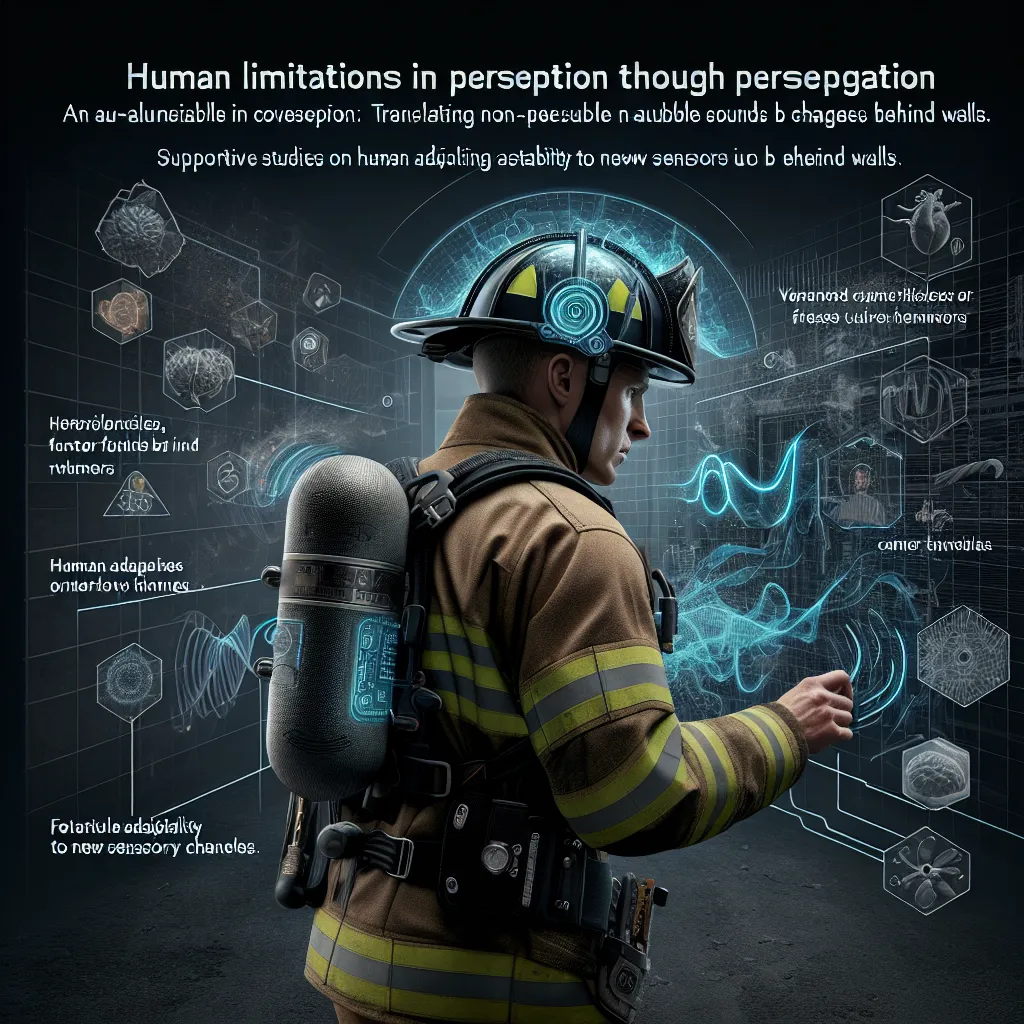
Humans are limited by biology to certain spectrums of sound, light, and scent, creating blind spots in perception. A wearable device translating non-audible sound into vibration or visual cues would expand sensory input, helping users perceive hidden environments. Support comes from studies on neuroplasticity showing people can adapt to new sensory channels. For example, a firefighter could wear a wristband that vibrates in response to temperature changes, allowing them to detect dangerous heat sources through walls.
Description
No additional description provided.
The Pitch
Humans are inherently limited by their biological constraints, which restrict their abilities to perceive the full spectrums of sound, light, and scent. This creates significant blind spots in their awareness of the environment. Imagine a wearable device designed to translate non-audible sound into either vibrations or visual cues. Such a device could revolutionize how users interact with their surroundings by expanding their sensory input and helping them perceive hidden or imperceptible aspects of their environment.
Research on neuroplasticity has provided support for the idea that humans can adapt remarkably to new sensory channels. This adaptability can be harnessed to help people understand and interact with their environments more effectively. For instance, consider a firefighter equipped with a wristband that vibrates in response to temperature fluctuations. This tool would enable the firefighter to detect dangerous heat sources through walls, potentially saving lives by providing early warnings about the presence and location of a fire.
The problem this device addresses is the inherent limitation in human sensory perception, particularly in situations demanding heightened awareness. These situations might include navigating through hazardous environments, monitoring vital signs in real-time, or even enhancing the experience of interactive entertainment. Without tools to extend their natural senses, individuals are at a disadvantage in environments beyond their perceptual capabilities.
The solution is to develop a wearable device that supplements human senses by converting non-human-perceptible data into tactile or visual stimuli. The core of this device would be a system capable of detecting specific environmental inputs—such as temperature changes or inaudible sound frequencies—and translating them into sensory feedback that humans can process.
Product details might include a compact, lightweight wristband equipped with advanced sensors. These sensors would be capable of detecting specific environmental cues, such as heat or sound changes, and would be paired with a small actuator system to provide real-time feedback. The device could be customizable to suit different professional needs, from improved safety gear for emergency responders to immersive experiences for gamers.
To build and launch this as a minimum viable product (MVP), developers could use tools like Arduino or Raspberry Pi for prototyping, coupled with sensors available from electronic component providers. Software development kits (SDKs) could be utilized for programming the translation of sensory data into stimuli. For ease of manufacturing, 3D printing technology could be employed to create ergonomic and durable housing for the wearable.
The go-to-market (GTM) strategy could involve partnerships with industry professionals who would benefit from the technology, such as those in firefighting, law enforcement, or virtual reality entertainment. Engaging in pilot programs to gather feedback and refine the product would be crucial. Marketing efforts could focus on showcasing real-world applications through demonstrations and case studies.
The business model might be based on a combination of direct sales and a subscription service for continuous software updates and functional enhancements. This ensures customers always have the latest capabilities at their fingertips, while the company maintains an ongoing revenue stream.
In summary, the wearable device represents a pioneering step in overcoming human sensory limitations, leveraging cutting-edge technology to enhance perception and interaction within a wide range of environments. Its potential applications are vast and varied, promising improved safety and enriched experiences across multiple sectors.