Wearable Device Alerts Users to Impending Strokes
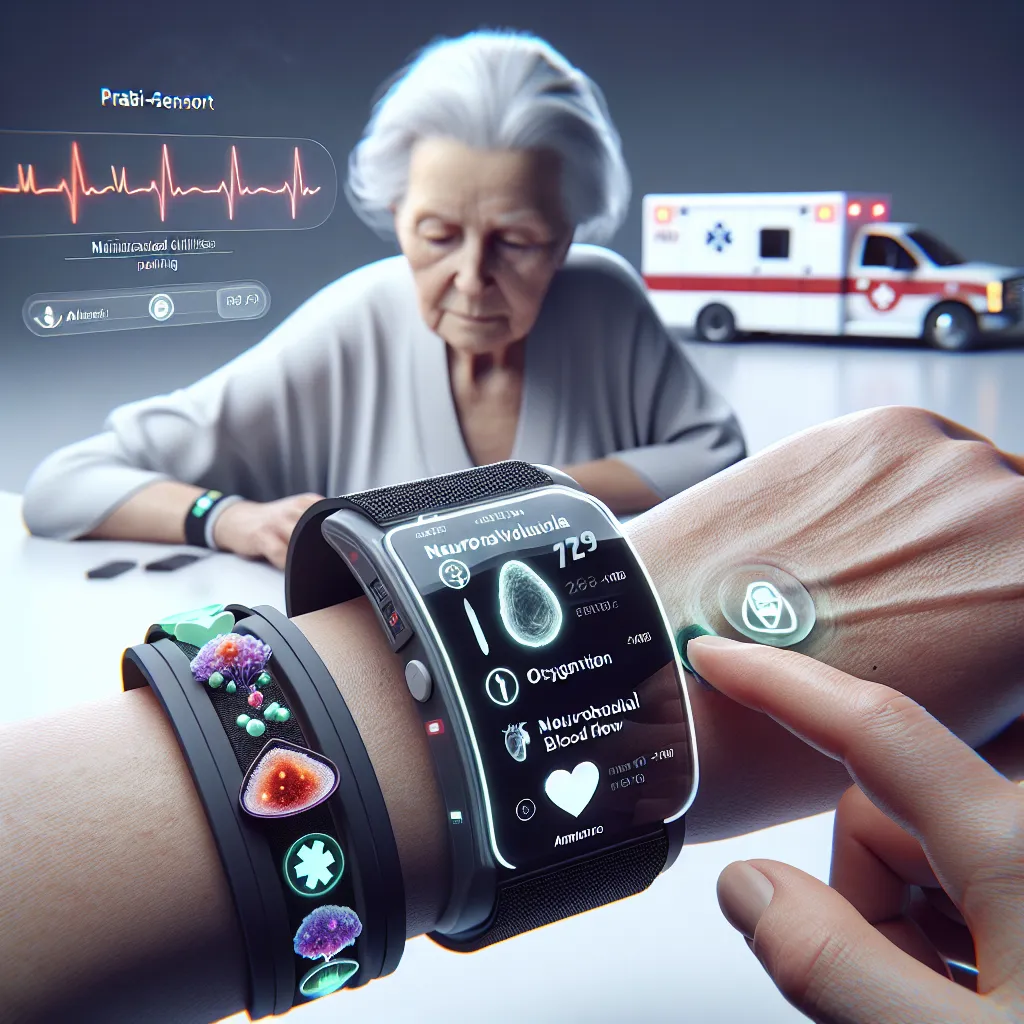
By the time a stroke hits, the damage has already begun. Millions of high-risk individuals—older adults, people with atrial fibrillation, or prior mini-strokes—have no continuous way to monitor their neurovascular health. A new wearable could change that: a multi-sensor patch or wristband that tracks blood flow, oxygenation, and microembolic patterns, using AI to predict when a stroke is likely to occur. When risk spikes, it alerts the user and automatically pings nearby hospitals or mobile hubs. This is now possible thanks to miniaturized ultrasound sensors, continuous blood flow monitoring, and machine learning models trained on massive vascular datasets. It’s a Fitbit for the brain—one that doesn’t just count steps but saves lives. Imagine a 72-year-old woman getting a notification that her cerebral blood flow has changed and an ambulance is dispatched before symptoms even appear.
Description
No additional description provided.
The Pitch
In the realm of healthcare, early detection is crucial, especially for conditions like strokes where every second counts. Currently, millions of high-risk individuals, such as older adults, people with atrial fibrillation, or those who have experienced mini-strokes, lack a continuous method to monitor their neurovascular health. Traditional methods of stroke prediction and monitoring are often reactive, kicking into action only after symptoms manifest.
The potential solution involves a revolutionary wearable device—a multi-sensor patch or wristband that could change the landscape of stroke prevention. This device would continuously track key health indicators such as blood flow, oxygenation, and microembolic patterns. Critically, it would employ advanced artificial intelligence to analyze this data and forecast when a stroke is likely to occur. Upon detecting elevated risk, the device would alert the user and automatically contact nearby hospitals or mobile medical hubs, ensuring timely medical intervention.
This innovation becomes feasible thanks to recent technological advances. Miniaturized ultrasound sensors and continuous blood flow monitors have reached a stage where they can be integrated into compact wearable devices. Furthermore, machine learning algorithms, trained on vast datasets of vascular data, can detect subtle changes and patterns far beyond human capability.
The proposed product is akin to a Fitbit for the brain—not merely tracking physical activity but actively safeguarding neurological health. Consider the impact on individuals like a 72-year-old woman who, thanks to an early warning notification from the device about changes in her cerebral blood flow, can receive immediate medical attention before severe symptoms develop. This can save lives by preventing strokes or minimizing their impact.
For those interested in bringing this vision to life, the journey begins with building a minimum viable product (MVP). The MVP would feature the core wearable device equipped with sensors for blood flow and oxygen monitoring. Machine learning models would be embedded to process the data and predict risks, and a simple alert system would notify users and emergency services when necessary.
Several tools could aid in launching this MVP. Platform providers such as Raspberry Pi could be used for prototype development, while cloud-based services like AWS or Google Cloud can host the AI-driven analytical systems. Wearable tech components like flexible sensors and Bluetooth communication modules will be integral. To reduce time to market, collaboration with existing hardware manufacturers or strategic partnerships in the wearable tech sector could accelerate development.
In terms of go-to-market (GTM) strategy, a focus on partnerships with healthcare providers and insurance companies will be essential. These alliances can facilitate pilot programs and clinical trials to establish efficacy and safety credentials. Direct-to-consumer campaigns through digital channels could also build awareness and trust.
The business model could adopt a subscription service, charging for both the device and ongoing data monitoring and analysis. This would ensure a steady revenue stream while keeping initial device costs accessible through financing options.
In summary, this wearable stroke prediction device combines cutting-edge sensor technology, AI, and proactive healthcare into a life-saving innovation. By focusing on early and accurate detection, it promises not only to revolutionize stroke management but also to offer peace of mind for millions at risk.