Waze for Detecting Real-World Changes
Crowdsource smartphone photos to detect real-world changes and sell alerts.
Description
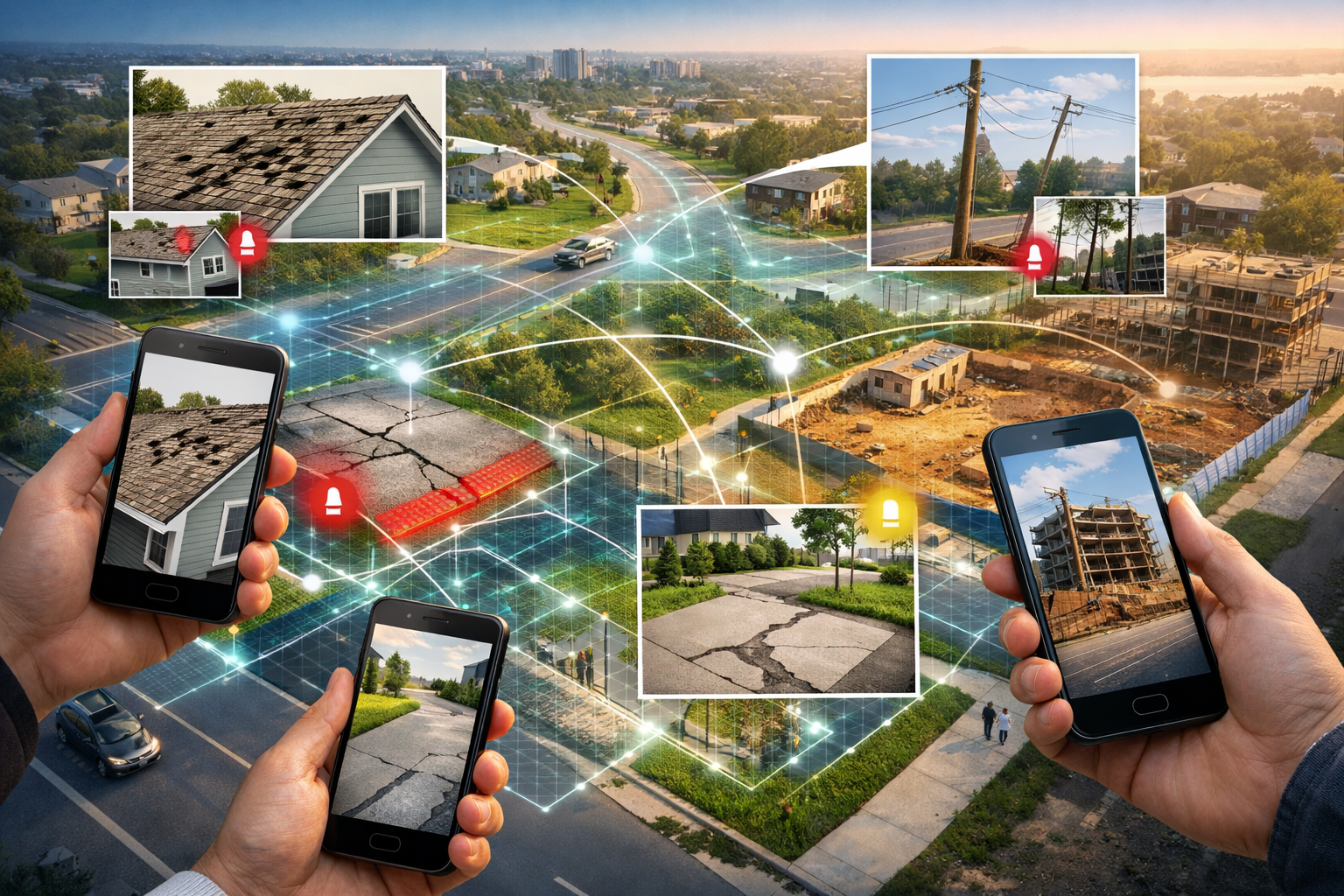
Every day, insurance companies, utilities, and local governments spend money sending people into the field to inspect things that might have changed. A damaged roof, a leaning utility pole, a cracked sidewalk, or a new construction project could go unnoticed for months until someone physically checks it. Meanwhile, millions of people walk, drive, and photograph these exact locations every day. Imagine a platform that turns ordinary smartphone photos into a constantly updated map of real-world changes. Users snap pictures of buildings, roads, and infrastructure, and AI matches each image to its precise 3D location, compares it against previous captures, and identifies what's different. A utility company could receive an alert when a pole appears damaged. An insurer could spot visible roof deterioration. A city could discover a broken sidewalk before someone reports it. Contributors earn money for useful, verified captures, while businesses subscribe to location-specific change alerts instead of paying for repeated manual inspections. As smartphone cameras, 3D mapping, and computer vision improve, the opportunity isn't selling pictures of the world. It's selling what changed.
The Pitch
Imagine a world where the vigilance of everyday citizens transforms the way we monitor infrastructure and urban environments. Leveraging collective oversight, this platform harnesses the power of millions of smartphone users to create an ongoing dialogue about the condition of our surroundings. The participation of everyday individuals not only democratizes data collection but also fosters community engagement—turning citizens into proactive stakeholders in their local environments. This not only amplifies safety and awareness but gives communities a sense of ownership over their infrastructure, making them attentive to changes that affect their daily lives.
At its core, the beauty of this concept lies in its ability to capitalize on the unnoticed abundance of minute but critical data. Each photo captured holds the potential to communicate vital information about structural integrity or emerging hazards. Traditional methods of inspection are often reactive, identifying problems only after they escalate. By implementing a proactive approach where changes are flagged in real-time, businesses and municipalities can prevent costly repairs and enhance public safety—a subtle but profound shift from a reactive to a proactive framework.
Moreover, the platform provides a seamless integration of advanced technology with human insight. While AI efficiently processes and analyzes the captured images, the unique perspectives of individuals can contextualize changes in ways that algorithms alone might miss. This fusion of human observation and machine learning not only enhances accuracy but also builds a richer repository of local conditions, offering deeper insights into urban dynamics. The effectiveness of this collaboration emphasizes an intriguing truth: technology’s role is not to replace human observation but to amplify it.
In a society increasingly fueled by instant information, the urgency for real-time awareness of infrastructural changes has never been greater. Service disruptions, natural disasters, or even everyday wear-and-tear can have far-reaching implications. By channeling the collective efforts of thousands, this platform creates a robust network of vigilance that can respond promptly to arising issues, substantially reducing the risk before it manifests into a broader problem.
Ultimately, this concept isn't merely about documenting changes; it's about transforming our approach to safety, efficiency, and community wellbeing. In a world driven by immediacy and connectivity, a system that fosters a continuous, low-effort flow of vital information could redefine our expectations of public infrastructure management—making it not only reactive but resilient and responsive. This compelling mix of technology, community engagement, and preventative action stands to revolutionize how we perceive and manage our physical environments.