Video Call Eye Contact Correction Tool
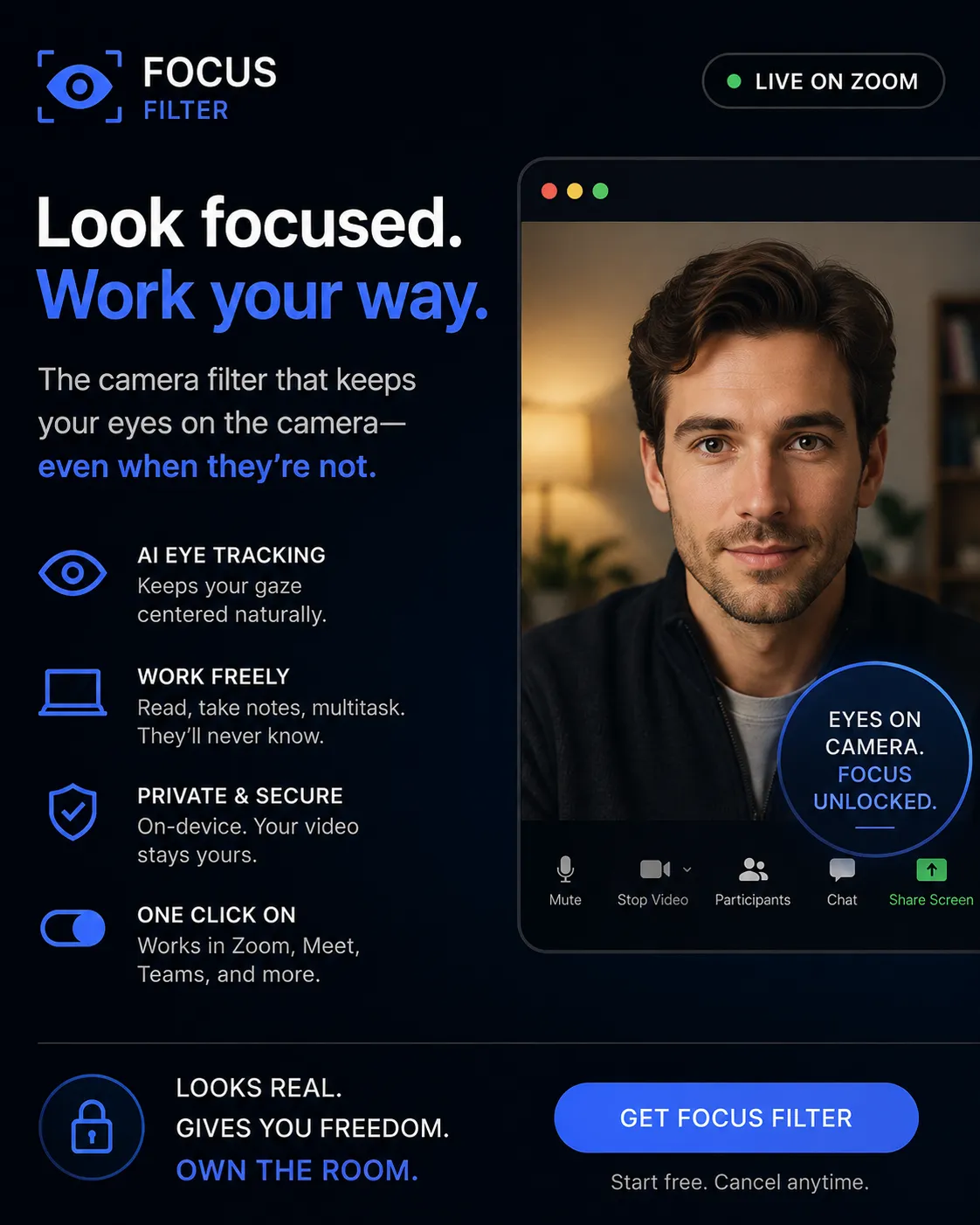
There is a particular moment on Zoom when you realize someone can see you reading something on your second monitor. Fix that. Build a camera layer that subtly corrects your gaze so you continue appearing to look toward the camera while checking notes, reading a document, or doing something considerably less defensible. Keep your natural expressions and head movement, just stabilize where your eyes appear to be looking. Video calls created an entirely new social obligation: visibly staring at coworkers for hours. Technology created the problem. Technology can provide the alibi.
Description
No additional description provided.
The Pitch
The interesting business is not “better eye contact.” It is relief from a new kind of performative labor. Video meetings turned attention into a visible behavior, which means people are no longer judged only on what they say but on whether their face appears properly oriented while saying it. That is an unusually valuable layer to own: the thin space between actual cognition and socially acceptable presence.
The non-obvious truth is that looking away is often part of doing the work. People glance at notes, compare documents, search Slack, monitor dashboards, read legal language, or check the agenda while speaking. In person, these behaviors are softened by the room; on video, they become suspicious because the camera flattens every eye movement into apparent disengagement. A product that corrects gaze is not helping people fake attention so much as translating normal work behavior back into a medium that made it look rude.
This also works because the best version would be almost invisible. Most video tools compete by adding artifacts: backgrounds, filters, avatars, reactions. But the more powerful intervention is subtraction—removing the tiny cues that make remote presence feel strained. If it preserves natural expression while eliminating the uncanny “I’m reading off-screen” signal, it becomes the kind of utility people forget is on, which is exactly how infrastructure sneaks into daily habit.
The willingness to use it would be driven by asymmetry. One missed glance rarely matters, but in high-stakes contexts—sales calls, interviews, therapy, teaching, executive meetings, investor updates—the penalty for seeming distracted is disproportionately large. People already rehearse lighting, camera height, microphones, backgrounds, and wardrobe for the same reason: video presence has become part of professional credibility. Gaze is simply the last uncorrected variable, and probably the most emotionally loaded one.
The deeper opportunity is that remote work made cameras into social interfaces, but most camera software still behaves like optics. The next valuable layer will understand that a video feed is not just an image; it is a performance of availability, confidence, honesty, and respect. A company that can quietly improve that performance without making people look artificial would occupy a strange and durable position: not a meeting app, but a face-saving technology for a world where work increasingly happens through faces on glass.