Vertical Agents as A Service
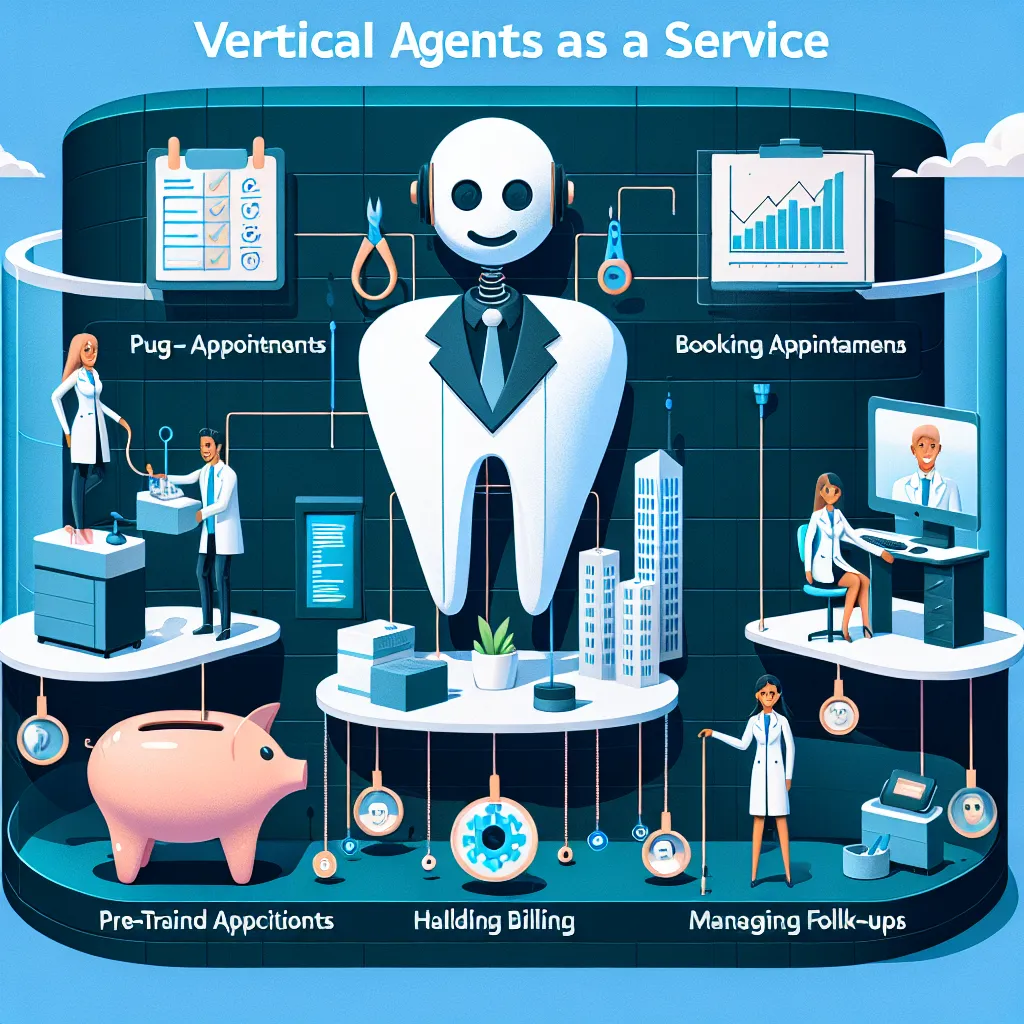
Generic AI tools don’t meet the nuanced needs of vertical industries like dentistry or auto repair. “Vertical Agents as a Service” offers fine-tuned AI workflows bundled specifically for each sector. These are plug-and-play agents—appointment booking, billing, follow-ups—built from general-purpose tools, trained on industry-specific data, and packaged with minimal setup. Instead of selling one-size-fits-all AI, you sell tailored intelligence. For example, a dental clinic might get a pre-trained AI receptionist and billing assistant, reducing headcount while increasing throughput. This mirrors successful models like ShopGenie in auto repair, and aligns with trends in vertical SaaS and Constellation Software roll-ups.
Description
No additional description provided.
The Pitch
In the rapidly evolving landscape of artificial intelligence, businesses across various sectors find themselves inundated with generic AI solutions. While these tools boast impressive capabilities, they often fall short when addressing the unique needs of specific industries. The lack of customization results in a gap between what these AI tools offer and what businesses in niche markets actually require—a problem that hinders efficiency and growth. To address this challenge, there is a growing demand for solutions that cater specifically to the nuanced requirements of vertical industries such as dentistry and auto repair.
**Problem:** Generic AI tools are designed to serve a wide range of applications, often resulting in a one-size-fits-all approach. This broad scope limits their effectiveness in industries that demand specialized workflows and data processing. For example, a dental clinic may struggle with AI solutions that aren't equipped to handle industry-specific tasks such as patient scheduling, billing, and personalized follow-ups. In these cases, businesses are forced to either compromise on functionality or invest heavily in custom development—neither of which are ideal scenarios for small to medium enterprises.
**Solution:** Vertical Agents as a Service (VAaaS) emerges as a revolutionary solution to bridge this gap. VAaaS offers AI workflows that are fine-tuned for specific industries. These are not just generic algorithms; they are plug-and-play agents tailored to manage the core operations of particular sectors. By training these AI agents on industry-specific data, they can efficiently handle tasks like appointment booking, billing, and customer follow-ups, with minimal setup required.
**Product Details:** VAaaS solutions are designed to seamlessly integrate into existing systems within the industry they serve. For example, a dental clinic might deploy a pre-trained AI receptionist that handles scheduling and patient communications, significantly reducing the need for human intervention. An auto repair shop could implement an AI agent for managing client inquiries and estimating repair times, based on historical data and current workload. These AI agents are built on adaptable general-purpose tools but are refined with data and workflows that cater to the unique challenges and needs of their respective industries.
**Tools for Easy MVP Launch:** To swiftly launch a Minimum Viable Product (MVP), several tools and platforms can be utilized:
- **AI Development Platforms:** Use platforms like TensorFlow, PyTorch, or Google Cloud AI to train and refine AI models. - **Data Annotation Tools:** Employ tools such as Labelbox or Supervise.ly to create quality datasets for training AI models. - **Low-Code Integration Platforms:** Consider platforms like Zapier or Integromat for easy integration of AI workflows into existing business operations. - **Feedback and Iteration Tools:** Utilize survey tools like Survey Monkey to gather feedback from early users and iterate on the AI offerings.
**Go-To-Market (GTM) Strategy:** The GTM strategy for VAaaS involves targeting industry-specific trade shows and conferences where decision-makers are present. An effective approach could include offering free webinars and workshops that demonstrate the product’s capabilities, and partnering with industry associations to gain credibility and reach. Early adopters can be attracted through introductory offers or discounted subscription models. A strong emphasis on case studies and testimonials will help showcase the solution's tangible benefits. Additionally, leveraging digital marketing strategies such as LinkedIn campaigns and targeted email marketing can efficiently reach potential customers in niche sectors.
**Business Model:** The business model for VAaaS is primarily subscription-based, allowing clients to subscribe to specific AI agents relevant to their industry. The tiered pricing structure could range from basic packages offering core functionalities to premium packages that provide advanced features and customization. Value-added services such as personalized training sessions, priority support, and regular updates can also be offered. This model mirrors successful strategies in vertical SaaS and aligns with the roll-up trends in software companies like Constellation Software, providing a scalable pathway for long-term growth and expansion.
By focusing on delivering tailored intelligence, Vertical Agents as a Service has the potential to redefine how niche industries harness AI, transforming everyday operations and enhancing productivity across the board.