USSD AI: Empowering Unconnected Communities via Text
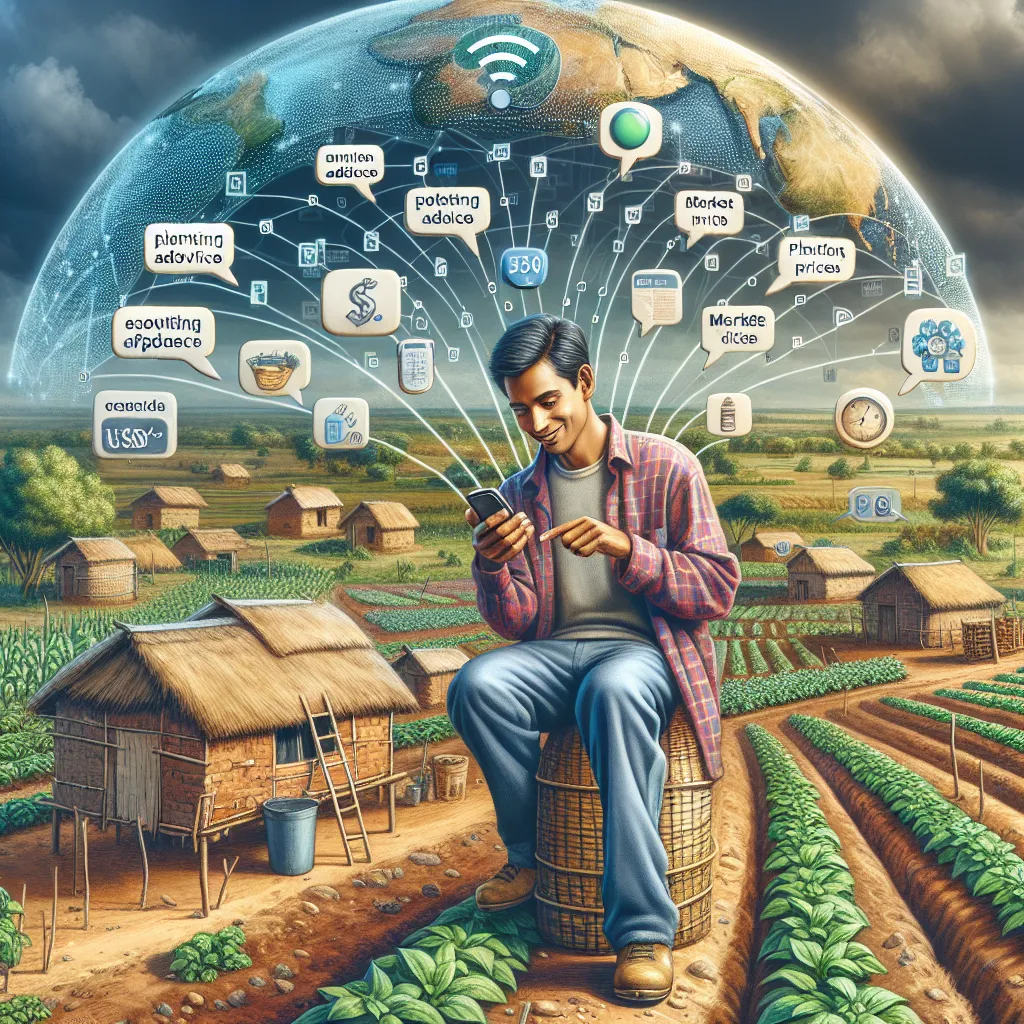
Over 2 billion people still lack access to basic banking, education, and healthcare—mainly because they don’t have smartphones or stable internet. A “USSD AI Agent” solves this by delivering lightweight, text-based AI services via feature phones using USSD codes—no apps, no data required. It brings intelligent tools to the last mile. With LLMs now compressible and SMS infrastructure ubiquitous, advanced services can reach underserved populations. For example, a farmer in rural Kenya texts a crop issue to the AI agent and gets back customized planting advice, market prices, and weather updates—all via basic text prompts.
Description
No additional description provided.
The Pitch
Access to essential services such as banking, education, and healthcare remains a challenge for over 2 billion people worldwide, primarily due to the lack of smartphones and stable internet connectivity. While digital innovations continue to transform urban areas, vast populations in rural and underserved regions are left behind. Enter the USSD AI Agent, a groundbreaking solution aimed at bridging this digital divide by delivering lightweight, text-based AI services via feature phones using USSD codes. This innovation eliminates the need for apps or data, bringing intelligent tools directly to those who need them most.
**Backstory and Problem Statement**
In many regions across the globe, particularly in sub-Saharan Africa, South Asia, and parts of Latin America, access to basic services is significantly hindered by limited technological infrastructure. Traditional smartphone applications and internet-based solutions are ineffective in these areas due to the high cost of mobile data and lack of network coverage. This digital exclusion perpetuates cycles of poverty and limits opportunities for economic and social advancement.
**Solution Overview**
The proposed USSD AI Agent leverages the ubiquitous SMS infrastructure and compressed Large Language Models (LLMs) to provide advanced AI-driven services to users of basic feature phones. By utilizing USSD codes, users can bypass the need for internet connectivity, allowing them to interact with AI systems that deliver personalized advice in various fields such as agriculture, finance, and education.
**Product Details**
- **Core Features**: - Text-based interaction powered by LLMs - Service delivery through USSD codes - Availability of contextual and localized information - Support for multiple languages and dialects
- **Use Case Example**: - A farmer in rural Kenya encounters a disease in her crops. By texting a query to the AI agent, she receives tailored advice on treatment, current market prices for alternative crops, and weather forecasts—all in a format compatible with her basic phone.
**Technology and Tools**
To develop the USSD AI Agent MVP (Minimum Viable Product), consider the following tools:
- **AI and Machine Learning**: Use open-source LLM frameworks that are computationally efficient, such as DistilBERT or TinyBERT. - **SMS and USSD Gateway**: Integrate with platforms like Twilio or Africa's Talking to handle USSD requests and responses. - **Backend Infrastructure**: Employ cloud-based solutions (e.g., AWS, Google Cloud) to host the AI models and manage data securely.
**Go-to-Market Strategy**
1. **Partnerships**: Collaborate with local telecommunications companies and NGOs to facilitate market entry and distribution. 2. **Pilot Programs**: Launch pilot initiatives in targeted communities to gather feedback and refine service offerings. 3. **Community Engagement**: Conduct educational workshops to introduce the technology and its benefits, fostering community buy-in and trust.
**Business Model**
- **Subscription Service**: Offer tiered subscription plans with different levels of access to AI features. - **Freemium Model**: Provide basic services for free while offering premium features at a cost. - **B2B Partnerships**: Partner with organizations and governments to integrate the service into existing support programs.
**Conclusion**
The USSD AI Agent has the potential to revolutionize access to essential services for millions of users globally, driving social and economic improvement through simple, accessible technology. By tapping into existing telecommunication networks and compressible AI models, this innovation empowers communities, providing them with the tools needed to overcome longstanding barriers to progress.