Universal Protocol Enhances Global Communication Fluency
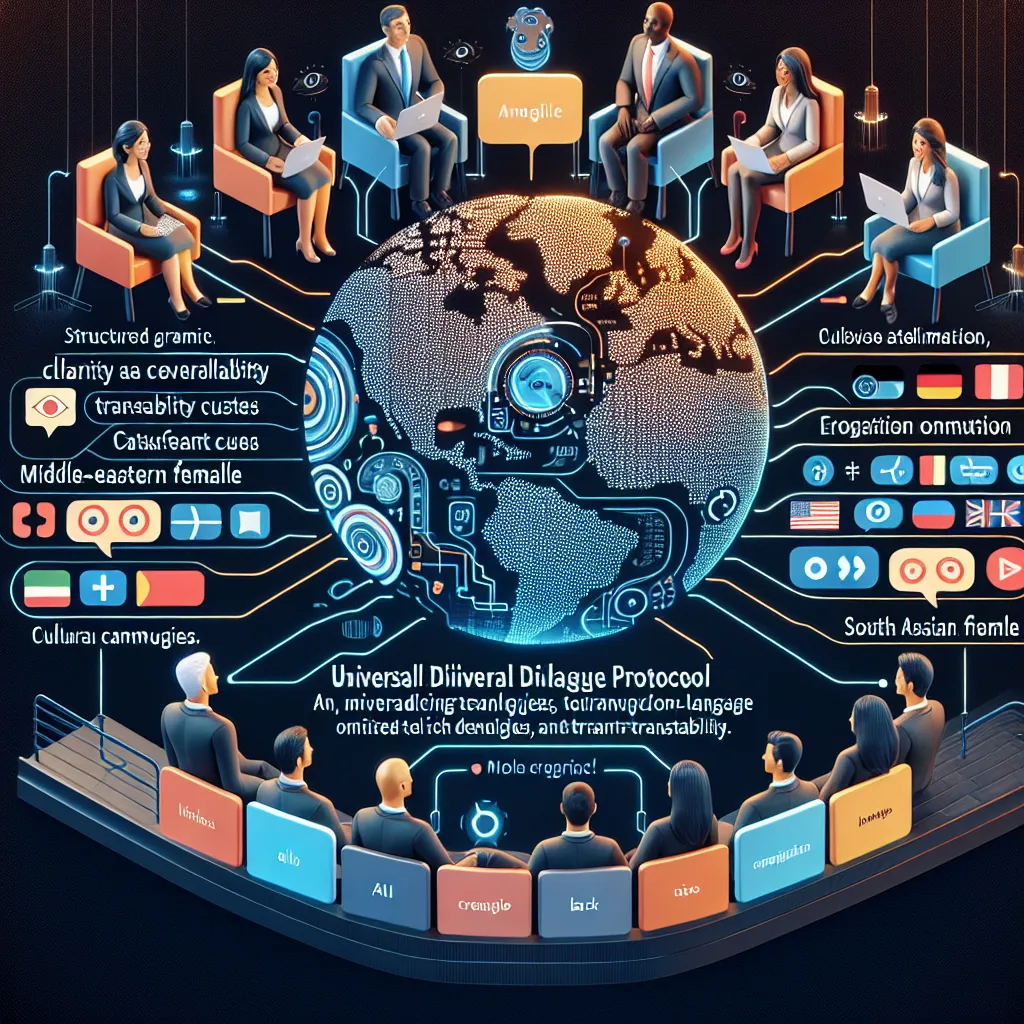
Language barriers still limit global collaboration, and while real-time translation tools exist, they’re built for accuracy—not natural fluency. A “Universal Dialogue Protocol” solves this by introducing a new, AI-native language optimized for clarity, brevity, and translatability—used by both humans and machines. It blends structured grammar, emoji-like cues, and compact syntax for global use. As AI becomes the intermediary in most communication, this protocol becomes a bridge, not just a translator. For example, a startup team across five countries uses the protocol to collaborate seamlessly—each speaking it with their agent, which adapts outputs for culture, tone, and clarity.
Description
No additional description provided.
The Pitch
In today’s interconnected world, effective communication is crucial for collaboration across borders. However, language barriers continue to pose significant challenges, limiting the potential for seamless global interaction. While current real-time translation tools have made strides in achieving accuracy, they often fall short when it comes to delivering natural and fluid communication. This is where the concept of a Universal Dialogue Protocol comes into play.
**Background**
With globalization and technological advancements, businesses, nonprofits, and individuals can connect more easily than ever before, but language differences can still hinder collaboration. Teams dispersed across multiple countries often face misunderstandings and inefficiencies due to language discrepancies. Although existing translation services focus on conveying accurate messages, the lack of natural fluency can lead to misinterpretations and lost nuances, which are vital in teamwork and negotiations.
**Problem**
The core issue lies in the fact that existing translation technologies prioritize word-for-word accuracy over a natural flow of communication. This results in dialogues that can feel stilted and awkward, failing to capture the subtleties of human conversation. For a globally diversified team, this can lead to misunderstandings, misaligned goals, and ultimately, decreased productivity.
**Solution**
The Universal Dialogue Protocol is designed to overcome these challenges by introducing a new, AI-native language that prioritizes clarity, brevity, and translatability. This protocol is intended for use by both humans and machines, functioning as a bridge rather than just a translation tool. By integrating structured grammar, emoji-like cues, and compact syntax, this innovative language is optimized for global communication.
**Product Details**
The Universal Dialogue Protocol encompasses the following components:
1. **Structured Grammar**: A simplified yet expressive grammatical framework that maintains coherence and clarity across diverse linguistic backgrounds.
2. **Emoji-like Cues**: Visual symbols that convey emotion and intent, enriching textual conversations and helping to preserve the conversational tone and subtext.
3. **Compact Syntax**: A streamlined sentence structure designed to convey complex ideas succinctly, reducing the chances of misinterpretation.
4. **Cultural Adaptation AI**: Machine learning algorithms that adjust outputs for cultural nuances, ensuring that the protocol respects and adapts to cultural differences.
**Tools for Launching an MVP**
1. **AI Development Platforms**: Utilizing platforms such as Google AI or Microsoft Azure to develop the language's AI components. 2. **Natural Language Processing (NLP) Tools**: Leveraging NLP frameworks like SpaCy or NLTK for constructing the language’s grammar and syntax. 3. **User Interface Design Software**: Tools like Figma or Sketch for creating user-friendly, intuitive interfaces for end-users. 4. **Cloud Communication Platforms**: Services like Twilio for facilitating seamless communication using the protocol.
**Go-To-Market Strategy**
1. **Target Audience Identification**: Focus on international teams, multinational corporations, and collaborative platforms that require seamless communication tools. 2. **Pilot Programs**: Implement pilot programs with selected global companies to test efficacy and refine features based on real-world usage. 3. **Partnerships**: Collaborate with existing communication platforms such as Slack or Microsoft Teams to integrate the protocol as an add-on feature. 4. **Marketing Campaigns**: Launch awareness and educational campaigns highlighting the unique features and benefits of the protocol.
**Business Model**
1. **Subscription Service**: Offer a subscription model tailored to company sizes, ensuring scalability from small teams to large enterprises. 2. **Freemium Model**: Provide a basic version free of charge, with premium features available through subscription plans. 3. **Licensing**: License the protocol to language service providers, educational platforms, and other technology companies. 4. **Consultancy Services**: Offer expert consultancy for businesses looking to implement and customize the protocol for their specific needs.
The Universal Dialogue Protocol represents a transformative approach to bridging language barriers, facilitating more effective and seamless communication across the globe. By focusing on clarity, brevity, and cultural adaptability, it promises to create a new standard in global collaboration.