Universal Payments API: Connects Global Transactions Seamlessly
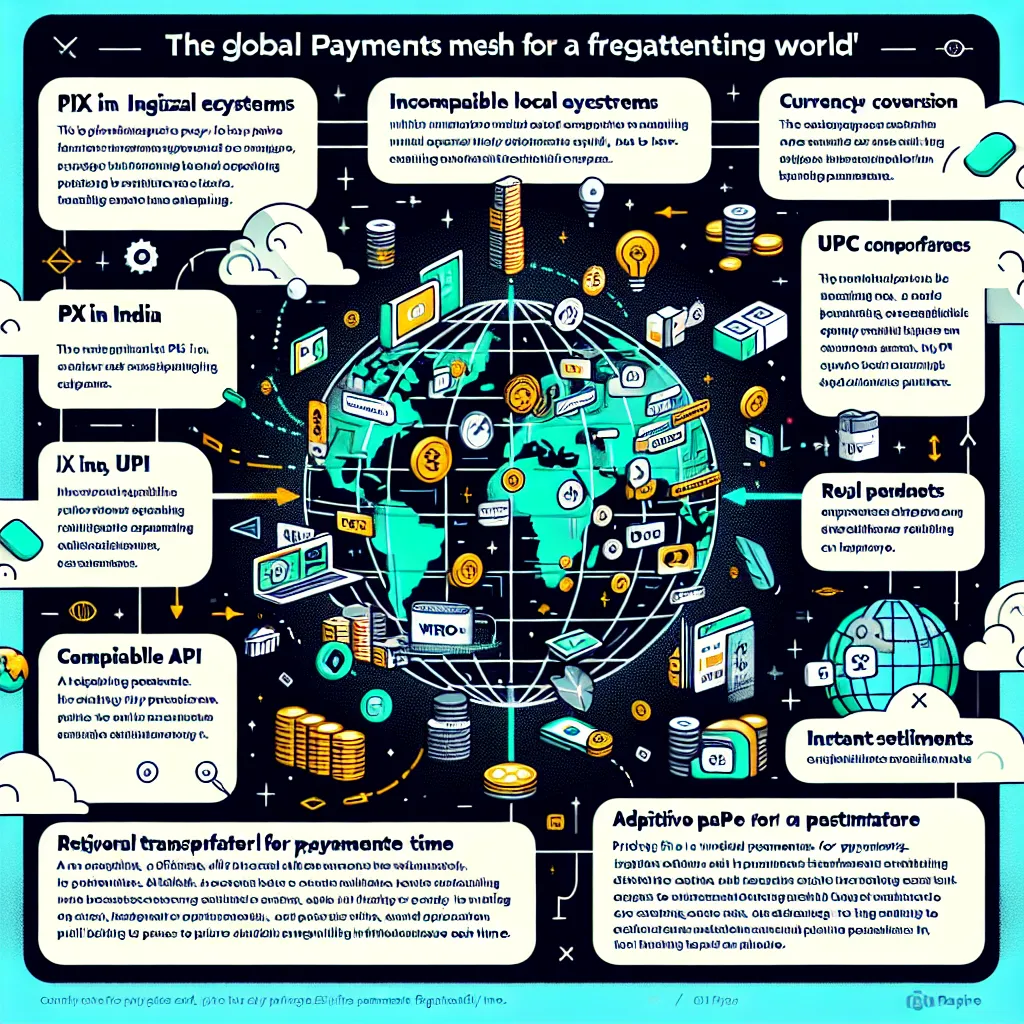
As payment systems fragment into local ecosystems—Pix in Brazil, UPI in India, Wero in Europe—cross-border money flow is becoming a maze of incompatible APIs, rules, and compliance regimes. Businesses expanding internationally are forced to rebuild the same infrastructure over and over again. The opportunity is for a startup to build a “Regional Payments Mesh,” an adaptive API that automatically routes transactions through the most efficient and compliant local rail—like a universal translator for payments. It would detect the sender and receiver’s region, convert currencies, comply with local data and KYC rules, and settle instantly across systems. Think of it as “Stripe for a fragmented world.” As sovereignty and localization rise, the startup that connects the fragments will become indispensable plumbing.
Description
No additional description provided.
The Pitch
With the increasing fragmentation of payment systems across the globe, businesses expanding their international reach face a daunting challenge. Countries like Brazil, India, and numerous European nations have developed unique payment ecosystems such as Pix, UPI, and Wero, respectively. This fragmentation leads to a maze of incompatible APIs, rules, and compliance standards, turning cross-border money flow into a complex task.
The Problem: Traditional methods of handling cross-border payments require businesses to continually rebuild infrastructure to align with diverse regional standards. This results in significant resource expenditure, delays, and increased risk of non-compliance with local regulations. For companies aiming to operate on a global scale, this inefficiency can be a significant barrier to growth and fluid operation.
The Solution: The concept of a Regional Payments Mesh offers a promising solution. By developing an adaptive API that serves as a universal translator for payments, transactions can be automatically routed through the most efficient and compliant local channels. This system would identify the regions of both sender and receiver, handle currency conversion, ensure compliance with local data and KYC regulations, and facilitate instant settlement across different systems.
Product Details: The core product is an API platform that seamlessly integrates with existing financial systems. Key features include:
1. Automatic detection of regional requirements for senders and receivers to ensure compliance and efficiency.
2. Real-time currency conversion based on the most favorable exchange rates.
3. A robust compliance engine that can handle multiple jurisdictions' KYC and data protection regulations.
4. Instantaneous settlement capabilities across a diverse range of payment systems.
5. A user-friendly dashboard that provides businesses with insights and analytics about their cross-border transactions.
Tools for MVP Launch: To build and launch an MVP (Minimum Viable Product), leveraging tools such as AWS for cloud infrastructure, RESTful APIs for platform development, and integration with existing payment gateways like Stripe or PayPal can significantly reduce the development timeline. Implementing compliance solutions like Alloy or Trulioo can address identity verification and KYC needs.
Go-To-Market Strategy: Initially targeting fintech companies and businesses with substantial cross-border transactions, the strategy would include:
1. Forming partnerships with local payment providers and financial institutions to ensure broad reach and reliability.
2. Offering API documentation and developer support to streamline the integration process.
3. Developing case studies and pilot programs with a select group of early adopters to demonstrate value and build credibility.
4. Leveraging digital marketing and attending industry conferences to raise awareness and establish a presence in the fintech industry.
5. Engaging in thought leadership by publishing white papers and participating in webinars to educate potential customers about the benefits of a unified payment mesh.
Business Model: A tiered subscription model based on transaction volume can be adopted, along with a small percentage fee on the transactions processed through the platform. Additional premium features like advanced analytics or personalized compliance solutions could be offered as part of a higher-tier plan or as a separate purchase.
In a world that increasingly values sovereignty and localization, a startup that successfully bridges the gap between fragmented payment systems stands to become the essential infrastructure that businesses rely on to thrive internationally. This Stripe for a fragmented world could reshape how we think about and manage cross-border transactions.