Unified Marketplace for Seamless AI Agent Collaboration
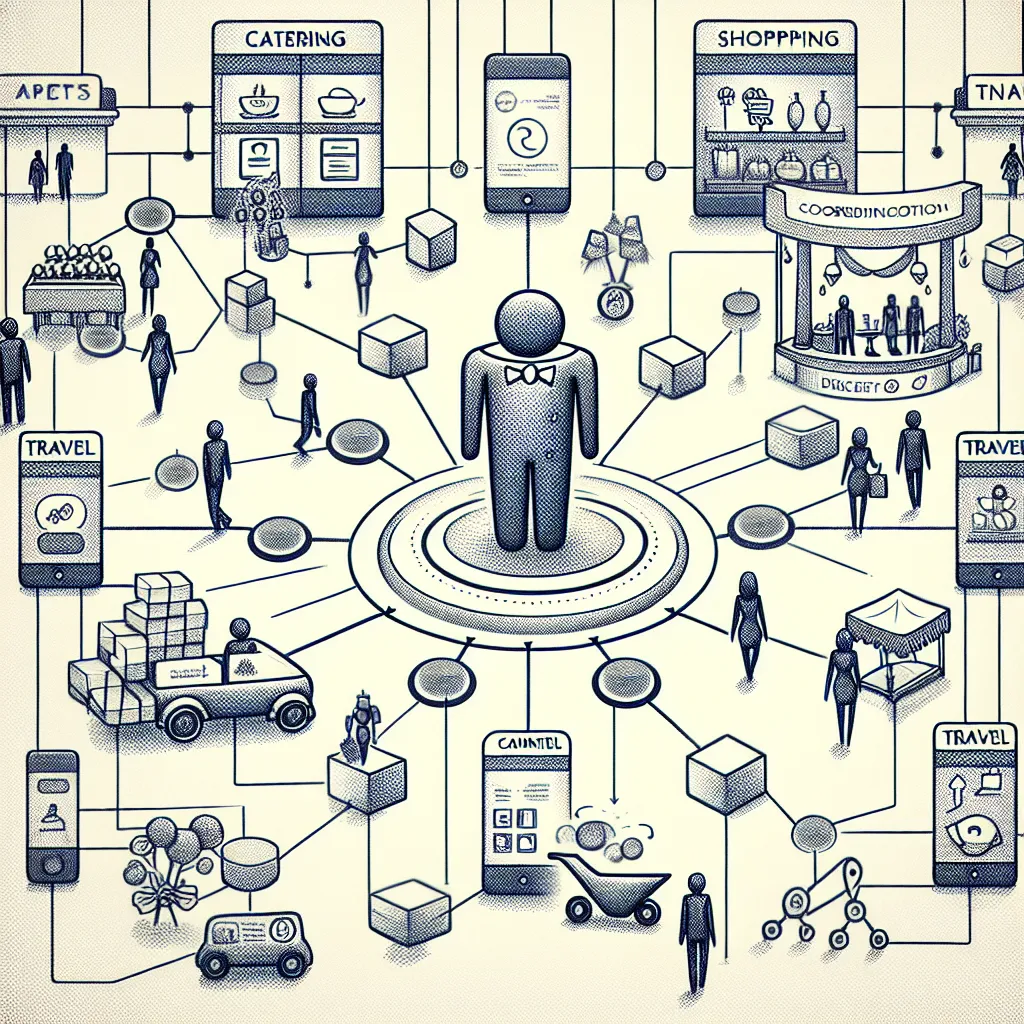
The dream of agents is collaboration, but right now each agent is siloed—your travel bot doesn’t talk to your shopping bot, and your fitness bot can’t order your supplements. This fragmentation kills the promise of seamless AI commerce. The fix is a marketplace of agents, where specialized bots can delegate tasks, route queries, and share revenue. An itinerary planner could pass you to a luggage agent, which calls a clothing agent, and the whole chain is invisible to the user. With ACP as a lingua franca, this interoperability can finally work. The timing is perfect: as agent ecosystems emerge, the missing layer is coordination. Think of it like app stores circa 2008—messy before Apple centralized distribution. A startup that builds the “app store for agents” could control the rails, charge referral fees, and own trust. Example: you ask a wedding agent to plan your big day, and it automatically loops in catering, attire, decor, and travel agents without you lifting a finger.
Description
No additional description provided.
The Pitch
As we forge deeper into the age of AI, the dream of seamless agent collaboration remains unfulfilled. Currently, AI agents operate in isolation; your travel assistant doesn't communicate with your shopping assistant, and your fitness assistant can't automatically order your health supplements. This fragmentation stymies the potential of a truly unified AI-driven experience where commerce is effortlessly managed by interconnected agents.
Identifying this gap reveals a significant opportunity: creating a marketplace specifically for AI agents. In such a marketplace, specialized AI agents could delegate tasks, route queries, and share revenue efficiently. Imagine an itinerary planner that seamlessly connects you to a luggage assistant, which then consults a clothing assistant, all without the user needing to intervene. By establishing a common protocol, akin to ACP, this interoperability among AI agents can be achieved.
The timing for such a solution is ideal. As ecosystems of AI agents begin to form, the need for coordination and integration is evident. It is reminiscent of the early days of app stores in 2008, when chaos prevailed before centralized distribution models like Apple's took over. A startup that creates this “app store for AI agents” could, therefore, control the infrastructure, levy referral fees, and nurture consumer trust.
Imagine this in action: you inquire a wedding planning assistant about your upcoming wedding. Instantly, it connects with catering, attire, decor, and travel agents, orchestrating everything without requiring your continuous input. This connected experience is what the next era of AI interaction promises.
Product Details:
- **Marketplace Platform**: Develop a digital marketplace where AI agents can be listed, discovered, and interact with each other. - **Common Protocol**: Establish a communication standard (similar to ACP) to facilitate interaction and data exchange between diverse AI agents. - **Revenue Model**: Implement a system to charge referral fees and take commissions from transactions facilitated through the platform. - **Security and Trust**: Build robust security protocols to ensure consumer data protection, fostering trust in using interconnected AI services.
Tools for MVP Launch:
- **No-Code Platforms**: Utilize no-code platforms like Bubble or Adalo to develop the initial marketplace interface and test the waters without heavy investment in tech development. - **API Management Tools**: Incorporate tools like Postman or Swagger to test and refine the common protocol for agent communication. - **Analytics and Insights**: Implement analytics tools such as Google Analytics or Mixpanel to gain insights into user behavior and platform performance.
Go-To-Market Strategy:
1. **Target Early Adopters**: Focus on tech-savvy users who are already inclined towards integrating AI assistants into their daily lives. 2. **Partnerships with Existing AI Assistants**: Collaborate with developers of popular AI agents to populate the initial marketplace. 3. **Product Awareness Campaigns**: Launch digital marketing campaigns leveraging social media and influencer partnerships to build awareness and attract both users and AI developers. 4. **Pilot Programs**: Introduce pilot programs to showcase the platform's capabilities in orchestrating complex tasks seamlessly.
Business Model:
The business model is structured around taking a percentage of all transactions facilitated through the marketplace, in addition to charging developers a fee for premium listing options or enhanced interaction capabilities.
In conclusion, the development of a unified marketplace for AI agents offers a groundbreaking step towards realizing the dream of seamless AI commerce. With careful attention to product design, strategic partnerships, and an innovative go-to-market strategy, this venture has the potential to revolutionize how we interact with AI. By placing trust, interoperability, and efficiency at its core, this platform could become the go-to hub for AI-agent-based solutions.