Unified Family Operating System for Seamless Living
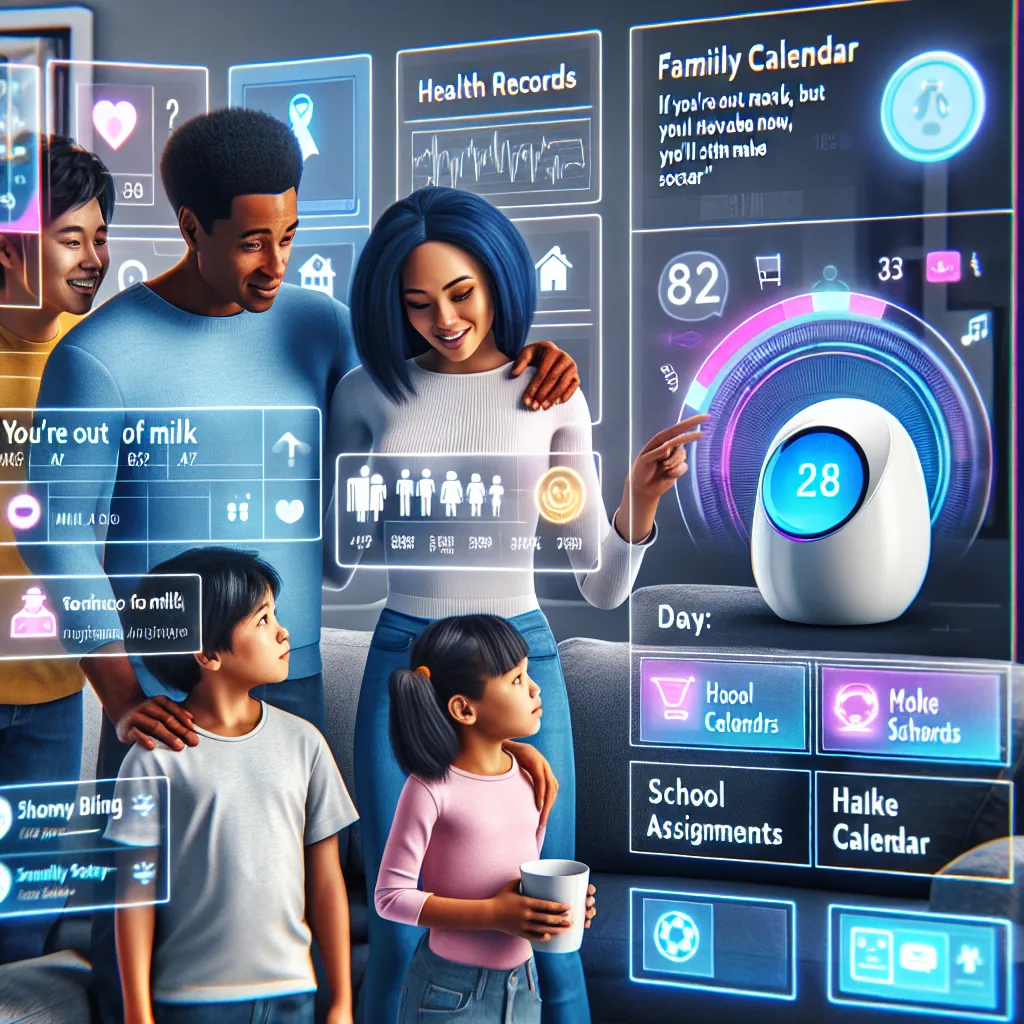
Families run like startups — multiple schedulese, devices, finances, and goals — but there’s no unified “OS” tying it together. Parents juggle school portals, shared calendars, payment apps, chores, and health records across dozens of disconnected tools. The result? Constant chaos and emotional burnout. A Family Operating System would act as the AI co-pilot for household life — syncing every family member’s digital world into one adaptive interface. It auto-detects conflicting events, predicts spending spikes, balances screen time, assigns chores dynamically based on who’s free, and even mediates arguments (“You’ve both spoken for 90 seconds — your turn, Ava”). With the rise of ambient AI and household IoT, this isn’t science fiction — it’s overdue. Picture a dashboard that knows the kids’ school calendar, your grocery patterns, your partner’s meetings, and your dog’s vet visit — and then calmly says, “You’re out of milk, but if you leave now, you’ll still make soccer.” The family calendar becomes a living, reasoning brain — one that saves marriages as easily as it saves time.
Description
No additional description provided.
The Pitch
In an era where families are increasingly juggling the complexities of modern life, there lies an opportunity to innovate a revolutionary platform: the Family Operating System. The dynamics of family life today resemble the intricacies of a startup, with a multitude of schedules, devices, finances, and goals requiring constant coordination. However, unlike startups, families lack a unified system to manage these elements seamlessly. This results in an environment plagued by chaos and emotional burnout, as parents struggle to keep track of school activities, payments, chores, and health records scattered across numerous disconnected tools.
The problem is clear: there is no single platform to bring these disparate elements together, leading to inefficiencies and heightened stress. Parents and family members are left navigating through fragmented systems, which not only wastes time but also strains relationships due to miscommunication and oversight.
The Family Operating System offers a solution by serving as an AI-powered co-pilot designed specifically for household life. This innovative system would synchronize every family member's digital world into a cohesive, adaptive interface. It would automatically detect schedule conflicts, predict spending spikes, optimize screen time, dynamically assign chores based on availability, and even mediate family discussions with fairness.
Imagine a dashboard that seamlessly integrates the children's school calendar, grocery patterns, a partner's work meetings, and even the family pet's vet appointments. It becomes an intuitive and proactive assistant, providing timely notifications such as, You're out of milk, but if you leave now, you'll still make soccer practice. This system transforms the traditional family calendar into an intelligent, reasoning entity, capable of not only saving time but also strengthening family bonds.
To build the Family Operating System as a Minimum Viable Product (MVP), several tools and technologies can be leveraged. Here’s how potential builders could approach the task:
1. **Technology Stack**: - **Backend**: Use a cloud service provider like AWS or Google Cloud to build a scalable infrastructure. - **AI & Machine Learning**: Implement AI tools such as TensorFlow or PyTorch for predictive analytics and task automation. - **Frontend**: Develop a user-friendly interface using frameworks like React or Vue.js. - **Database**: Utilize databases like MongoDB or Firebase for real-time data management and synchronization.
2. **GTM Strategy**: - **Target Audience**: Focus on tech-savvy parents and guardians who are early adopters of home automation technology. - **Marketing Channels**: Utilize social media platforms, parenting blogs, and influencer partnerships to create awareness and generate buzz. - **Community Engagement**: Build a community around early adopters by offering feedback loops, user groups, and forums to refine the product based on real-world usage.
3. **Business Model**: - **Subscription-Based Model**: Implement a tiered subscription model offering basic features for free with premium options for additional integrations and AI capabilities. - **Freemium Model**: Allow users to access the basic system for free while offering additional premium features such as advanced AI insights, customization, and priority support. - **Partnership Opportunities**: Collaborate with educational institutions, grocery delivery services, and payment platforms for integrated services and cross-promotional benefits.
By focusing on an all-in-one digital solution, the Family Operating System aims to alleviate the chaos of modern family life, taking a human-centered approach to technology. With the enhancing capabilities of ambient AI and the growing integration of IoT in households, the time to innovate in this space is now. This system holds the promise to not only organize and streamline daily operations but to ultimately enhance the quality of family life, fostering a sense of harmony and understanding among family members.