Unified AI Suites for Specialized Professions
The AI landscape is overflowing with single-purpose tools, but most users don’t want to duct-tape ten products together. The opportunity is to bundle thin, task-specific agents into one cohesive experience for a single persona. A “Lawyer OS” that drafts contracts, summarizes cases, and handles email. A “Student OS” that organizes study notes, creates flashcards, and plans schedules. A “Creator OS” that scripts, clips, and posts. One subscription, one UX, ten connected agents behind the scenes. The novelty isn’t the tools—it’s the packaging and vertical focus. Whoever builds the first polished suite that truly feels like software for me will win big.
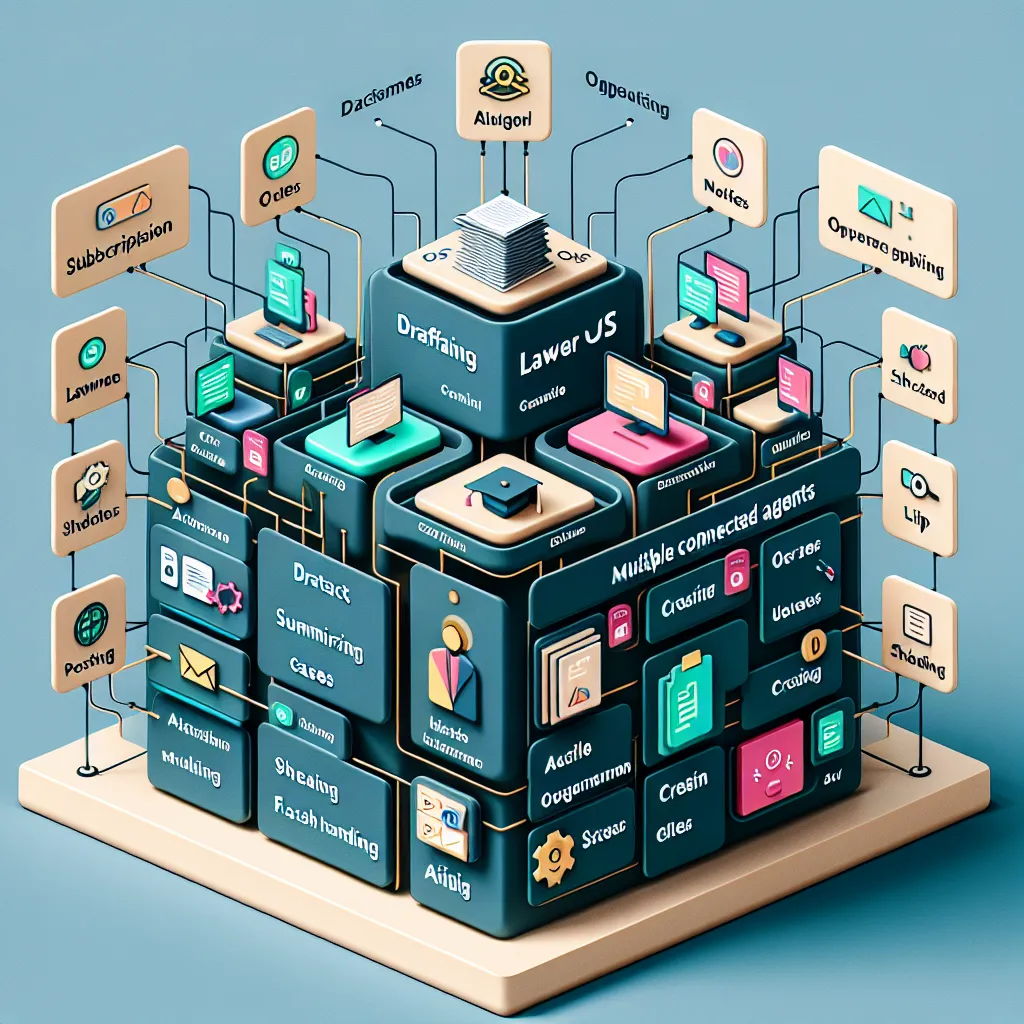
Description
No additional description provided.
The Pitch
Amidst the proliferation of AI tools and platforms, users often find themselves overwhelmed with the challenge of integrating multiple single-purpose applications to meet their needs. Each tool, while potentially powerful in its domain, often operates in isolation, requiring users to manually combine them to achieve their desired outcomes. This fragmented experience can be inefficient and frustrating, paving the way for an innovative solution that simplifies and enhances user interaction with AI technologies.
Backstory
The conception of the all-in-one AI Operating System (OS) stems from a fundamental realization: users across various domains have unique sets of tasks they need to accomplish using AI tools. Yet, the existing market primarily offers disjointed solutions that force individuals to cobble together disparate applications, leading to inefficiencies and potential discrepancies in workflow continuity. This scenario is prevalent among professionals like lawyers, students, and content creators who rely heavily on precision, organization, and productivity in their daily routines.
Problem
The current landscape poses several challenges:
1. Fragmentation: Users are compelled to utilize multiple applications with separate user interfaces, leading to a disjointed experience. 2. Integration: Manually integrating data and workflows from different applications consumes valuable time and effort. 3. Cost: Subscribing to multiple services can be costly and often redundant. 4. Learning Curve: Each tool demands its own learning curve, complicating the user experience. 5. Incompatibility: Not all applications work seamlessly together, leading to workflow disruptions.
Solution
The proposed solution is to develop a comprehensive Personal OS tailored to specific user personas. This platform will integrate a suite of task-specific agents into a single, cohesive user experience designed to address the precise needs of different professional personas. By focusing on vertical integration, the solution will deliver a polished, intuitive, and efficient system that feels personalized and responsive.
Product Details
1. **Lawyer OS**: Designed for legal professionals, this suite will feature tools for drafting contracts, summarizing case law, managing client communications, and organizing legal documents. An intuitive interface will ensure seamless task transitions and a unified workflow.
2. **Student OS**: Tailored to educational needs, this suite will enable students to organize study notes, generate flashcards, plan their schedules, and collaborate on study groups—all from one platform, thus enhancing academic productivity and focus.
3. **Creator OS**: Focused on content creators, this operating system will provide solutions for scripting videos, editing clips, scheduling posts, and managing online presence. This cohesive suite will empower creators to streamline their creative process from ideation to publication.
Tools for MVP Launch
1. No-code platforms (e.g., Bubble, Adalo) for rapid prototyping. 2. API integrations (e.g., Zapier) to connect existing tools into a unified interface. 3. Design tools (e.g., Figma) for creating intuitive user interfaces. 4. Beta testing platforms (e.g., Product Hunt) for initial user feedback. 5. Analytics platforms (e.g., Mixpanel) to track user engagement and iteratively improve features.
Go-to-Market Strategy
1. **Market Research**: Conduct in-depth research to understand the unique challenges and preferences of target user personas. 2. **Community Engagement**: Engage with professional communities through webinars, forums, and networking events to build awareness and gather insights. 3. **Partnerships**: Collaborate with industry-specific thought leaders and organizations to promote early adoption. 4. **Content Marketing**: Develop targeted content that emphasizes the benefits and efficiencies of the Personal OS suite. 5. **Feedback Loops**: Establish mechanisms for continuous user feedback to refine and optimize features post-launch.
Business Model
1. **Subscription-Based Pricing**: Offer tiered subscription plans tailored to the specific functionalities and needs of different user personas. 2. **Freemium Model**: Provide a basic version of the platform for free, with premium features available at a cost. 3. **Enterprise Solutions**: Develop customized packages for large organizations with specific compliance and integration needs. 4. **Upselling**: Encourage existing users to upgrade by showcasing additional capabilities and personalized enhancements.
With the introduction of a holistic and intuitive AI OS, users will no longer need to juggle multiple tools and subscriptions. Instead, they will be able to focus on their core tasks, thanks to a seamless experience crafted specifically for their professional and personal growth. This innovative approach not only addresses the current fragmentation in the AI landscape but also sets a new standard for personalized digital solutions.