Ultrathin Thermal Sensor Glasses for Navigation
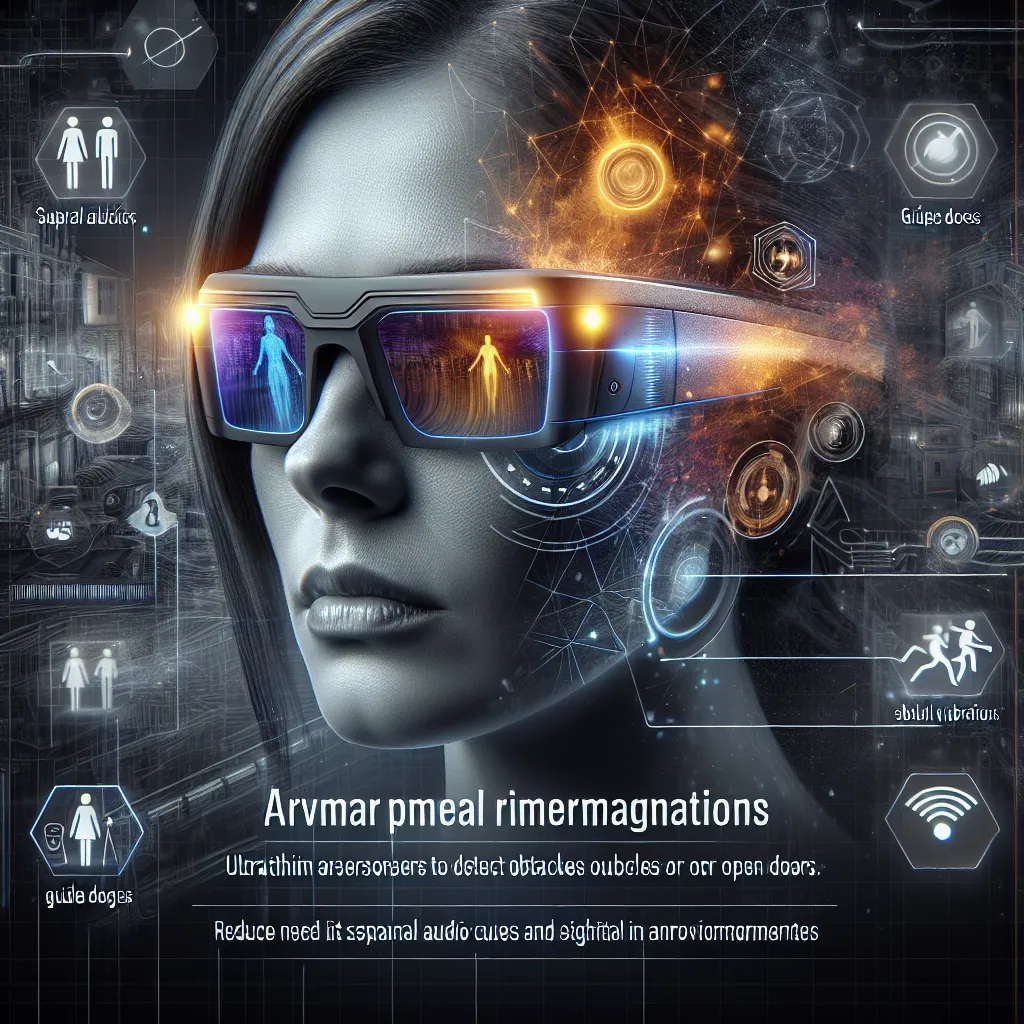
Visually impaired individuals rely on canes or guide dogs, but navigating unfamiliar environments—especially at night—can still be risky. Traditional thermal vision tech is inaccessible due to size and cost. Now, ultrathin thermal sensors can be integrated into standard glasses, offering spatial audio cues or subtle vibrations that guide users around warm obstacles like people or open doors. With no need for cooling or complex lenses, this system enables real-time navigation support in a discreet, wearable form. As accessibility tech advances and smart wearables grow more common, this empowers blind users with greater autonomy.
Description
No additional description provided.
The Pitch
In recent years, technology has offered transformative solutions to improve the quality of life for many, yet certain gaps in accessibility persist. Traditional methods of navigation for visually impaired individuals, such as canes and guide dogs, have limitations, particularly in unfamiliar environments and low-light conditions. The advent of thermal vision technology holds promise, but historical barriers of size and cost have made such solutions impractical—until now.
Backstory: Individuals who are visually impaired frequently encounter challenges in navigating spaces that sighted people navigate effortlessly. Traditional aids offer some support but often fall short, especially in complex or dynamic environments. The need for an affordable, practical solution has become increasingly apparent, as these individuals seek greater independence and confidence in their daily lives.
Problem: Navigating unfamiliar environments remains risky for the visually impaired, particularly at night or in poorly lit areas. While thermal vision technology could theoretically address this gap by detecting warm objects, the bulkiness and expense of conventional thermal devices have historically made them inaccessible.
Solution: Recent advancements in ultrathin thermal sensors present an opportunity to revolutionize navigation aids for visually impaired individuals. By integrating these sensors directly into a wearable format such as standard glasses, users can receive real-time feedback through spatial audio cues or subtle vibrations. This discreet system allows users to perceive their surroundings in a more intuitive manner, actively guiding them around obstacles like people or open doors without the need for cooling systems or complex lens configurations.
Product Details: The core product is a lightweight pair of glasses embedded with ultrathin thermal sensors capable of detecting warm objects in the vicinity. Connected to a user-friendly app, the glasses translate thermal data into spatial audio cues or gentle vibrations, offering real-time guidance. The product is designed for ease of use, with simple controls and long battery life to support day-to-day activities.
Tools for MVP: To quickly launch a minimum viable product, key tools and technologies will include: - Ultrathin thermal sensors: Innovation in sensor technology allows for compact design. - Wearable form factor: Developing a lightweight, comfortable, and stylish eyeglass frame. - Spatial audio/vibration feedback system: Integrating small speakers or motors for user feedback. - App development platforms: Using frameworks like React Native for cross-platform compatibility.
GTM Strategy: 1. Identify and segment target markets, such as visually impaired communities, accessibility advocates, and rehabilitation centers. 2. Develop partnerships with nonprofit organizations and healthcare providers to expand reach. 3. Utilize social media platforms and influencers in the accessibility space to build awareness. 4. Attend industry trade shows and conferences to demo the product and gather user feedback.
Business Model: The business model is two-pronged: direct sales to consumers through an online store and partnerships with healthcare providers and nonprofits for wholesale distribution at discounted rates. A subscription-based model could also be considered for continuous software updates that refine the spatial feedback system.
Conclusion: By addressing the limitations of traditional navigation aids and making cutting-edge technology more accessible, this innovative solution empowers visually impaired individuals with enhanced independence and confidence. As accessibility technology continues to progress alongside the growing trend of smart wearables, this product positions itself at the forefront of a market eager for improved navigation tools.