Ultralight Thermal Overlays Enhance Nighttime Visibility
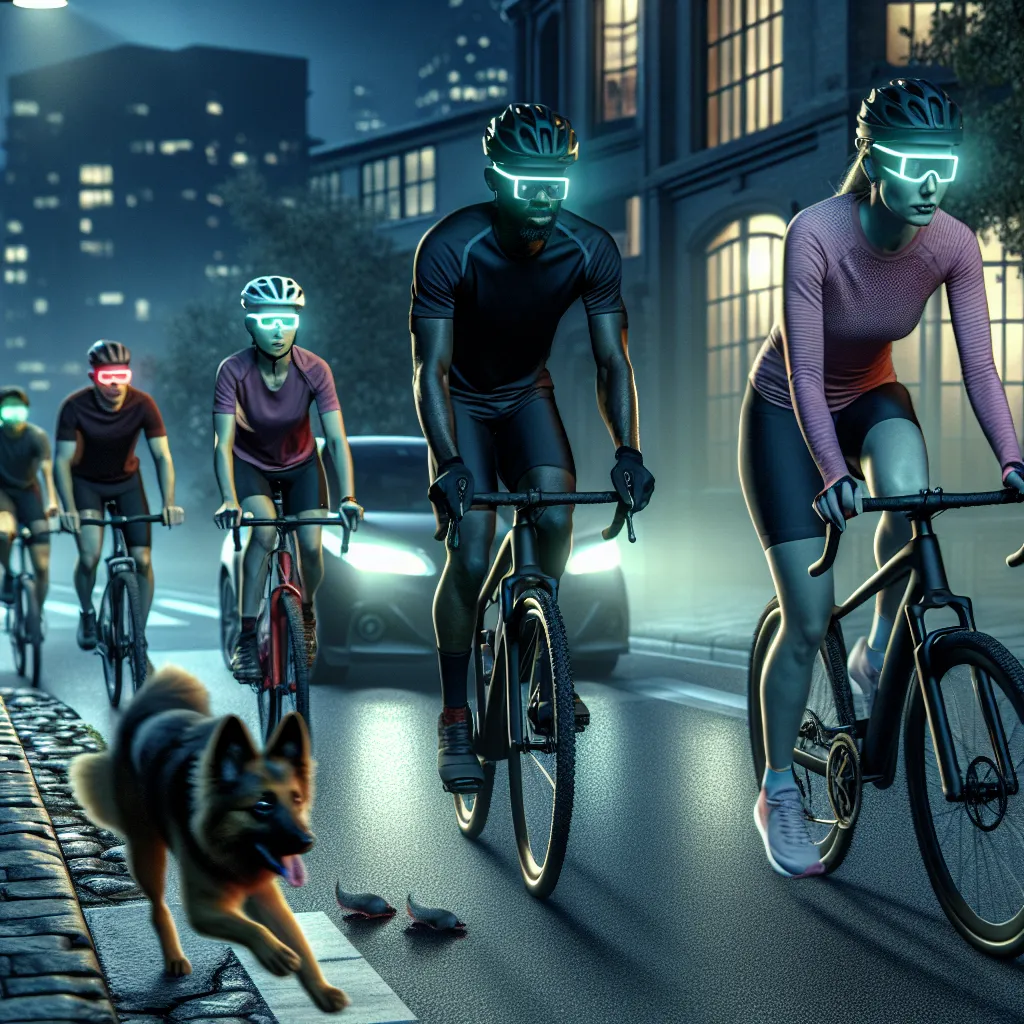
Urban cyclists and nighttime runners face constant threats from low-visibility conditions, where vehicles, animals, or people are hard to spot. Reflective gear helps, but doesn’t improve what they see. Now, ultralight thermal overlays can be embedded into sports glasses or even headbands to give athletes real-time visibility of warm objects, from a dog in the street to a parked car with a hot engine. This passive, low-power form of night vision allows safer solo runs or commutes without the need for bulky headlamps or expensive thermal goggles. It’s now feasible due to the miniaturization and flexibility of the MIT film.
Description
No additional description provided.
The Pitch
Imagine a world where urban cyclists and nighttime runners can navigate their environments with enhanced safety. These individuals often face significant visibility challenges in low-light conditions, where the risk of accidents increases due to the difficulty in spotting vehicles, animals, or even pedestrians. While reflective gear is a common solution, it only partially addresses the problem by making the wearer more visible to others, without improving the wearer's own ability to see potential hazards.
To tackle this issue, a novel solution has emerged: ultralight thermal overlays that can be seamlessly integrated into sports glasses or headbands. This innovation provides athletes with real-time visibility of warm objects, such as a dog crossing the street or a parked car with a recently active engine. Utilizing a passive, low-power form of night vision, these thermal overlays enhance the user's safety during nighttime activities without the need for cumbersome headlamps or costly thermal goggles.
The feasibility of this solution stems from significant advancements in the miniaturization and flexibility of thermal imaging technology, particularly a breakthrough film developed by MIT. This film allows for the creation of compact, lightweight devices that can be comfortably worn without hindering athletic performance.
To bring this innovative product to life, a step-by-step approach is suggested:
1. **Solution Design and Prototyping**: Initiate with designing prototypes that use the MIT thermal film. Partner with industrial designers to ensure ergonomic integration into sports glasses or headbands. Collaborate with engineers to address power efficiency, size constraints, and durability.
2. **Research and Development Tools**: Utilize software like SolidWorks for 3D modeling of the product, and consider using Arduino for building prototype circuits. For material testing, access to a lab with thermal imaging equipment would be beneficial.
3. **Minimum Viable Product (MVP) Launch**: Develop an MVP focusing on essential functionality—effective thermal detection and user comfort. Test the MVP with a target group of cyclists and runners to gather feedback on usability and performance.
4. **Go-To-Market Strategy**: - **Target Audience**: Identify and engage with urban runners and cyclists who are safety-conscious and technology-friendly. - **Marketing Channels**: Utilize social media platforms, sports enthusiast forums, and local running or cycling clubs to generate buzz. Consider collaborations with influential athletes or safety advocates. - **Distribution**: Establish partnerships with sporting goods stores and online platforms that cater to active lifestyles.
5. **Business Model**: Consider a direct-to-consumer model complemented by retail partnerships. Implement a subscription service for software updates or replacement parts, ensuring the product remains useful and current over time.
This forward-thinking solution promises to enhance the safety and confidence of urban athletes. By empowering them with better visibility, the risk of accidents is minimized, allowing runners and cyclists to enjoy their activities with greater peace of mind, even after the sun has set.