Ultrablack Fabric Revolutionizes Architectural Illusions
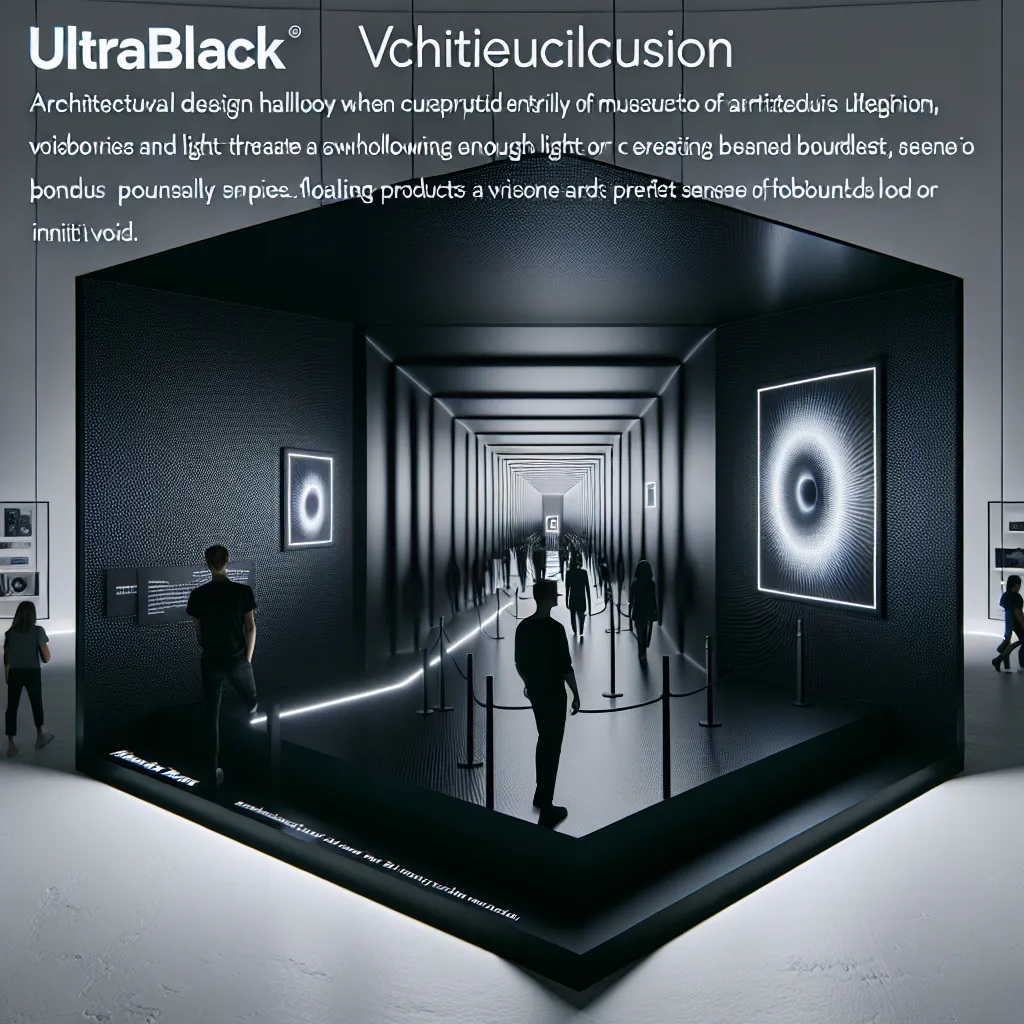
Architects, theme parks, and experiential designers are always searching for ways to manipulate perception — to create illusions of depth, disappearance, or floating objects — but conventional materials can’t swallow enough light to make that possible without digital tricks. Using ultrablack fabric as a building material changes the physics of spatial experience, allowing real-world “infinity rooms” and walk-through void environments. This becomes realistic now because the textile is safe, flexible, and scalable, unlike earlier black coatings that couldn’t survive touch or moisture. Picture a museum hallway lined entirely with ultrablack panels where visitors feel like they’re walking through nothingness, or a branded pop-up where products appear to hover in a perfectly dark cube.
Description
No additional description provided.
The Pitch
Exploring ways to revolutionize architectural and experiential design through innovative materials can lead to groundbreaking solutions in manipulating perception. Traditionally, designers have faced challenges in creating illusions of depth, disappearance, or floating objects. Conventional materials often fall short because they can't absorb enough light without relying on digital enhancements. However, the introduction of ultrablack fabric as a building material offers a transformative approach, changing the dynamics of how spaces are experienced.
Historically, efforts to create environments with drastically altered perceptions have been constrained by material limitations. The need for materials that are not only visually effective but also practical for diverse environments has been a significant hurdle. Previous black coatings often could not withstand physical interaction or environmental factors like moisture, limiting their application in real-world scenarios. This challenge has hindered the creation of immersive spatial experiences that can fully engage and intrigue.
The emergence of ultrablack fabric offers a solution by providing a material that absorbs nearly all visible light while being safe, flexible, and scalable. This opens new possibilities for real-world applications such as infinity rooms and walk-through void environments. Imagine museum hallways lined entirely with ultrablack panels, creating a sensation of traversing through a void, or branded pop-ups where products are showcased in an environment that makes them appear to hover within a perfectly dark backdrop.
For those interested in pioneering this concept, the potential to build a minimum viable product (MVP) with ultrablack fabric is feasible. Tools such as computer-aided design (CAD) software can aid in visualizing and planning these unique environments. Partnerships with manufacturers specializing in cutting-edge textiles can facilitate the development process. Launching a pilot project in collaboration with museums or brand activation events can serve as a testing ground to refine the experience and gather user feedback.
The go-to-market (GTM) strategy could involve showcasing successful case studies and harnessing the power of social media and digital marketing to reach architects, designers, and companies seeking innovative solutions. Demonstrating the potential through immersive pop-up experiences or collaborations with high-profile events can additionally attract interest and investment.
In terms of the business model, revenue can be generated through contracts with design firms, museums, and entertainment venues. Licensing agreements or direct sales of the fabric to designers and architects looking to incorporate the unique properties of ultrablack into their projects are potential avenues for growth. Additionally, offering design consultancy services to help partners integrate ultrablack effectively into their environments can create additional value.
The incorporation of ultrablack fabric in architectural and experiential design represents a significant leap forward in manipulating spatial perceptions and creating engaging, memorable environments. As this innovative material becomes more accessible and its potential unfolds, it promises to reshape the landscape of design in various industries.