Transforming Robotaxi Interiors into Custom Micro-Spaces
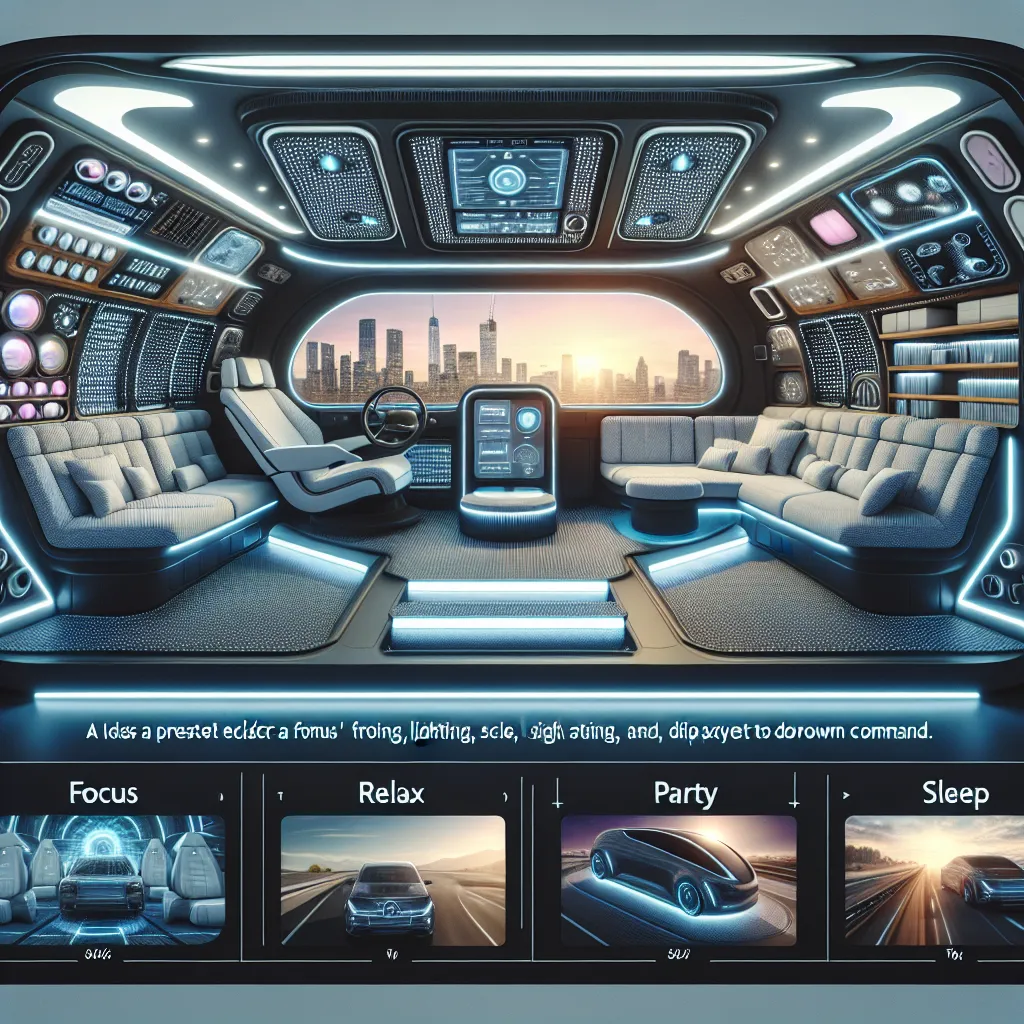
When you remove the driver, the car becomes a room. But right now, every robotaxi interior is a sterile pod — no personalization, no vibe. Cabin transforms robotaxi interiors into customizable “micro-spaces.” Users can select presets (Focus, Relax, Party, Sleep) and the car adjusts lighting, scent, seat angle, and content display accordingly. Advertisers can sponsor immersive cabin themes (“Netflix Ride to Downtown”). Why now? Because once 100,000 AVs are rolling, in-ride experience becomes the new front door of attention. Cabin is the Shopify of in-car atmospheres.
Description
No additional description provided.
The Pitch
Imagine a future where your car ride isn't just a means of transportation but an experience tailored to your needs and preferences. As autonomous vehicles become more prevalent, the absence of a driver presents a unique opportunity to rethink the car interior. The current state of robotaxi interiors — bland, sterile spaces — fails to capitalize on this potential. This concept outlines a vision for Cabin, a solution that transforms autonomous vehicle interiors into customizable micro-spaces, catering to both individual preferences and innovative advertising models.
Backstory: With the rise of autonomous vehicles, transportation is on the brink of a revolution. However, the interior design of these vehicles hasn't kept pace with the technological advancements in driving technology. As the driver is no longer needed, the attention shifts to the passenger experience, which remains underdeveloped and uninspired.
Problem: As robotaxi services expand, the need for an engaging, personalized in-car experience becomes apparent. Current designs lack customization, resulting in monotonous rides that fail to enhance passenger satisfaction or utilize the full potential of the space. There is a growing demand for interiors that cater to varying moods, activities, and brand experiences for users and advertisers.
Solution: Cabin reimagines the interior of autonomous vehicles, offering a dynamic environment that adapts to passengers' preferences. By transforming vehicles into customizable micro-spaces, Cabin enhances the riding experience through adjustable lighting, scent, seat configurations, and content display. Passengers can choose from multiple preset modes such as Focus, Relax, Party, or Sleep, each creating a unique atmosphere inside the vehicle. Additionally, the platform allows advertisers to sponsor immersive cabin themes, turning rides into interactive brand experiences.
Product Details: Cabin integrates seamlessly with the existing design of autonomous vehicles, offering a modular and user-friendly interface. The system includes the following features:
1. Customization Presets: Multiple modes selectable via a mobile app or in-vehicle interface, adjusting the vehicle's atmosphere (lighting, scent, seating, content) to match the desired mood or activity.
2. Personal Profiles: Users can save preferred settings, allowing for quick access during repeated journeys.
3. Immersive Advertisements: Partner with brands to create sponsored themes that reflect their identity and engage passengers through a unique in-car experience.
4. Analytics Dashboard: Provides insights into user preferences, engagement metrics, and advertisement performance.
Tools for MVP Launch: To develop and launch Cabin as a minimum viable product, consider utilizing the following tools and technologies:
1. Mobile App Development: Use platforms like React Native or Flutter for cross-platform compatibility.
2. IoT Integration: Employ IoT frameworks such as Arduino or Raspberry Pi for in-car connectivity and control.
3. Cloud Services: Leverage AWS or Google Cloud for data storage and analytics.
4. Scent and Lighting Technology: Partner with suppliers specializing in customizable automotive scent diffusers and mood lighting systems.
Go-To-Market (GTM) Strategy: 1. Strategic Partnerships: Collaborate with autonomous vehicle manufacturers and ride-sharing companies to integrate Cabin into existing fleets.
2. Pilot Programs: Launch pilot programs in key urban areas with high demand for autonomous rides to gather user feedback and iterate on the product.
3. Brand Collaborations: Engage with brands in industries like entertainment, hospitality, and lifestyle to develop sponsored themes and generate buzz.
4. Marketing Campaigns: Utilize digital marketing and social media platforms to build awareness and highlight the unique value proposition of Cabin.
Business Model: Cabin's monetization strategy includes:
1. Subscription Model: Offer passengers a premium subscription for advanced customization features and additional preset modes.
2. Advertising Revenue: Generate income through partnerships with brands for immersive sponsored themes.
3. Licensing Fees: Charge vehicle manufacturers or fleet operators a licensing fee to integrate Cabin’s technology into their interiors.
By redefining the in-car experience for autonomous vehicles, Cabin presents an innovative solution that enhances passenger satisfaction, creates new advertising opportunities, and positions itself as a leader in the future of transportation design.