Transforming Podcasts into 3D Holographic Experiences
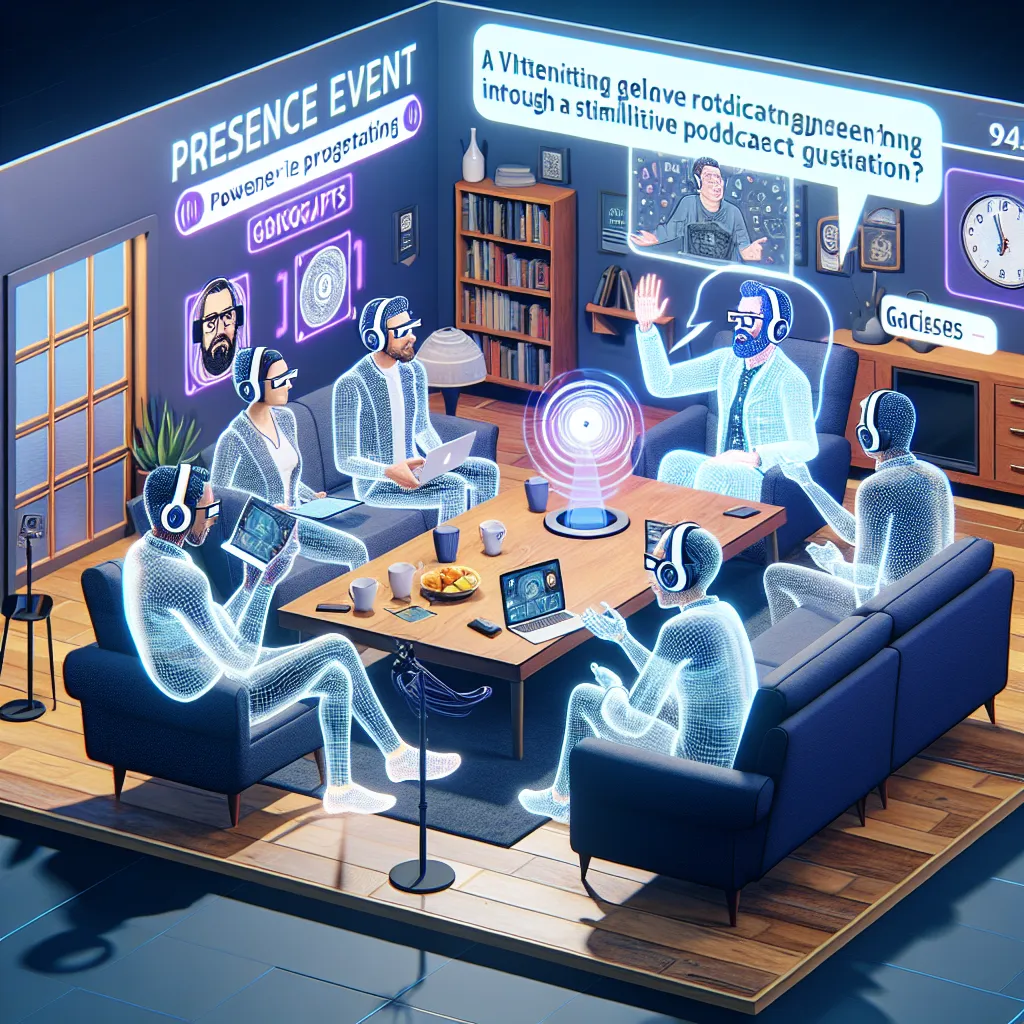
Podcasts today fight for ear-time, but what if they fought for space-time? This is a platform that transforms audio podcasts into 3D holographic experiences you can project into your living room through AR glasses or mixed-reality devices. Imagine not just listening to All-In, but seeing holograms of Chamath, Jason, and crew sitting around your coffee table, bantering in real-time. The problem today is engagement — podcasts are too passive, too long, too easy to skip. The solution is to turn them into immersive “presence events” where listeners feel part of the conversation. With Apple Vision Pro and Meta doubling down on spatial computing, the infrastructure exists now. Example: a fan tunes into Lex Fridman, but instead of earbuds, Lex appears as a hologram across the dinner table, pausing so you can ask questions that the AI co-pilot answers in his style. Podcasts stop being background noise and start being a front-row experience — and the first platform to own this wins the trillion-dollar attention war.
Description
No additional description provided.
The Pitch
In today's busy world, capturing and holding attention is more challenging than ever, especially when it comes to audio content such as podcasts. Despite their popularity, podcasts often struggle with listener engagement — they can be too passive, lengthy, and easy to ignore or skip. This issue presents an opportunity to redefine the podcasting experience by leveraging emerging technologies in augmented reality (AR) and mixed reality (MR).
Imagine transforming audio podcasts into 3D holographic experiences that you can project into your living room. This platform allows users to experience their favorite shows not just with their ears, but with their eyes and surroundings through AR glasses or other mixed-reality devices. Instead of simply listening to a podcast, picture seeing holograms of the hosts around your coffee table, creating engaging, real-time interactions.
The problem with podcasts today is that they fail to fully engage their audience. The proposed solution is to elevate podcasts into immersive presence events. Through these events, listeners can feel like part of the conversation rather than just passive recipients of audio content. With tech giants like Apple and Meta making strides in spatial computing, the necessary infrastructure and devices are becoming increasingly accessible.
Here's how it works: A fan chooses to tune into a show with a host like Lex Fridman. Rather than plugging in earbuds, the listener dons AR glasses and a holographic version of Lex appears across the table. This setup allows for interactive experiences, such as pausing the host to ask questions that an AI assistant answers in the host’s style. This innovation transforms podcasts from background noise into captivating front-row experiences.
Product Details: 1. Core Features: - 3D holographic visualization of podcast hosts and guests. - Interactive AI-driven conversations and Q&A based on the podcast content. - Seamless synchronization with existing podcast platforms.
2. Technology Stack: - AR and MR development using platforms like Unity or Unreal Engine. - AI Natural Language Processing to mimic host speech styles. - Cloud-based solutions for content delivery and synchronization.
3. Compatibility: - Designed for use with devices like Apple Vision Pro, Meta Quest series, and upcoming mixed-reality devices.
To launch this as a Minimum Viable Product (MVP), focused development on a few key features is critical. Start with popular podcasts to attract an initial user base and establish partnerships with podcast creators to deliver optimized content.
Go-to-Market (GTM) Strategy: 1. Leverage Early Adopters: - Target tech enthusiasts and podcast aficionados who own AR/MR devices. - Offer limited-time free trials for early feedback and user testimonials.
2. Partnerships: - Collaborate with prominent podcast networks for exclusive holographic content. - Partner with hardware manufacturers for bundling or co-marketing initiatives.
3. Marketing Channels: - Focus on digital marketing through social media, specialized tech communities, and podcasts. - Use AR experiences in public spaces or events to demonstrate the product's capabilities.
Business Model: 1. Subscription-Based Services: - Offer tiered subscriptions for consumers, with options ranging from basic access to premium features and exclusive content.
2. Licensing: - License the technology to podcast creators or other media companies looking to expand into holographic content.
3. Revenue Sharing: - Collaborate with podcast creators on revenue-sharing models based on content engagement and user growth.
By turning passive listening into dynamic experiencing, this platform stands to not only redefine podcasting but also capture a significant share of the expanding attention economy driven by immersive media.