Transforming Defense Tech for Civilian Innovation
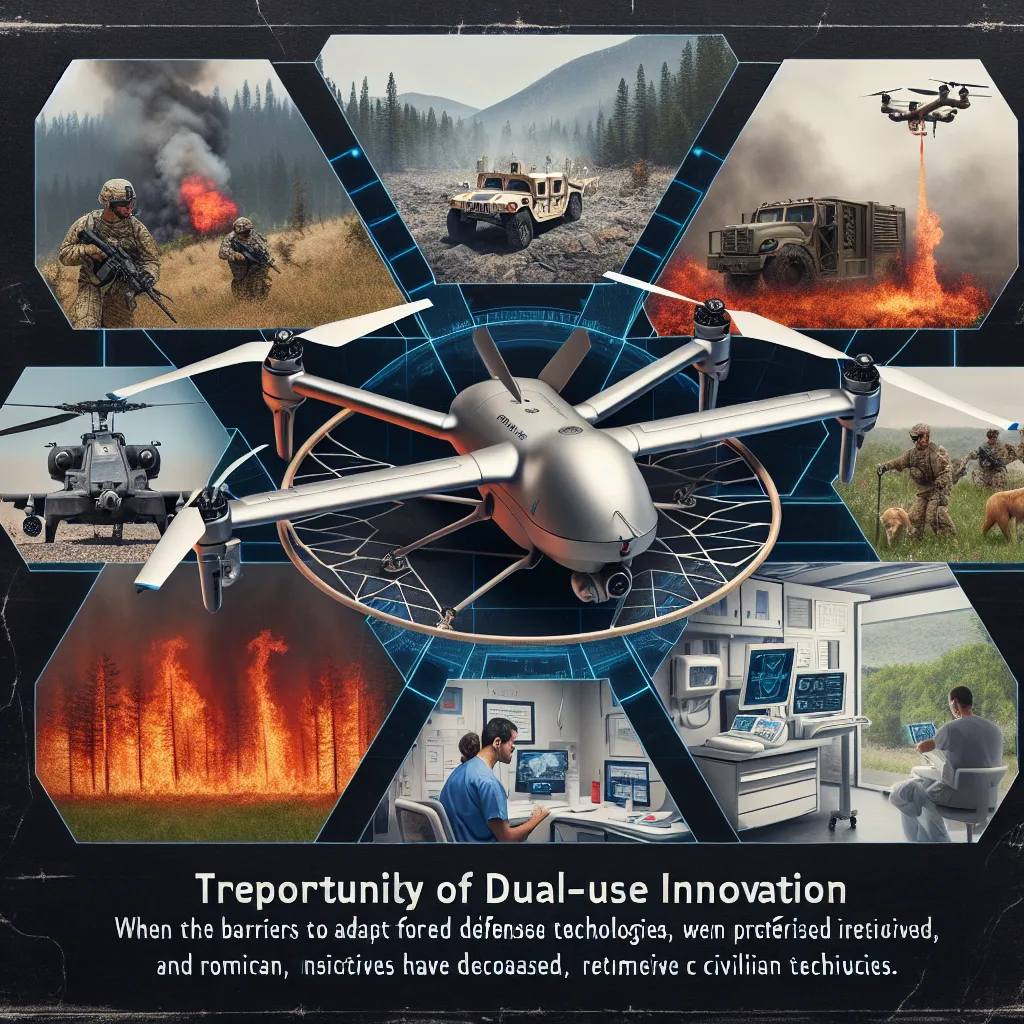
Defense tech now iterates faster than civilian infrastructure, and for the first time the reverse-flow is the opportunity. We need a studio that watches emerging defense capabilities—drones, logistics, remote medical, edge computing—and spins them into civilian companies serving agriculture, utilities, emergency response, or energy. Why now? The barrier to adapting once-exclusive technology has dropped and governments are actively incentivizing dual-use innovation. Imagine a startup that repurposes battlefield-grade drones into precision wildfire response, or remote-care systems for rural hospitals. The thesis is simple: the future arrives first in defense, but the biggest upside is civilian.
Description
No additional description provided.
The Pitch
In recent years, the pace of technological innovation in the defense sector has outstripped that of civilian infrastructure. This development opens a novel and promising business opportunity: repurposing advanced defense technologies for civilian applications. With the decrease in barriers to adapt once-exclusive technologies and governments actively encouraging dual-use innovation, the time is ripe to establish a venture studio focusing on this transformative potential.
Backstory: Traditionally, technological advances flowed from civilian industries into military applications. However, the modern landscape has reversed this dynamic. Emerging defense capabilities, such as drones, advanced logistics systems, remote medical care, and edge computing, now offer opportunities for civilian application. This shift is significant, as technologies initially developed for defense purposes are rigorously tested and perfected before being adapted for broader uses.
Problem: Civilian sectors such as agriculture, utilities, emergency response, and energy face challenges that demand advanced technological solutions. However, the pace of innovation in these areas often lags behind that of the defense industry. This gap leaves critical industries without access to cutting-edge tools that could significantly improve efficiency, safety, and effectiveness.
Solution: The establishment of a venture studio dedicated to transforming emerging defense technologies into viable civilian applications offers a compelling solution. By focusing on dual-use innovation, this studio can identify and adapt battlefield-grade technologies for impactful civilian services.
Product Details: 1. Drones: Develop precision wildfire response systems using advanced drone technology. These drones, equipped with sophisticated sensors and analytics, can provide real-time data to firefighting teams, optimizing their response strategies. 2. Remote Medical Systems: Repurpose remote-care technologies to enhance healthcare delivery in rural and underserved areas. These systems can provide high-quality medical diagnostics and consultation, bridging the gap between healthcare facilities and outlying communities. 3. Edge Computing: Employ edge computing for real-time decision-making in critical infrastructure sectors such as utilities and energy, allowing for faster data processing and response to dynamic conditions.
Tools for Easy MVP Launch: 1. Low-Code Development Platforms: Accelerate the development of minimal viable products with platforms like Bubble or OutSystems, which allow rapid iteration and testing. 2. Open Source Technologies: Leverage existing open-source software and frameworks, reducing development costs and time to market. 3. Prototyping Software: Utilize prototyping tools like Figma and Adobe XD to create initial product designs and simulations.
Go-To-Market Strategy: 1. Partnership Development: Forge partnerships with key players in targeted civilian sectors to align product development with industry needs. 2. Pilot Programs: Implement pilot projects to demonstrate the efficacy and benefits of adopted technologies to potential customers and stakeholders. 3. Government Collaboration: Engage with government agencies to secure funding and regulatory support for dual-use technology applications.
Business Model: Adopt a subscription-based model offering tailored solutions to industry-specific challenges. Additionally, generate revenue through licensing agreements and partnerships with civilian entities and government agencies interested in innovative, dual-use technologies.
Conclusion: The convergence of defense and civilian technological spheres provides a unique opportunity to revolutionize critical civilian industries. By creating a venture studio that transitions battlefield innovations to civilian sectors, not only is the gap in technological advancement bridged, but society as a whole benefits from more resilient, efficient, and forward-thinking solutions.