Transform Consent Banners into Branded Experiences
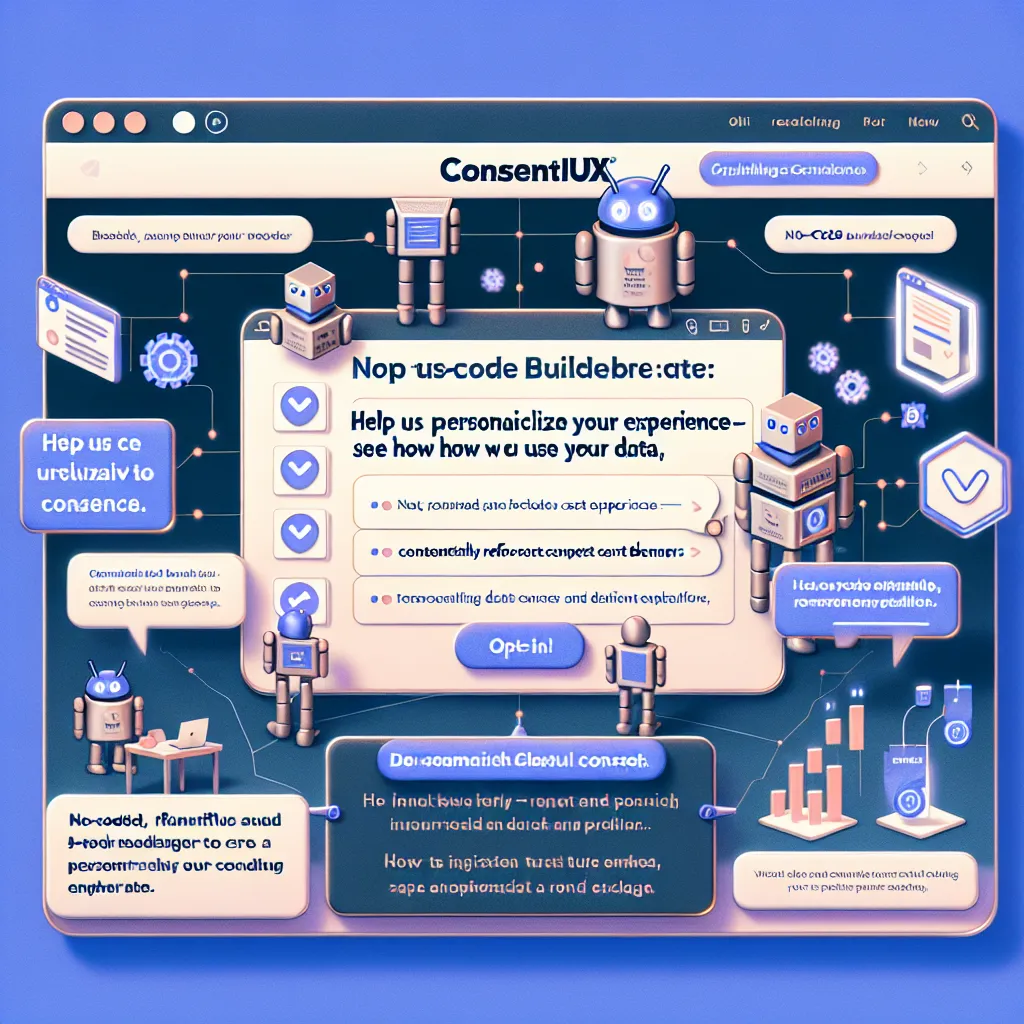
Most consent banners today are legal checkboxes filled with vague language and designed for compliance—not clarity. As consumer privacy awareness grows, these touchpoints represent missed brand opportunities. ConsentUX is a no-code builder that lets marketers turn consent banners into branded, contextual micro-moments—like landing pages—with plain-language copy, real-time personalization, and explanations of value exchange. The Usercentrics report states, “Design your consent banner like it’s a landing page. See it as your first handshake with customers.” By using ConsentUX, an e-commerce brand might display a banner that says, “Help us personalize your cart experience—see how we use your data,” boosting opt-in rates while reinforcing trust. With opt-in rates declining across Europe and “accept all” no longer being the default, a frictionless, design-forward approach to consent has become essential—not just for privacy, but for performance.
Description
No additional description provided.
The Pitch
Most consent banners today, often appearing as legal checkboxes filled with vague language, are primarily designed to meet compliance requirements rather than offer clarity to users. With increasing consumer awareness about privacy, these touchpoints have become missed opportunities for brands to create meaningful connections. ConsentUX aims to address this gap by offering a no-code builder that empowers marketers to transform consent banners into engaging, branded, and contextual micro-moments, akin to landing pages. This solution features plain-language copy, real-time personalization, and a clear explanation of the value exchange.
Understanding the Problem:
As privacy regulations evolve and consumers become more privacy-conscious, the traditional consent banner has not kept pace with these changes. Often, these banners are perceived as obstacles, using legal jargon that is neither user-friendly nor engaging. Many consumers simply click accept all without truly understanding what they're consenting to, especially as that's no longer the default option in some regions. This has led to declining opt-in rates, particularly evident across Europe, where regulations like the GDPR have altered expectations around consent.
The Solution:
ConsentUX offers an innovative alternative by enabling companies to create consent banners that act more like landing pages. These banners can convey the value exchange associated with data sharing in clear, relatable language. By using real-time personalization, brands can engage users at the moment consent is requested, offering transparency and building trust. With ConsentUX, an e-commerce company might display a banner that invites users to help personalize their cart experience, providing insight into how their data will be used and benefiting both parties.
Product Details:
1. **No-Code Builder**: This feature allows marketers to design and deploy custom consent banners without the need for technical expertise, reducing the reliance on IT resources.
2. **Branded Experience**: Brands can fully customize the look and feel of consent banners to align with their visual identity, ensuring a seamless user experience.
3. **Real-Time Personalization**: Tailor consent requests with real-time data to make interactions relevant and engaging for users.
4. **Plain-Language Copy**: Simplify complex legal jargon into clear, understandable language that encourages user engagement and trust.
Tools for MVP Launch:
- Use a no-code platform like Webflow or Bubble to design the interface. - Implement user analytics tools such as Google Analytics to track interactions and opt-in rates. - Integrate with CRM tools like HubSpot to personalize content based on user data. - Employ A/B testing tools like Optimizely to refine copy and design for optimal performance.
Go-To-Market (GTM) Strategy:
1. **Target Audience**: Focus on e-commerce brands and digital marketers who prioritize user experience and data privacy.
2. **Partnerships**: Collaborate with marketing agencies and privacy-focused organizations to expand reach.
3. **Content Marketing**: Develop educational content that highlights the benefits of enhanced consent experiences, such as whitepapers, webinars, and case studies.
4. **Early Adopters**: Offer special pricing or extended trials to early adopters willing to provide feedback and testimonials.
Business Model:
ConsentUX will operate on a subscription-based model with tiered pricing plans based on the number of website visitors or transactions. This ensures scalability for businesses of all sizes and encourages widespread adoption. Special enterprise plans can be offered with additional customization and support.
By addressing the current shortcomings of consent banners and turning them into opportunities for user engagement, ConsentUX not only enhances privacy compliance but also boosts brand performance through improved trust and interaction rates.
---