Transdermal Feasibility Kits for Early Drug Testing
Drug developers waste years testing injection-only biologics without an easy way to evaluate whether transdermal delivery is viable. The breakthrough insulin polymer demonstrates a reproducible method that labs could test early instead of late. A startup can sell turnkey “transdermal feasibility kits” containing polymer conjugates, membrane diffusion chambers, protocols, and validation assays. This doesn’t deliver drugs to patients—it helps scientists rapidly test whether their molecule can cross skin. A small biotech working on a therapeutic peptide could run the kit in-house and discover early that their drug is a patch candidate, saving millions in development costs.
Description
No additional description provided.
The Pitch
In the realm of drug development, biologics have traditionally faced a significant bottleneck: their predominant reliance on injection-based delivery systems. This approach not only affects patient compliance but also prolongs the development cycle due to its inherent complexity. Frequently, researchers spend years advancing their biologics towards injection-based delivery, oblivious to the potential of simpler and more patient-friendly transdermal methods. However, evaluating the feasibility of such methods is usually an afterthought, leading to substantial waste in resources and time when a candidate is deemed unsuitable for skin penetration at advanced stages.
**Proposed Solution**
The recent discovery of a breakthrough polymer for insulin delivery via the skin represents a pivotal shift. This polymer provides a consistent, reproducible method to assess the potential for transdermal delivery of biologics. By applying this advancement early in the drug development pipeline, scientists can more swiftly determine whether their molecules could be viable candidates for patch-based delivery, thus circumventing the limitations and expenses associated with injection-only formats.
**Product Details**
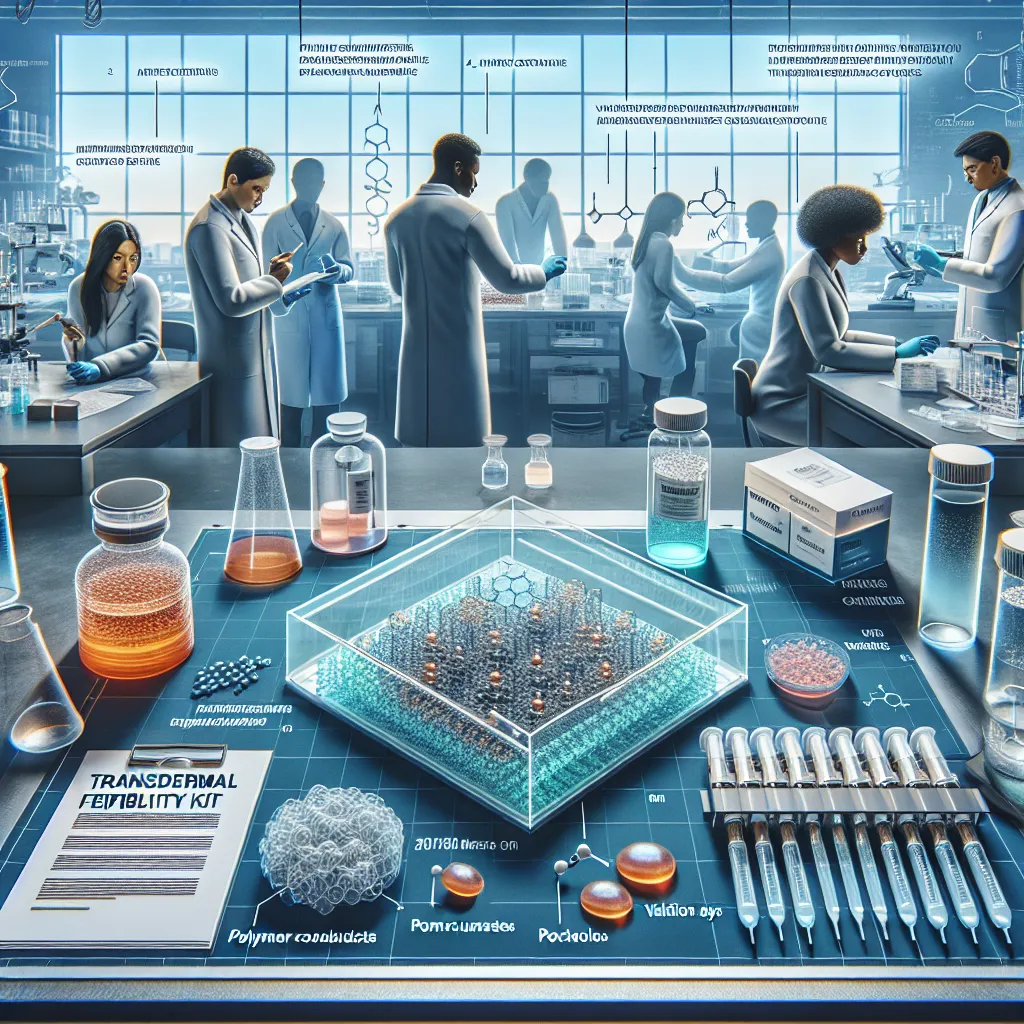
The proposed venture involves creating transdermal feasibility kits tailored for biotech startups and research laboratories. Each kit would contain the following components:
- **Polymer Conjugates**: Proprietary compounds designed to bind with various biologic molecules, aiding their passage through the skin. - **Membrane Diffusion Chambers**: Tools to simulate human skin and assess the rate and effectiveness of molecule penetration. - **Detailed Protocols**: Step-by-step guides for conducting transdermal feasibility tests, ensuring consistency and reliability in results. - **Validation Assays**: Methods to verify the success of the transdermal trials, providing empirical evidence to support patch development potential.
These kits are not designed to deliver drugs directly to patients but rather to empower researchers with the capability to make informed decisions earlier regarding the delivery mechanisms of their biologic candidates.
**MVP Development and Tools**
For those interested in bringing this to market as a minimum viable product (MVP), several steps and tools can facilitate a streamlined launch:
1. **Prototype Development**: - Use 3D printing to create diffusion chamber prototypes. - Partner with chemical manufacturers to synthesize initial batches of the polymer conjugates.
2. **Testing Framework**: - Leverage existing laboratory partnerships to refine assay and protocol designs through iterative testing.
3. **Digital Platform**: - Develop a web-based interface for kit ordering, technical support, and data sharing using platforms like Shopify or WooCommerce for e-commerce functionalities.
4. **Regulatory Compliance**: - Collaborate with regulatory consultants early to ensure all components of the kit meet necessary laboratory standards.
**Go-To-Market Strategy**
- **Target Market**: Initially focus on small- to mid-sized biotech firms and academic research labs specializing in pharmaceutical development. - **Partnerships**: Establish alliances with universities and research institutions to serve as pilot sites and reference accounts. - **Thought Leadership**: Publish white papers and case studies demonstrating the efficacy and cost-saving potential of early transdermal testing. - **Industry Conferences**: Present at key industry events to raise awareness and generate leads.
**Business Model**
The primary revenue will come from the direct sale of the transdermal feasibility kits. A subscription-based model can be offered for labs interested in continuous access to updated conjugates and protocols. Support services for data interpretation and bespoke kit adaptations could provide additional revenue streams, enhancing customer loyalty and engagement.
Overall, this venture has the potential to significantly streamline drug development workflows, offering substantial efficiencies in cost and time, while simultaneously pushing the pharmaceutical industry towards more patient-friendly therapeutic solutions.