Trade School Revolution: Tech-Driven Vocational Future
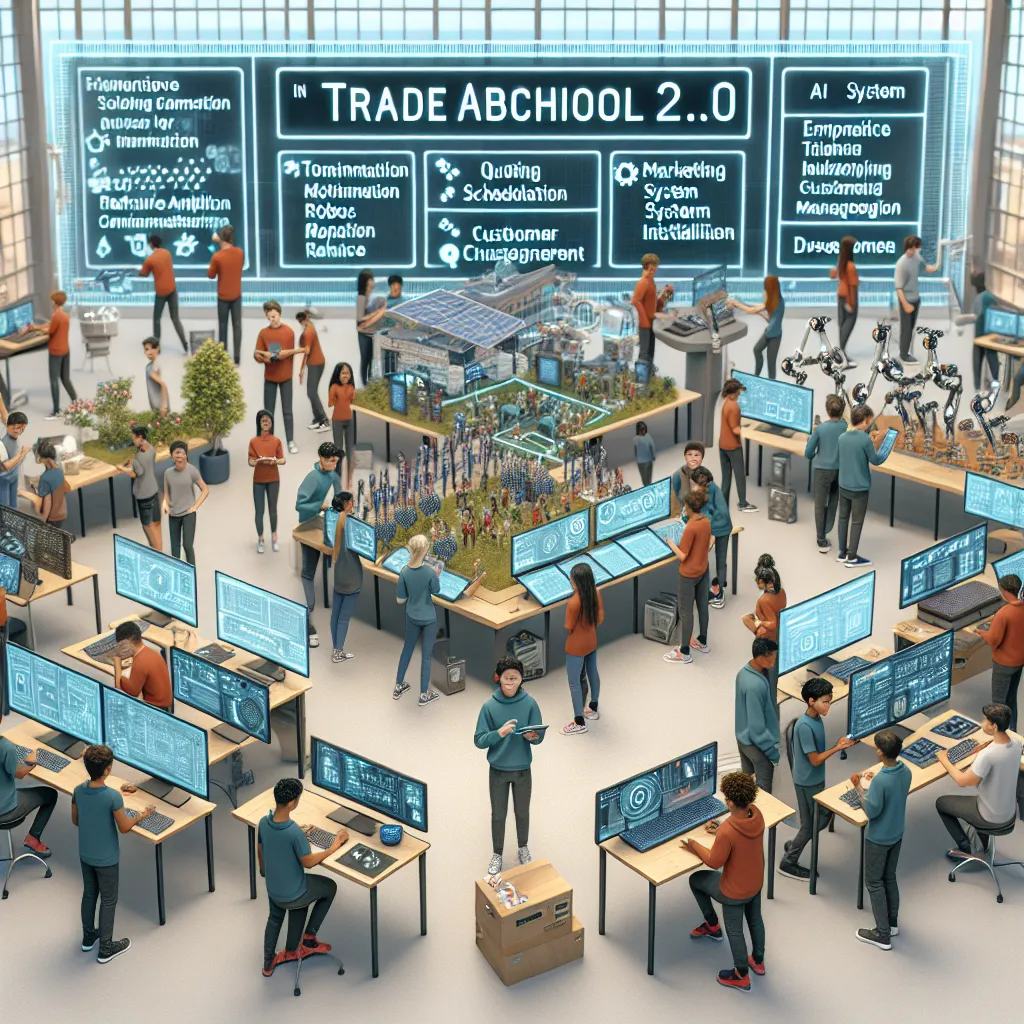
College is no longer the unquestioned default. Tuition is soaring past $200K, entry-level knowledge jobs feel increasingly fragile in an AI-driven economy, and the old promise—degree in, stable career out—no longer feels guaranteed. At the same time, the “unsexy” economy is quietly booming. Plumbers, electricians, HVAC technicians, energy installers, advanced manufacturing operators—people who work with their hands and understand customers—are aging out and in short supply. Trade School 2.0 would reimagine vocational training as a tech-native, AI-augmented launchpad. Not just teaching a skill, but compressing mastery through simulations and AI copilots, then equipping graduates with the tools to run and scale modern service businesses—automated quoting, scheduling, marketing, customer management. The timing is powerful: electrification, infrastructure upgrades, reshoring, and a coming wave of reskilling as AI reshapes white-collar work. The next generation of “trades” may include robotics maintenance, drone repair, solar optimization, and AI system installation. This isn’t a fallback path. It’s a reframing of ambition in a world where leverage increasingly lives in the physical layer.
Description
No additional description provided.
The Pitch
In recent years, the traditional path of securing a degree from a four-year college no longer guarantees stable employment. With tuition costs soaring above two hundred thousand dollars and the rise of AI introducing vulnerabilities to entry-level knowledge jobs, this outdated equation—degree in, stable career out—has lost its reliability. As college becomes a less attractive default option, an often overlooked sector is experiencing significant growth: the trades.
This sector comprises essential roles such as plumbers, electricians, HVAC technicians, energy installers, and advanced manufacturing operators. These are the individuals who work directly with their hands, offering valuable services in day-to-day life. Many skilled professionals in these trades are nearing retirement, leading to a shortage just as demand is increasing. The modern economy thus presents an opportune moment for rethinking vocational training through the vision of Trade School 2.0.
The challenge lies in modernizing vocational training to appeal to a new generation while aligning it with tech-forward careers in the physical economy. Trade School 2.0 aims to address this by creating a tech-native, AI-augmented launchpad for vocational expertise. This would not merely involve the teaching of skills but would also focus on accelerating mastery through the use of simulations and AI assistants. Furthermore, the program would equip graduates with the digital tools necessary to operate and expand contemporary service businesses in areas such as automated quoting, scheduling, marketing, and customer management.
The timing for this initiative could not be more suitable. With electrification, infrastructure enhancements, and reshoring on the rise, alongside the need for reskilling prompted by AI's impact on white-collar work, the trades industry is ripe for transformation. The anticipated new wave of trades could expand to include careers in robotics maintenance, drone repair, solar optimization, and AI system installation. These emerging fields demonstrate that this path is not a fallback but a recalibration of ambition for an economy where value increasingly occupies the physical layer.
To bring Trade School 2.0 to life, several steps can be taken:
1. Product Development: Design a curriculum that integrates both traditional trade skills and modern technology. Use platforms that support AI and simulation-based learning to create interactive and practical educational experiences.
2. Tools and Technologies: Partner with technology providers to incorporate AI-driven copilots and tools into the training modules. Use scheduling, marketing, and customer management software tailored for service businesses to offer graduates a comprehensive toolkit.
3. Minimal Viable Product (MVP) Launch: Begin with a pilot program focusing on a specific trade with high demand, such as HVAC technology. Use feedback to refine the curriculum and tools before expanding into additional trades.
4. Go-To-Market (GTM) Strategy: Position Trade School 2.0 as a forward-thinking alternative to traditional college education. Highlight the leverage in physical jobs and the high demand in the current labor market. Use digital marketing strategies to reach tech-savvy individuals exploring alternatives to higher education.
5. Business Model: Offer a hybrid revenue model that includes tuition fees, certification programs, and premium access to advanced tools and resources. Consider partnerships with businesses for job placements and apprenticeships to enhance the value proposition.
Overall, Trade School 2.0 is an opportunity to rethink vocational education for a tech-driven era, ensuring the workforce is prepared to meet the demands of an evolving and increasingly tech-integrated world.