Touring Exhibits for Historic Artifacts
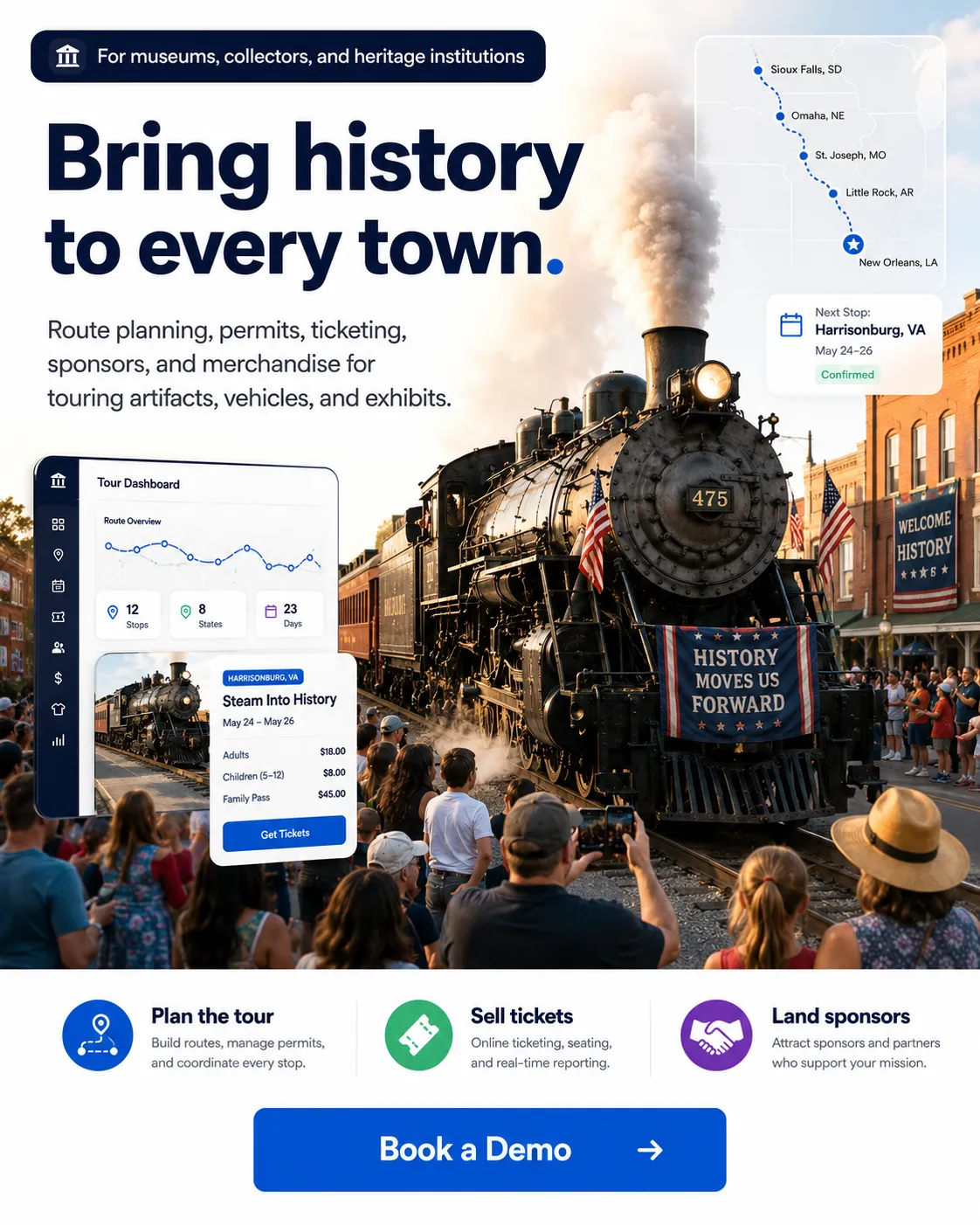
A giant historic steam locomotive called Big Boy is traveling across the country, and thousands of people are showing up just to see it pass through their town. It reveals a bigger opportunity: there are countless rare machines, vehicles, artifacts, movie props, spacecraft, fossils, and pieces of history sitting in storage because their owners do not know how to turn them into touring attractions. A startup could handle the route planning, permits, ticketing, sponsorships, merchandise, security, and promotion required to take these objects on the road. Instead of people having to visit a museum, the museum would come to them. Imagine a retired NASA spacecraft visiting 25 cities, with families buying timed tickets and local companies sponsoring each stop.
Description
No additional description provided.
The Pitch
A business like this works because awe is scarce, but inventory is not. The world is full of objects that are too famous, strange, large, fragile, or emotionally loaded to behave like ordinary exhibits, yet they are often treated as storage problems. A locomotive, capsule, dinosaur skeleton, race car, movie creature, or presidential aircraft can have more public magnetism than a whole museum wing, but the expertise to move it, insure it, contextualize it, and monetize it is fragmented. The valuable asset is not the object itself; it is the ability to make dormant cultural gravity portable.
The deeper insight is that many people will not travel for culture, but they will gather when culture interrupts their normal geography. A national museum visit requires planning, money, time off, and proximity. A rare object arriving forty minutes away becomes a local event, closer to a parade, eclipse, or championship trophy tour than a museum exhibition. That changes the psychology. People are not merely buying admission; they are participating in the one weekend their town becomes part of a larger story.
This also creates a better economic shape for owners of rare artifacts. Museums and collectors often face a painful tradeoff: preserve the object unseen, or exhibit it in one fixed location to a limited audience. A touring model lets a single asset earn repeatedly without needing permanent foot traffic. More importantly, it can turn preservation from a cost center into a reason the object survives. The public is often willing to fund the continued care of something once they have stood in front of it, photographed it, and felt that it belongs partly to them.
The sponsorship potential is unusually natural because the event is locally scarce and emotionally clean. A bank sponsoring a banner ad is forgettable; a bank helping bring a lunar module or legendary locomotive to town becomes attached to a memory families keep. Local institutions want ways to appear civic rather than merely commercial, and these tours give them a stage that feels generous, educational, and specific to place.
The most compelling version of the company would become a kind of traveling operating system for wonder. Its defensibility would come from accumulated trust: with artifact owners, insurers, municipalities, venues, preservationists, and audiences. Once it proves it can move precious things without diminishing them, it becomes the obvious home for the next impossible object that deserves to be seen.