Tornado Safety Mattress
A mattress with straps or handles to easily lift and use as protection during a tornado. Could be licensed to mattress manufacturers or sold as an aftermarket product.
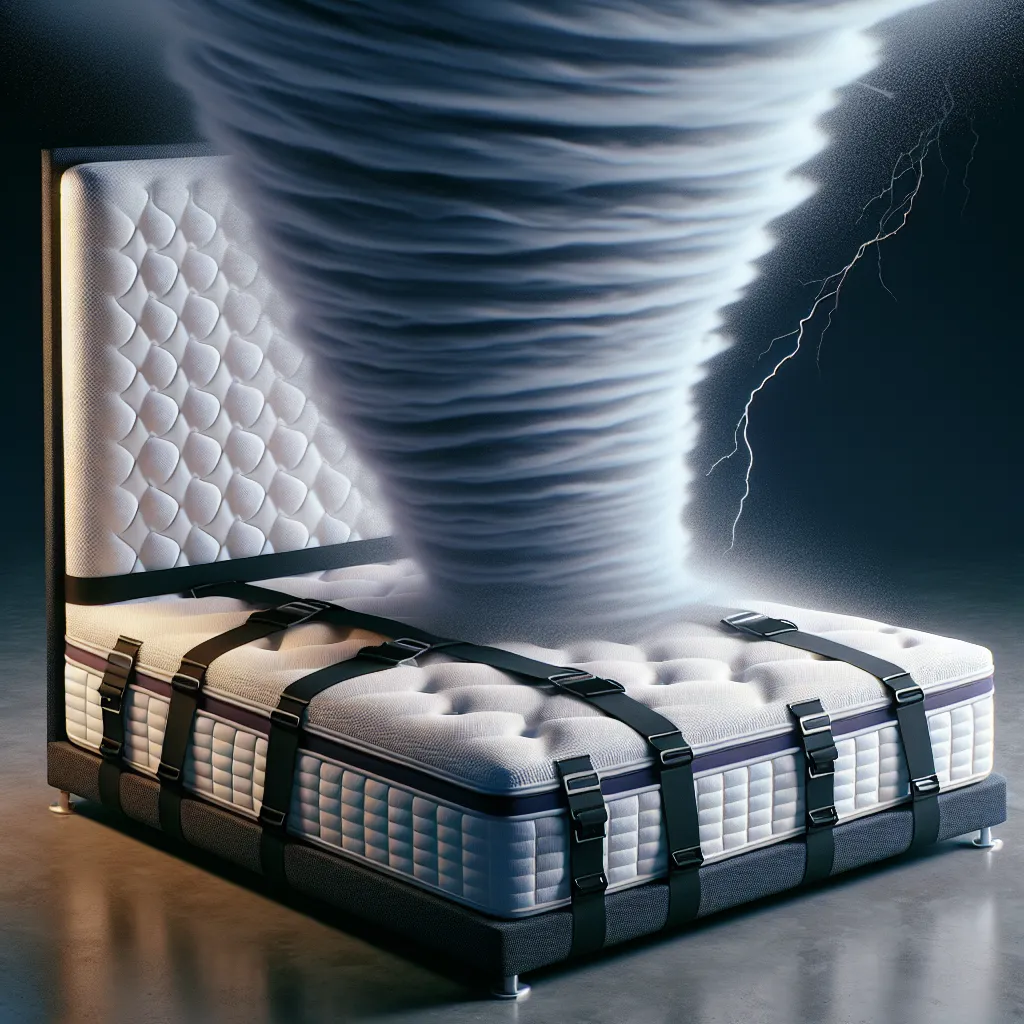
Description
No additional description provided.
The Pitch
Tornadoes and severe storms pose a significant danger in many parts of the world, particularly in "Tornado Alley" in the U.S. While most people are aware of basic safety procedures—such as taking cover in basements or bathtubs—few realize how difficult it can be to use everyday items like mattresses for added protection. During emergencies, it’s often advised to cover oneself with a mattress to protect against flying debris, but traditional mattresses are heavy and cumbersome to lift quickly. There’s a clear gap in the market for a practical, easy-to-use solution that enhances protection during tornadoes and severe weather.
Solution: Our product, the Tornado Safety Mattress, provides an innovative yet simple solution to help people take cover more effectively. It’s a mattress equipped with built-in, easy-to-grip straps or handles that allow individuals to quickly lift and maneuver it for use as a protective shield in emergencies. The straps are designed to make lifting the mattress effortless, enabling it to be placed over individuals, especially in bathtubs or safe rooms. In addition, the mattress itself is reinforced with lightweight but strong materials to offer better protection from flying debris.
Go-to-Market Strategy (GTM):
Partnership with Mattress Manufacturers: License the safety feature to mattress brands, allowing them to incorporate it into their existing product lines. This can be marketed as a premium feature for families in tornado-prone regions.
Direct to Consumer (Aftermarket Product): Sell the safety straps as an aftermarket accessory that can be attached to existing mattresses. This option provides a low-cost entry point for customers who don't want to replace their mattresses but still want to enhance safety.
Home Safety Retailers: Work with retailers like Home Depot or Lowe’s, where customers already shop for disaster preparedness items, to feature the Tornado Safety Mattress and strap kits as part of home safety sections.
Emergency Preparedness Campaigns: Partner with local government or emergency preparedness programs to promote the mattress as part of tornado safety kits, especially in high-risk regions.
Leverage FEMA and Red Cross campaigns for co-marketing opportunities.
Content Marketing: Utilize educational videos demonstrating how quickly and easily the mattress can be used during an emergency. These videos could be shared through social media, YouTube, and disaster preparedness websites, showing real-life scenarios where the mattress could have saved lives.
Business Model:
Licensing to Mattress Manufacturers: The mattress straps can be licensed to mattress companies as a built-in feature. Mattress manufacturers would pay a licensing fee per unit, offering an extra selling point for consumers concerned about safety. This could be marketed as part of a "tornado-safe" line of bedding.
Direct Sales of Aftermarket Straps: The straps can be sold separately for consumers to attach to their existing mattresses, priced at $29.99 to $49.99. This is an affordable way for homeowners to increase their safety without investing in a new mattress.
Affiliate Partnerships with Safety Brands: Partner with companies that sell home safety kits, storm shelters, or insurance companies to offer the Tornado Safety Mattress as an add-on product.
Offering insurance discounts for using certified safety products could also be explored.
Subscription-Based Emergency Alerts: For additional recurring revenue, the company could offer an app-based subscription service that notifies users of severe weather alerts, tornado warnings, and how to use their safety mattress in real-time. This could be bundled with the product or sold separately.
Target Audience:
Families in Tornado-Prone Regions: The primary market consists of families living in high-risk tornado zones like the U.S. Midwest and Southeast. Households with children are especially likely to invest in enhanced protection.
Emergency Preparedness Enthusiasts: This segment includes individuals and families who proactively plan for natural disasters and prioritize safety features in their homes.
Homeowners and Renters in Severe Weather Areas: Both homeowners and renters seeking affordable ways to improve safety during storms, particularly those without access to basements or storm shelters, are ideal targets for this product.
Mattress Retailers: Mattress companies interested in expanding their product offerings with innovative features that appeal to safety-conscious consumers.
Revenue Potential:
Licensing Fees: If major mattress manufacturers incorporate the safety handles, the company could earn recurring licensing fees for every unit sold. Assuming partnerships with three or four major mattress brands, this could generate significant revenue across a broad geographic market. Aftermarket Sales: Aiming for 100,000 households in tornado-prone areas within the first year, with an average price of $40 per strap kit, potential revenue could reach $4 million in the U.S. alone. Global expansion to regions with frequent storms could increase that figure dramatically.
Subscription-Based Emergency Alerts: Offering a tornado alert and instructional app for $1.99 per month could generate a consistent recurring revenue stream, potentially adding $200,000 annually if 100,000 users subscribe.
Conclusion: The Tornado Safety Mattress is a simple yet highly effective product that addresses a critical safety gap in tornado-prone areas. By focusing on partnerships with mattress manufacturers and offering a low-cost aftermarket solution for existing mattresses, this business model has the potential for wide adoption. Combined with a robust marketing strategy that leverages viral content, emergency preparedness partnerships, and educational campaigns, this product can generate significant revenue while helping protect families during life-threatening storms.