Tokenized Exchange for Transparent Bankruptcy Claims Trading
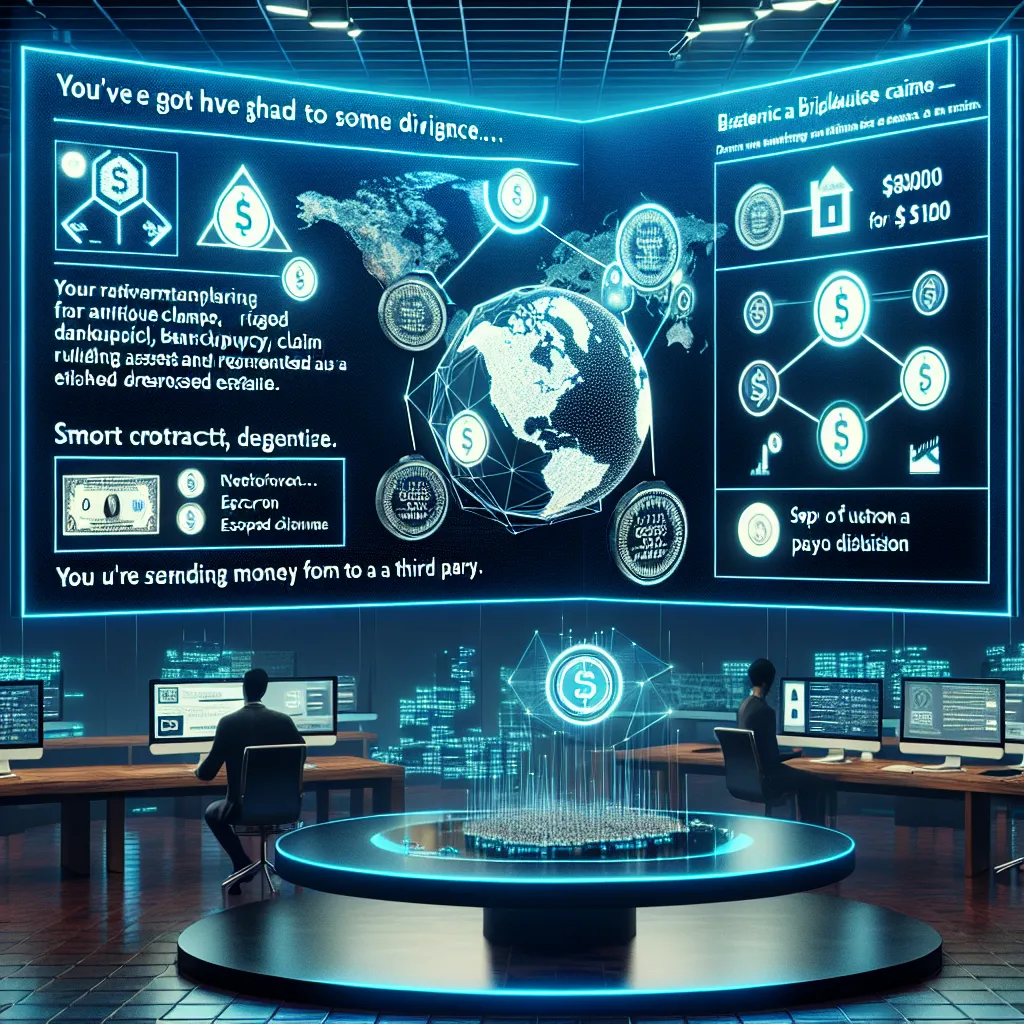
Bankruptcy claims are difficult to trade, dominated by obscure private deals and inaccessible legal processes. The lack of transparency, standardization, and liquidity keeps this high-yield asset class limited to a few insiders. The solution is a tokenized exchange where claims are fractionalized into digital assets and traded on a regulated, transparent platform. Smart contracts could automate verification, escrow, and payout distribution, making distressed investing safer and accessible globally. As Scott Galloway said, “You’ve got to do some diligence… you’re sending money to a third party”—pointing to the operational friction in today’s process. A user might invest $100 in a tokenized Anthropic-linked claim from the FTX estate, track its value, and receive payouts automatically upon resolution, democratizing a lucrative but gated asset class.
Description
No additional description provided.
The Pitch
In the complex world of finance, bankruptcy claims have emerged as a highly lucrative asset class. However, their trading is hindered by a lack of transparency, standardization, and liquidity. Currently, these high-yield opportunities remain accessible only to a handful of insiders who are adept at navigating obscure private deals and complex legal processes. This presents a substantial barrier for many investors who could potentially benefit from these opportunities.
The proposed solution is a tokenized exchange platform designed to facilitate the trading of bankruptcy claims by transforming them into fractionalized digital assets. This platform would operate on a regulated and transparent basis, offering a streamlined process for both seasoned and new investors. By employing blockchain technology and smart contracts, the platform would automate key processes such as verification, escrow, and payout distribution. This ensures not only the reduction of operational friction but also the enhancement of security and efficiency in trading distressed assets on a global scale.
The envisioned product would allow a user to invest in a range of tokenized claims, such as those potentially linked to the FTX estate or similar high-profile cases. For instance, an investor could allocate $100 towards a specific tokenized claim, monitor its fluctuating value over time, and receive automated payouts once the associated bankruptcy case reaches a resolution. This process democratizes access to a previously gated asset class, opening doors to a broader spectrum of investors.
To transform this concept into a Minimum Viable Product (MVP), several modern tools and technologies would be instrumental. Blockchain platforms like Ethereum provide a robust framework for creating and managing smart contracts. Tokenization protocols such as ERC-20 or newer standards could offer the necessary infrastructure for handling the fractional assets. Additionally, leveraging identity verification services and compliance tools ensure that the platform adheres to financial regulations, earning customer trust and meeting legal requirements.
The Go-To-Market (GTM) strategy would involve engaging with both traditional and digital marketing channels to reach a targeted audience of potential investors. Educational content, such as webinars and whitepapers, could be pivotal in explaining the complex nature of bankruptcy claims and highlighting the advantages of participating in a tokenized exchange platform. Building strategic partnerships with legal experts, financial advisors, and blockchain innovators can further enhance credibility and reach.
From a business model perspective, the platform could generate revenue through transaction fees on trades, listing fees for new claims, and premium features such as advanced analytics. Additionally, a subscription model for access to in-depth research and analysis on various claims might attract seasoned investors seeking deeper insights.
Overall, the creation of this tokenized exchange platform not only holds the potential to revolutionize the trading of bankruptcy claims but also aligns with the broader trend of democratizing financial markets and making high-yield investment opportunities accessible to a global audience.