Thought-Based Authentication: Secure, Silent Access
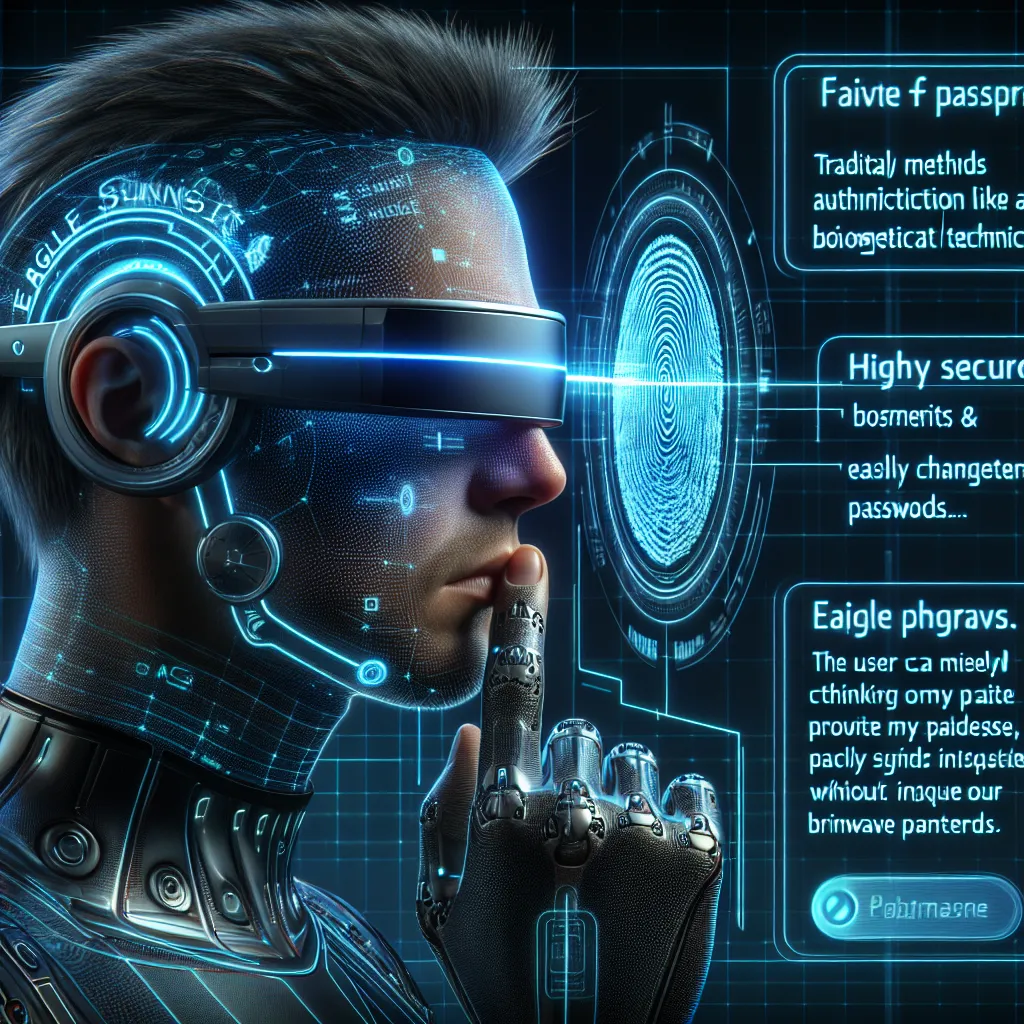
Passwords are forgettable, biometrics can be spoofed, and voice-based systems are noisy and insecure. Solution: A silent, thought-only authentication method where a user “thinks” a private passphrase to unlock devices or log in. Brainwave patterns tied to that phrase are unique, combining the security of biometrics with the changeability of passwords. Why Now: The mental-password concept has been validated at >98% reliability, and consumer BCIs are improving in both accuracy and affordability. Example: A user puts on lightweight AR glasses, thinks “Eagle sunrise,” and their banking app unlocks instantly—no typing, no speaking.
Description
No additional description provided.
The Pitch
Imagine a world where your thoughts are the key to your digital life. Traditional authentication methods are increasingly seen as cumbersome and vulnerable. Passwords can be forgotten or stolen, biometrics can be spoofed, and voice recognition fails in noisy environments. This narrative explores the development of a revolutionary thought-only authentication system, providing a seamless and secure way to access your digital devices and applications.
**Backstory**
As digital interactions become more integral to our lives, the need for secure and user-friendly authentication solutions has become paramount. Passwords have long been a weak link, easily breached or forgotten. Biometric technology, while initially promising, has its pitfalls with potential for spoofing and privacy concerns. Amidst these challenges, advances in Brain-Computer Interfaces (BCIs) offer a new frontier for authentication. Leveraging unique brainwave patterns tied to individual thoughts, this approach blends the security of biometrics with the adaptability of traditional passwords.
**Problem**
The current state of digital security is fraught with challenges:
1. Passwords are often forgotten and can be easily compromised through hacking techniques. 2. Biometric systems like fingerprint scanners and facial recognition are vulnerable to spoofing and raise privacy issues. 3. Voice-based authentication struggles with accuracy in noisy or mixed environments. 4. The constant evolution of security threats necessitates a more dynamic and reliable solution.
**Solution**
The envisioned solution is a silent, thought-only authentication method that leverages advancements in BCIs to provide a secure and convenient way to access devices and applications. By thinking of a private passphrase, users can authenticate themselves through unique brainwave patterns. This combines the security of biometrics with the flexibility and changeability of passwords, addressing many of the vulnerabilities present in current methods.
**Product Details**
1. **Technology**: Utilize consumer-friendly Brain-Computer Interfaces which capture unique brainwave patterns associated with a particular thought or phrase, ensuring high reliability.
2. **User Experience**: Lightweight wearables like AR glasses equipped with BCI sensors will capture the user's thought-based passphrase seamlessly.
3. **Security Layer**: Brainwave patterns are unique and difficult to replicate, adding an extra layer of security while allowing for passphrase updates similar to password changes.
4. **Platform Integration**: Designed to integrate with existing operating systems and applications, providing a universal authentication method that can replace or augment current systems.
5. **Reliability**: Initial studies and prototypes show a reliability rate of over 98%, ensuring a dependable user experience.
**Tools for Initial Launch**
To bring this innovative solution to market, the following tools and resources will simplify the launch process:
1. **Development Platform**: Utilize platforms like Emotiv or Neurosky to develop the BCI technology with existing hardware and software kits.
2. **Prototyping Tools**: Leverage rapid prototyping tools such as Arduino or Raspberry Pi to create early versions of the hardware.
3. **Software Development**: Collaborate with software developers to create integration scripts and APIs for seamless application within existing digital ecosystems.
4. **User Testing**: Conduct extensive user testing to refine the user experience and improve reliability.
**Go-to-Market Strategy**
1. **Target Audience**: Initially focus on tech enthusiasts and early adopters who value privacy and security, gradually expanding to broader consumer markets.
2. **Partnerships**: Collaborate with wearable tech companies and app developers to incorporate the technology into existing platforms and devices.
3. **Awareness Campaign**: Launch a campaign highlighting the unique benefits of thought-based authentication, emphasizing security, convenience, and privacy.
4. **Pilot Programs**: Implement pilot programs in sectors requiring high security, such as finance and healthcare.
**Business Model**
1. **Product Sales**: Offer BCI-enabled wearables at a competitive price point to tech-savvy consumers.
2. **Subscription Service**: Provide a subscription-based model for software updates and advanced security features.
3. **Enterprise Solutions**: Develop tailored solutions for businesses and organizations requiring enhanced security measures.
4. **Licensing**: License the technology to hardware manufacturers and software developers to broaden market reach.
In conclusion, the shift to thought-based authentication is not just a futuristic vision but a practical solution to pressing security challenges. By leveraging advancements in BCIs and a strategic go-to-market plan, this innovation has the potential to redefine how we think about digital security.