The Future of Phone-Free Spaces
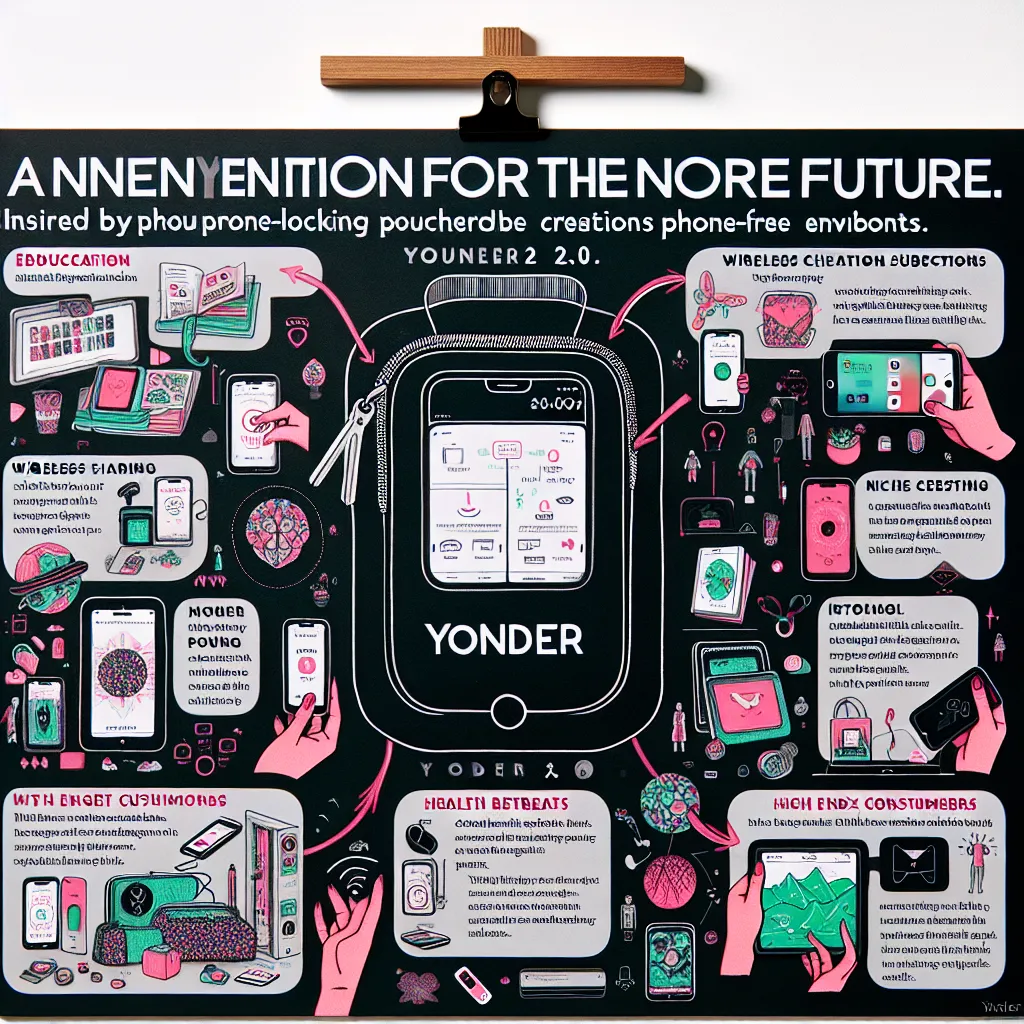
This builds on the success of Yonder’s phone-locking pouches, offering advanced features like wireless charging, remote unlocking for large groups, and customized designs for various industries. This next-gen solution targets schools, event venues, wellness retreats, and affluent consumers, making it easier to create phone-free environments. The business model includes subscription services for institutions, premium direct sales to individuals, and experiential revenue from digital detox retreats. By leveraging influencer-driven marketing and niche customization, Yonder 2.0 is set to revolutionize how we disconnect from our devices.
Description
No additional description provided.
The Pitch
In a world dominated by smartphones, finding ways to disconnect has become increasingly important for mental health, productivity, and meaningful human interaction. Yonder, the pioneer in phone-securing pouches, has introduced a practical solution for events, schools, and other spaces where being phone-free fosters focus. However, Yonder is only scratching the surface. The future demands a smarter, more versatile solution that goes beyond just locking up phones—one that integrates convenience, caters to specific markets, and even creates phone-free experiences.
Why the World Needs Yonder 2.0 The smartphone is both our greatest tool and our biggest distraction. Research consistently shows that constant access to our devices diminishes productivity, worsens anxiety, and disrupts our social lives. While we evolved over millions of years to live in natural environments, in just the past few decades, smartphones have rewired our attention spans and mental health. Children in schools, attendees at live events, and people in wellness settings all suffer from the “fentanyl” of distraction.
Yonder’s basic pouch is a great start, but it’s only the beginning. Today’s market requires a more elegant, feature-rich solution that serves not just events but schools, workplaces, wellness centers, and high-end consumers. This is where Yonder 2.0 comes in—an advanced phone-securing solution that is customized for different markets, more convenient to use, and ready to integrate into everyday life.
Product Vision: Yonder Phone Pouch 2.0 Yonder 2.0 transforms the simple concept of locking away phones into a multifaceted product. Here’s what it can offer:
Charging Capabilities: While the phone is locked away, the pouch can wirelessly charge devices, solving the common issue of low battery life at the end of the day. Remote Unlocking for Large Groups: Schools and large event venues can remotely unlock pouches simultaneously for large crowds, streamlining the process and eliminating the hassle of individual unlocking. Niche Versions for Different Markets: Tailored versions of Yonder 2.0 can cater to specific industries: Education: Pouches designed for classrooms, with easy mass-unlock systems. Health & Wellness: Luxurious, calming designs for wellness retreats and spas. Affluent Consumers: High-end leather-bound pouches that reflect a sense of exclusivity, perfect for wealthy families or premium venues like private clubs. Courtrooms & Legal Settings: Discreet, tamper-proof pouches to ensure no disruptions or privacy breaches during legal proceedings. Go-To-Market Strategy (GTM) Market Segmentation and Targeting:
Schools: There’s a growing demand in education to limit smartphone distractions. Target school districts, private schools, and charter schools, especially those focused on innovative learning environments. Schools are incentivized to embrace solutions that improve student focus and reduce anxiety, making Yonder 2.0 a perfect fit. Premium Events and Venues: Music festivals, comedy clubs, and theaters can create richer audience experiences by encouraging phone-free participation. Private events and weddings are also target markets. Wellness and Retreat Centers: With the growing demand for digital detox retreats, high-end spas and wellness centers are natural partners. Affluent Consumers: Market to affluent families who understand the value of disconnection and are willing to pay a premium for a well-designed product. Influencer and UGC Strategy:
Micro-Influencers: Partner with mental health advocates, productivity coaches, and wellness influencers. These influencers would promote the benefits of going phone-free in both everyday life and at events, creating organic, relatable content that resonates with target audiences. Celebrity Endorsements: As the product gains traction, seek out endorsements from celebrities who value mindfulness or digital detoxing (e.g., musicians, actors, athletes). Educational Campaigns: Develop content showcasing the benefits of phone-free spaces, particularly for children’s learning and family bonding. Partnerships with Institutions:
Partner with schools, corporate training programs, event organizers, and wellness centers to provide bulk solutions. Collaborate with government and legal institutions to develop solutions for courtrooms and other sensitive environments. Revenue Model Subscription-Based Service: Schools, theaters, and event venues can subscribe to a monthly service plan, which includes the Yonder 2.0 pouches, regular software updates for remote unlocking, and technical support.
Example: A school with 1,000 students could pay a $10 monthly fee per student, generating $120,000 annually from a single institution. Direct-to-Consumer Sales: Premium versions of Yonder 2.0 for affluent families and individual users can be sold as one-time purchases, starting at $199 and scaling to $499 for luxury versions with features like wireless charging and high-end materials.
Experiential Revenue: Phone-free retreats and wellness events can charge participants for curated experiences that focus on mindfulness and digital detoxing. These experiences could be designed as weekend retreats, with pricing ranging from $500 to $3,000 per participant, depending on location and exclusivity.
Enterprise Solutions: Offer large corporations or event venues bulk orders of Yonder 2.0 pouches along with software that enables them to manage multiple pouches. This could be sold as a SaaS model, where companies pay based on the number of users/devices managed.
Target Audience Schools and Educational Institutions: With rising concerns over students’ mental health and the impact of smartphone distractions, schools will be primary targets. The education sector is already moving toward more phone-free environments, and Yonder 2.0 provides an efficient, scalable solution.
Event Venues and Theaters: Concerts, comedy clubs, and private event organizers benefit from ensuring that attendees stay present and engaged without the distraction of their phones.
Health and Wellness Industry: Wellness retreats and spa centers can offer guests the opportunity to fully unplug, integrating Yonder 2.0 pouches into their digital detox programs.
Affluent Families and High-End Consumers: This market is increasingly aware of the dangers of phone addiction and values mindfulness. A luxurious Yonder 2.0 pouch designed to fit their aesthetic and lifestyle is an attractive offering.
Corporate & Legal Markets: Companies that want to promote productivity in meetings or maintain confidentiality in sensitive discussions can benefit from Yonder 2.0. Courtrooms can also adopt Yonder to ensure phone-free spaces during hearings.
Future Growth As Yonder 2.0 takes hold, the potential for broader market penetration is enormous. By expanding into international markets, partnering with governments, and offering more tailored versions for every niche, Yonder 2.0 could quickly become the global standard for phone-securing solutions. Additionally, as phone addiction becomes more recognized, creating entirely phone-free experiences will shift from niche retreats to mainstream wellness offerings.
In summary, Yonder 2.0 isn’t just about locking up phones—it’s about reclaiming presence and focus in a digitally overwhelmed world. By innovating beyond the basic pouch and strategically targeting markets ready for change, this startup is poised to shape the future of how we interact with our devices and each other.