Tariff Cost Insurance for Importers
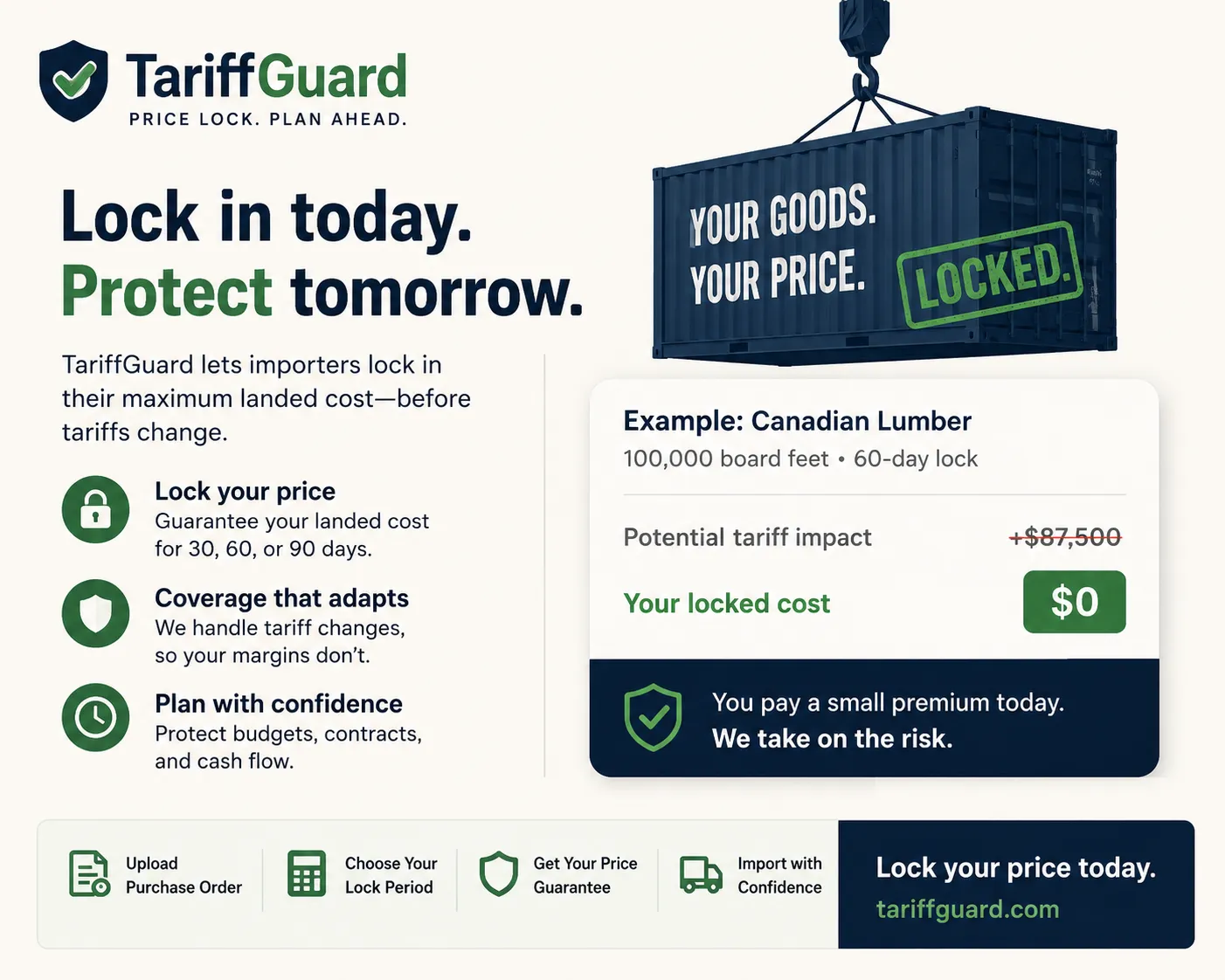
Insurance for surprise tariffs. Businesses can usually calculate what a tariff costs after it happens, but they still have no easy way to protect themselves before the rules change. This startup would let importers lock in the maximum landed cost of a product for the next 30, 60, or 90 days, combining customs data, supplier alternatives, inventory reservations, and specialty insurance behind the scenes. Trade policy is changing faster than companies can move factories or rewrite supplier contracts, creating demand for a financial product that turns political volatility into a predictable expense. A retailer ordering Canadian hockey sticks could pay a small premium today to guarantee that new tariffs will not destroy its Christmas margins.
Description
No additional description provided.
The Pitch
A tariff shock is especially painful because it arrives in the narrow space between commitment and sale. By the time a company has placed a purchase order, booked production, planned promotions, and promised delivery dates, it has often made the commercial decision but not yet absorbed the political risk. That gap is large enough to ruin margins, but short enough that traditional hedging tools and supply-chain redesigns do not really fit it.
The interesting business is not simply “tariff insurance.” It is the creation of a tradable ceiling on landed cost. Importers do not need perfect predictions about trade policy; they need to know the worst-case economics of an order before they commit working capital. A product that converts an unknown policy outcome into a known input cost would let merchants make ordinary decisions again: whether to buy, how much to buy, what price to advertise, and how much margin to reserve.
This works because the risk is fragmented in exactly the way insurance likes. Individual importers experience tariff changes as sudden and existential, but across countries, product codes, shipment dates, and suppliers, the exposure can be pooled, modeled, and partially offset. One company’s disaster is part of a larger portfolio of probabilistic policy events. The hard part is not noticing that tariffs are risky; it is assembling enough transaction-level data to price that risk before the cargo moves.
The company would also sit at a valuable junction between information and action. Customs data, policy monitoring, alternative sourcing, inventory timing, and freight decisions are usually treated as separate disciplines. But when the customer is trying to protect a margin window, those things become one problem. The insurer does not merely pay a claim; it can often reduce the claim by rerouting supply, reserving inventory earlier, or identifying a substitute origin before the tariff takes effect.
The deeper appeal is that trade volatility is becoming a permanent cost of operating internationally, but most businesses still manage it with spreadsheets, panic buying, and vague contract clauses. A company that makes policy risk feel like a line item would become more valuable as the world becomes less predictable. It would not eliminate geopolitics from commerce; it would make geopolitics something a purchasing manager can budget for.