Tactical AR Game: Thermal Vision Glasses
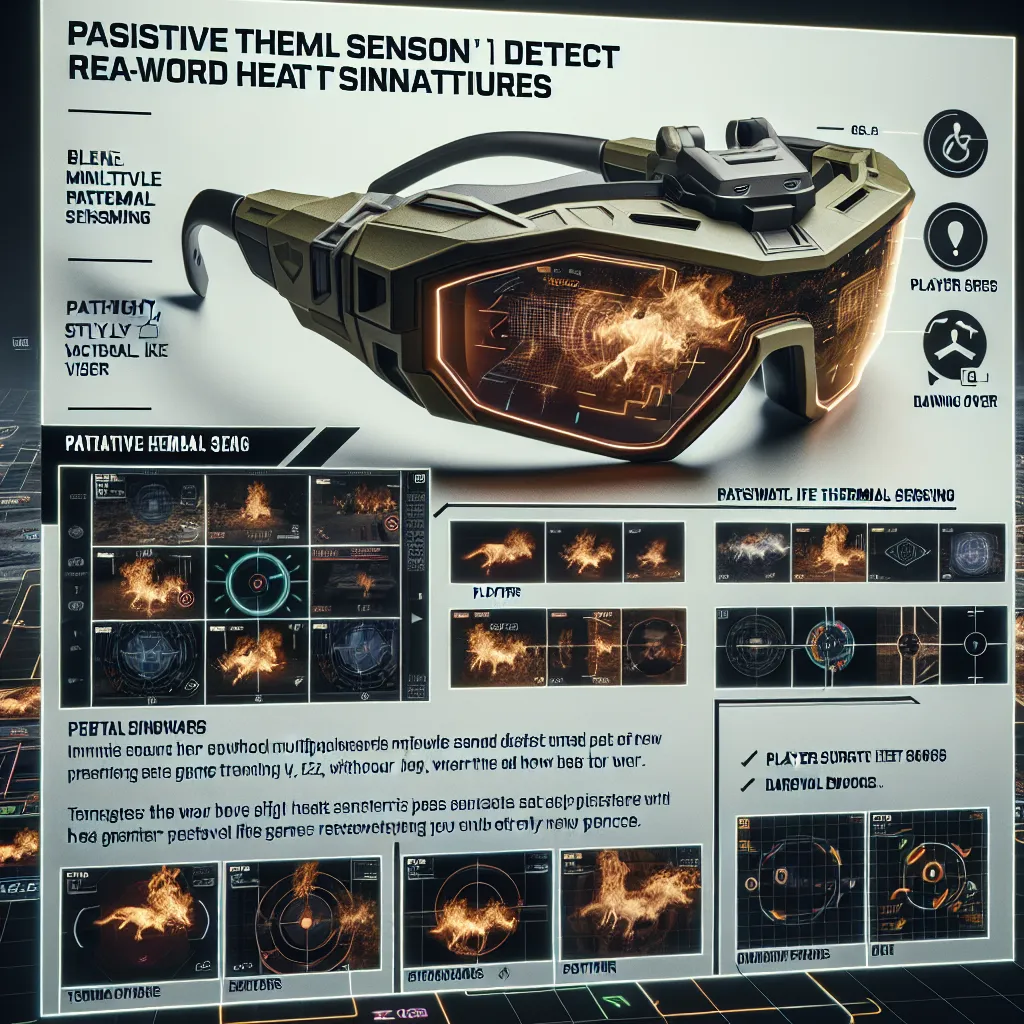
Augmented reality games typically focus on visuals and sound. But imagine a tactical stealth game where your glasses detect real-world heat signatures—other players, pets, or decoys—and use that as part of gameplay. The MIT tech enables passive thermal sensing without draining power or requiring expensive gear. Think laser tag meets Predator vision, but built into stylish, lightweight eyewear. This would open up entirely new genres of indoor/outdoor multiplayer gaming, blending real-life heat sources with virtual overlays.
Description
No additional description provided.
The Pitch
Augmented reality (AR) games have traditionally centered around immersive visuals and engaging soundtracks to create captivating experiences. While enjoyable, these elements have largely remained on the surface of what this technology can achieve. Imagine a world where the physical environment interplays intricately with digital enhancements—particularly through the sense of heat. This concept envisions a groundbreaking tactical stealth game that integrates thermal detection into the AR framework, offering players an unprecedented level of interaction.
**Background**
The field of AR gaming has seen significant advancements in recent years, with games becoming more sophisticated and integrating more aspects of our physical world. However, they have mostly relied on external inputs like stored maps, GPS, and visual markers. Until recently, tapping into the thermal domain required equipment that was not only costly but also cumbersome and power-intensive, making it impractical for widespread consumer use.
**Problem**
Current AR games lack a multi-sensory experience that could elevate gameplay to new dimensions. Players are yearning for a more immersive adventure that taps into their instincts in unexpected ways. The absence of affordable technology to seamlessly incorporate thermal sensing into AR has kept this area untapped.
**Solution**
The solution comes in the form of an innovative AR game that uses cutting-edge technology for passive thermal sensing. By embedding these capabilities into sleek, wearable glasses, an entirely new genre of gaming can be realized. This sensing technology, developed by researchers at MIT, enables the detection of heat signatures within the environment, offering endless possibilities, such as detecting opponents in a stealth game scenario or identifying non-player characters disguised as heat decoys.
**Product Details**
The core product comprises lightweight eyewear equipped with an advanced thermal sensor. These glasses are designed to: - Detect real-world heat signatures, allowing for interactive gameplay. - Incorporate virtual overlays to augment players’ environments with real-time information about nearby heat sources. - Provide a comfortable, fashionable design that ensures prolonged wearability without fatigue. - Operate efficiently with low power consumption, extending battery life and eliminating the need for frequent charging.
**Tools and Resources for Launching Minimum Viable Product (MVP)**
To bring this product to market effectively, the following tools and steps can be utilized: - Rapid prototyping using AR development platforms such as Unity or Unreal Engine. - Leveraging open-source thermal imaging libraries to develop the core functionality. - Incorporating feedback loops through initial beta tests with lead users for real-world insights. - Collaboration with hardware manufacturers to refine the product design and ensure reliability.
**Go-to-Market Strategy**
A comprehensive GTM strategy involves: - Building a strong community of AR gaming enthusiasts through targeted social media campaigns and online communities. - Partnering with gaming influencers and AR content creators to showcase the product's unique capabilities. - Launching initial MVPs in strategic locations, such as gaming events, to generate buzz and gather user feedback. - Creating immersive videos demonstrating the unique blend of thermal detection and AR gaming to appeal to broader audiences.
**Business Model**
The business model could follow: - A direct-to-consumer approach with pre-orders to gauge initial interest and finance production runs. - Subscription-based model offering exclusive content, such as new game scenarios or virtual worlds. - Collaborations with game developers for exclusive releases on the platform. - Licensing opportunities for use in various sectors, expanding beyond gaming into educational or security applications.
By integrating thermal detection into AR gaming, this concept elevates the art of storytelling and player immersion to a level previously thought unattainable. With the right technology, strategic partnerships, and marketing execution, this could redefine how players experience AR games.