Tableside Cooking Restaurants for Everyday Foods
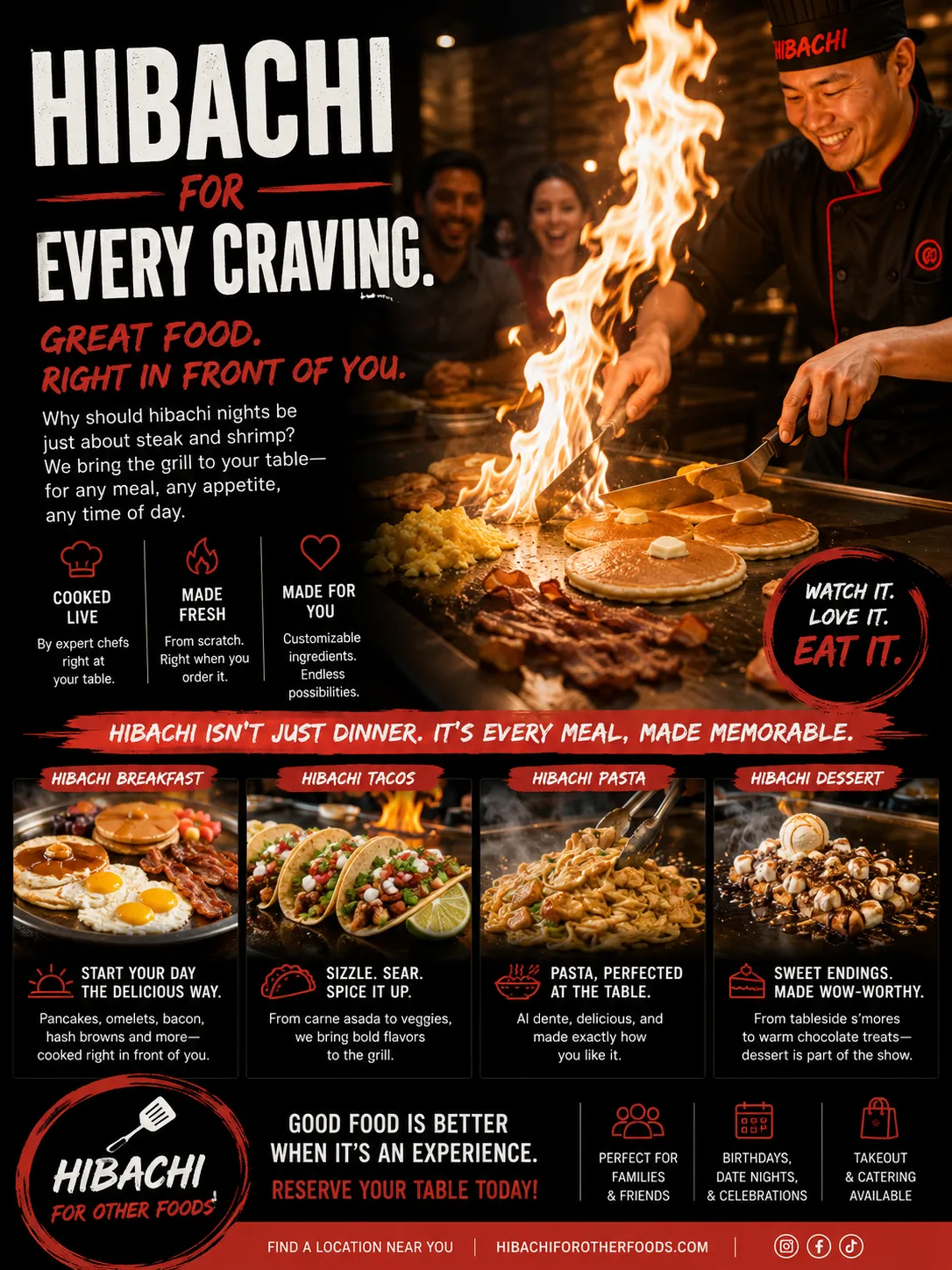
Hibachi figured out something restaurants mostly ignore: watching your food get made is fun. Why did we decide this should only apply to fried rice and onion volcanoes? Give me hibachi breakfast. A chef making pancakes, eggs, bacon, and French toast in the middle of the table. Hibachi tacos where tortillas are pressed in front of you. Hibachi dessert. Restaurants keep trying to invent experiences people will leave the house for. The experience might just be moving the kitchen six feet closer.
Description
No additional description provided.
The Pitch
The oldest restaurant cost center into the product. Most restaurants hide the labor, heat, timing, and craft that make the meal worth paying for, then spend separately on décor, branding, and entertainment to make the room feel alive. A tableside griddle collapses those categories. The cook is not just producing the meal; they are producing the atmosphere, the pacing, the memory, and the reason the meal could not have been delivered in a cardboard box.
The deeper insight is that many ordinary foods are more theatrical than restaurants give them credit for. Pancakes bubbling before the flip, bacon curling on hot steel, tortillas puffing, sugar caramelizing, cheese melting, eggs setting in real time: these are tiny dramas people already enjoy watching in short-form videos and open-kitchen counters. Hibachi works not because shrimp is inherently more entertaining than other foods, but because the format gives guests permission to look. Breakfast, tacos, and dessert may actually be better suited to this than steak, because they are familiar enough that people notice the transformation.
It also answers a hard question for casual dining: what can a restaurant sell that isn’t being eroded by delivery, meal kits, or better grocery options? The defensible part is not the recipe; it is synchronized presence. A group is seated around a shared heat source, eating at the tempo of the cook, reacting to the same moments. That makes the meal feel social without requiring guests to manufacture conversation from nothing. The table itself becomes the event.
The format could also make repeat visits feel less repetitive than theme restaurants usually do. The base ingredients are inexpensive, flexible, and craveable, but the performance changes with the chef, the group, the time of day, and the dish. A breakfast griddle in front of children on a Saturday has a different emotional shape than a late-night dessert table or a taco dinner with friends, even if the underlying operating idea is the same.
The most interesting part is that it reframes “experience” as proximity rather than novelty. Restaurants often chase spectacle by adding more: louder rooms, stranger menus, elaborate interiors. This idea suggests the opposite. The magic may come from removing one wall between guest and kitchen and letting people enjoy the simple pleasure of seeing food become food.