Synthetic Brain Tissue for Ethical Neurogenetic Research
Description
No additional description provided.
The Pitch
**Exploring the Synthetic Brain Tissue Engine: A New Frontier in Neurogenetics Research**
**Backstory**
For decades, neuroscience research has grappled with significant limitations, primarily the scarcity of real human brain tissue and the strict ethical boundaries that regulate such studies. Traditional organoids offer some insights, but their capacity to accurately reflect human psychiatric diseases is limited. Furthermore, animal models frequently fall short in mapping specific aspects of human cognition and neurological disorders. In response to these challenges, advancements in synthetic biology have paved the way for an innovative approach that promises to revolutionize the study of brain function and disorders.
**The Problem**
The current methodologies in studying human brain function are constrained by several factors:
1. **Limited Availability of Real Tissue**: Accessing human brain tissue for research is fraught with ethical and logistical challenges.
2. **Ethical Constraints**: The need to adhere to stringent ethical standards limits the scope of experiments, particularly those involving live tissues or human subjects.
3. **Inadequate Disease Modeling**: Existing models like organoids or animal brains often fail to accurately represent human cognitive processes and psychiatric conditions.
**The Solution**
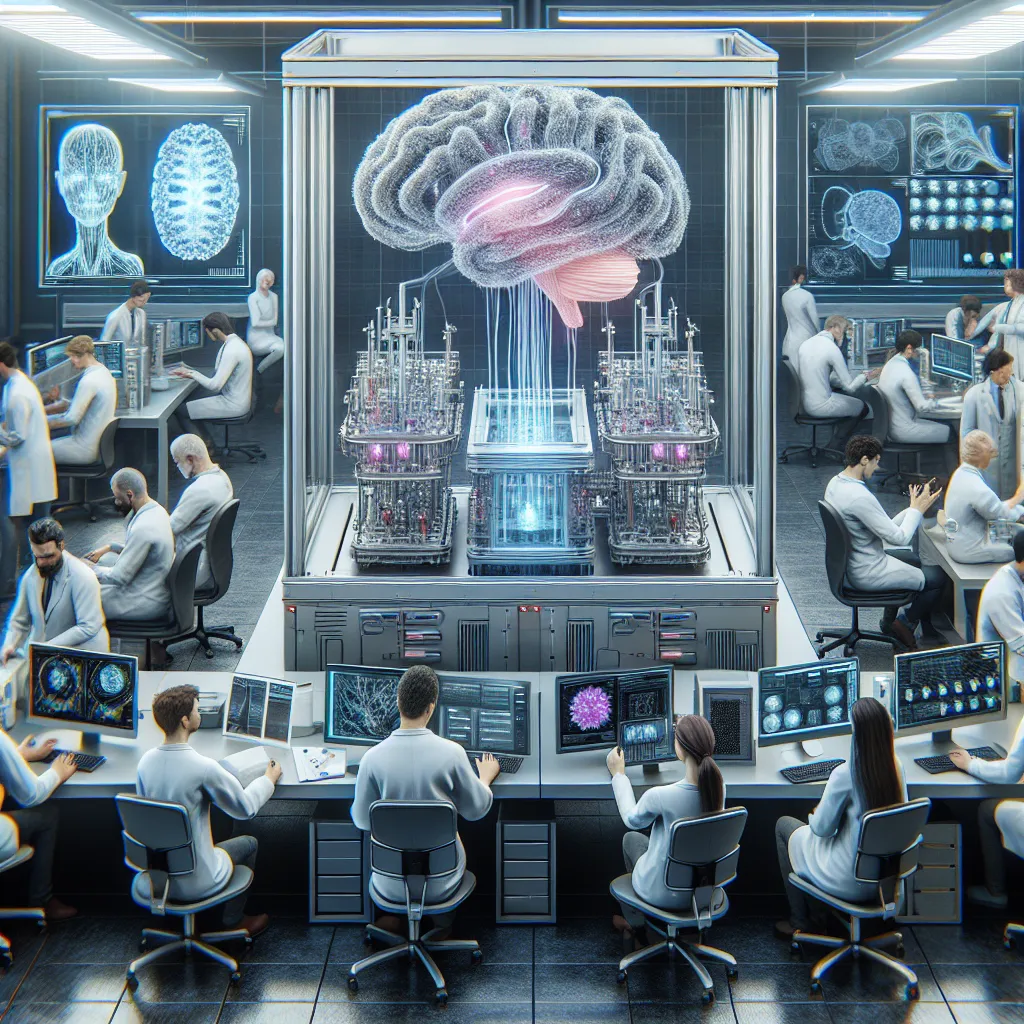
The Synthetic Brain Tissue Engine presents an innovative platform allowing laboratories worldwide to cultivate neural tissue from synthetic chromosomes. Designed specifically to mimic or enhance particular cognitive traits, this solution offers an ethically sound alternative to live subject experimentation. By incorporating synthetic DNA into neural research, scientists can now explore neurogenetic conditions, cognitive processes, and even facets of synthetic consciousness without crossing ethical lines.
**Product Details**
The Synthetic Brain Tissue Engine is a pioneering platform that combines synthetic DNA technology with neural tissue cultivation. Key features include:
- **Customizable Chromosomes**: Researchers can design synthetic chromosomes tailored to specific cognitive traits or neurological conditions. - **Scalable Tissue Growth**: The platform can support the growth of neural tissue at various scales, suitable for both small-scale laboratory research and extensive pharmaceutical trials. - **Ethical Compliance**: This tool fully adheres to ethical guidelines, as it avoids the use of live human subjects.
Example Application: A pharmaceutical company interested in ADHD can use this platform to create neural tissue expressing a synthetic gene believed to be influential in the disorder. They can conduct cellular-level tests and understand drug interactions before transitioning to human trials.
**Tools for Building an MVP**
To develop a Minimum Viable Product, the following tools and strategies can facilitate rapid deployment:
1. **CRISPR Technology**: Utilize this gene-editing tool for designing and integrating synthetic chromosomes with precision.
2. **Bioreactors**: Implement scalable bioreactors for consistent and controlled tissue growth.
3. **Data Analytics Suite**: Use advanced software to analyze genetic data and model outcomes as the tissue develops.
4. **Cloud-based Collaboration Platforms**: Facilitate global collaborations among neurogenetic researchers and pharmaceutical companies.
**Go-to-Market (GTM) Strategy**
- **Target Audience**: Focus on neuroscience research laboratories, pharmaceutical companies, and academic institutions. - **Partnerships**: Build alliances with pharma companies for pilot projects and with research institutions for validation studies. - **Conferences and Workshops**: Host workshops at medical and scientific conferences to demonstrate the capabilities and applications of the technology. - **Scientific Publications**: Publish results and breakthroughs in reputable journals to gain credibility and visibility.
**Business Model**
1. **Subscription Service**: Offer a subscription model for continuous access to the platform and its updates.
2. **Customization Fees**: Charge for bespoke chromosome designs tailored to specific research needs.
3. **Consultation Services**: Provide expert consultation for setting up and optimizing experiments on the platform.
4. **Partnership Models**: Develop revenue-sharing agreements with pharmaceutical companies using the platform for drug development.
By pioneering the use of synthetic DNA in neurogenetics, the Synthetic Brain Tissue Engine not only addresses the pressing challenges of traditional research methods but also opens up new avenues for discovery in the cognitive sciences. As the understanding of human cognition and consciousness deepens, this platform positions itself as an indispensable tool in the modern scientific arsenal.