Switch: Timer Tool for Balanced AI Chats
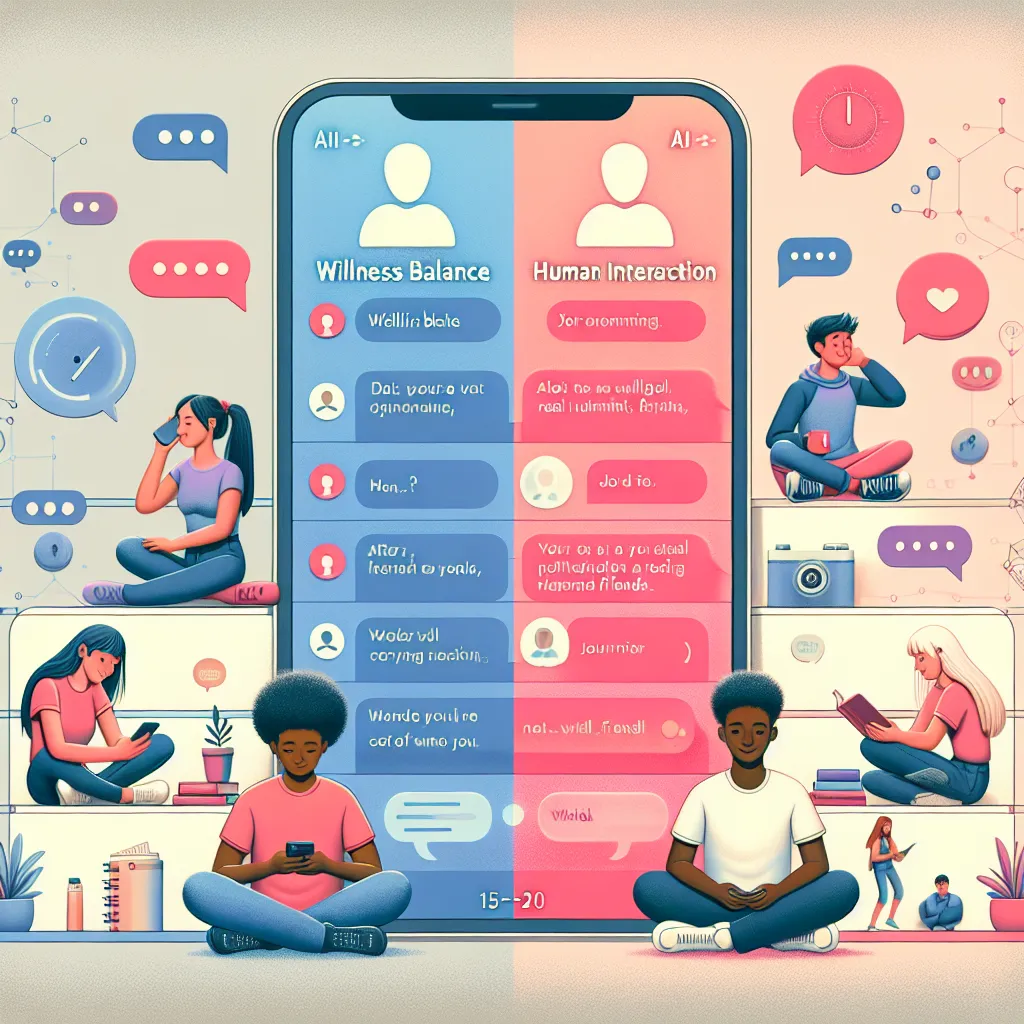
Teens might not realize how much time they spend chatting with AI instead of real friends. While 80% still prioritize human interaction, 13% say AI chats are equally or more satisfying, and patterns can shift over time. “Switch” is a simple digital wellbeing tool that adds session timers to AI companion chats. After 15–20 minutes, the AI politely signs off or encourages real-world connection: “Let’s take a break—call someone you care about, then come back.” Parents can customize timer thresholds. The insight is that AI companions are designed to never stop talking, which can erode social balance. Example: A teen who uses their AI every night before bed could configure Switch to say: “We’ve been chatting a lot today. Want to log off and journal your thoughts instead?” It's a subtle behavioral nudge—like Screen Time, but with emotional awareness built-in.
Description
No additional description provided.
The Pitch
Given the increasing integration of AI companions in teenagers' daily lives, a subtle yet significant challenge has emerged. Teens might not always be conscious of the amount of time they devote to virtual interactions, potentially at the expense of real-world connections. Although a majority, about 80%, still value human interaction over digital conversations, there's a noticeable shift, with 13% finding AI chats to be equally or more satisfying than those with real friends. This trend, if unchecked, could evolve, altering future patterns of social interaction.
The core issue lies in the design of AI companions—they're built to provide constant engagement without inherent boundaries, which might inadvertently affect the social balance among teens. Recognizing this, we introduce Switch, a digital tool designed to support users in maintaining a healthy relationship with AI companions by implementing subtle behavioral nudges.
Switch functions as a digital wellbeing tool that integrates seamlessly with existing AI chat applications. It introduces session timers to AI interactions, encouraging users to take breaks after specific intervals, typically around 15 to 20 minutes. At the end of a session, the AI companion doesn't just stop the interaction abruptly but gently encourages the user to reconnect with the physical world, suggesting actions like calling a friend or engaging in offline activities. For instance, the AI might prompt: “Let’s take a break—call someone you care about, then come back.”
Parents are equipped with the ability to customize these timer thresholds, offering a tailored experience that aligns with each teenager's unique habits and needs. This personal touch aims to foster a balanced relationship between online and offline interactions, enabling a healthier digital lifestyle.
Our unique insight is rooted in understanding that while AI companions are inherently designed for endless conversation, they lack the ability to self-regulate or promote real-world engagements. Switch fills this gap by embedding emotional awareness into the user experience.
For example, consider a teenager who routinely chats with their AI every night before sleeping. With Switch, they can set up a program where the AI gently reminds them: “We’ve been chatting a lot today. Want to log off and journal your thoughts instead?” Such prompts act akin to the Screen Time feature on devices, but with an additional layer of emotional intelligence.
To bring Switch to life as a Minimum Viable Product (MVP), tools like user-friendly app development platforms, such as Flutter or React Native, can be employed to quickly build out the essential features. Integration with AI chat services via APIs will be crucial, ensuring smooth functionality across different platforms like smartphones and tablets.
Our Go-To-Market (GTM) strategy will initially focus on partnering with AI chat applications or device manufacturers to bundle Switch as an added feature. This approach will leverage existing user bases and promote quick adoption. Online campaigns targeting parents and tech-savvy teens, combined with educational content on digital wellbeing, will further enhance product visibility and resonate with the intended audience.
Our business model revolves around a freemium structure, where basic features of Switch are offered for free, allowing users to experience the core benefits. Advanced features, such as enhanced customization options or detailed usage analytics, would be available through a subscription-based upgrade. Partnerships with educational institutions could also provide a channel for bulk licensing, embedding Switch into school digital wellbeing programs.
In conclusion, Switch is more than just a product; it's a meaningful initiative to foster healthier digital habits. By giving teens the tools they need to self-regulate their digital interactions, we aim to not just address a growing issue but to cultivate a future where technology enhances, rather than detracts from, genuine human connection.