Survivor Audition and Competition Training Camp
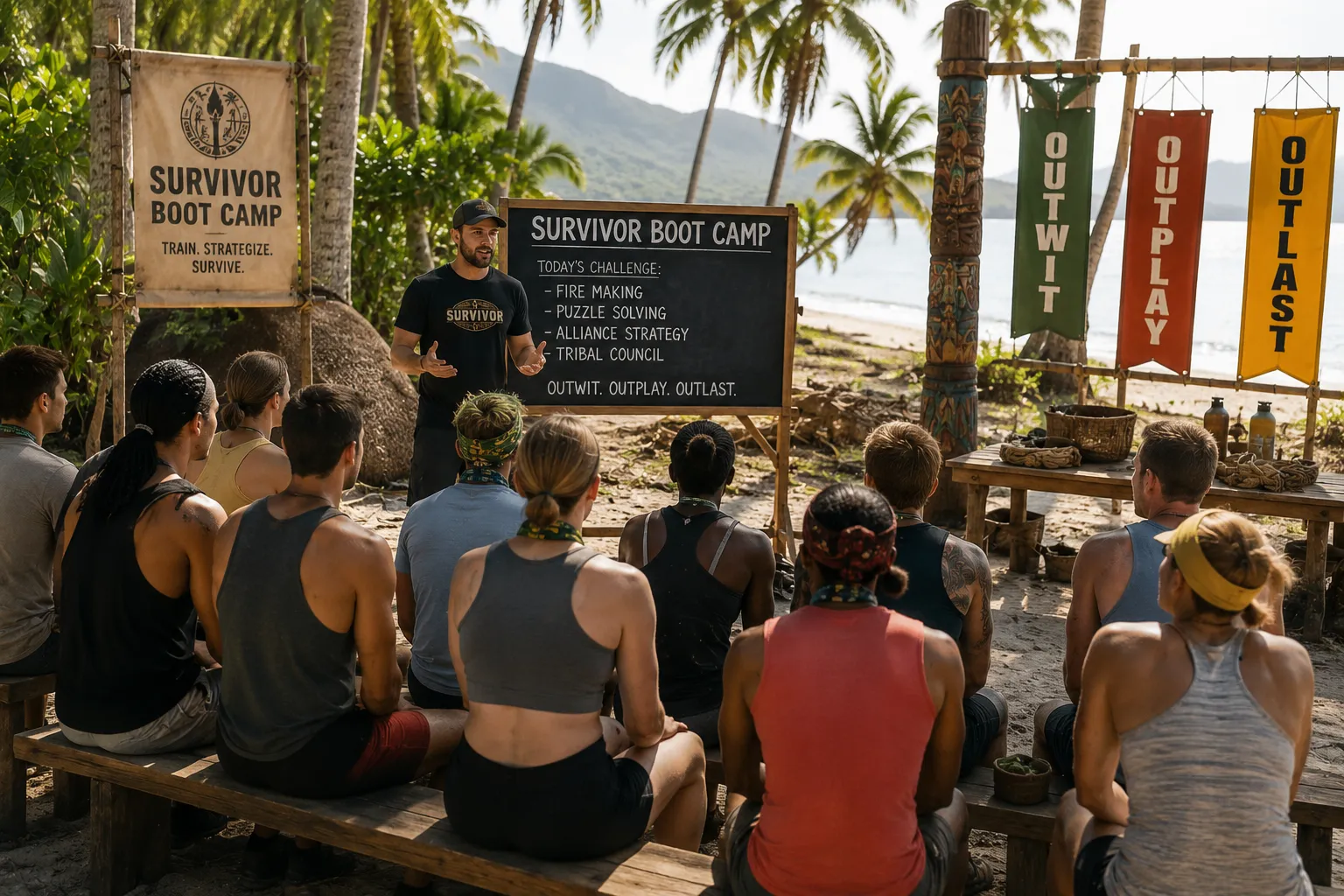
Thousands of people dream of competing on reality competition shows like Survivor, but have no idea how to stand out during casting or prepare for the unique physical, strategic, and social challenges of the game. Most applicants simply submit a video and hope for the best despite the process becoming increasingly competitive. Survivor Boot Camp combines an immersive training experience with professional casting preparation, teaching contestants everything from fire-making and puzzle solving to alliance strategy, confessionals, and creating a compelling audition video. Graduates leave with a professionally produced application and firsthand experience of simulated tribal councils and challenges. As reality television continues to produce celebrities and production companies actively encourage new applicants each season, there's an opportunity to professionalize what is currently an unstructured process. Imagine spending a weekend at an authentic Survivor-style camp, completing challenges, receiving coaching from former contestants, and leaving with a polished audition ready to submit.
Description
No additional description provided.
The Pitch
For a certain kind of fan, getting cast is no longer just a fantasy; it is a socially legible achievement, a story that can define a person for years. That makes preparation feel rational even when the odds are long. People already spend heavily on pageant coaches, sports camps, college admissions consultants, and acting classes for outcomes that are uncertain but identity-shaping. This sits in the same category: paid preparation for a rare chance to become the person you privately imagine yourself to be.
The strongest part of the idea is that it sells an experience even if the customer never gets on the show. Most audition services are judged only by whether they produce the desired outcome. Here, the preparation itself can be emotionally complete: a weekend of deprivation, competition, strategy, confessionals, and social gameplay is a form of adult fantasy camp. That lowers the burden on casting success as the only measure of value. The buyer can justify it as training, but the product also functions as a memorable adventure built around a cultural obsession.
There is also a useful asymmetry in the market: casting teams need vivid personalities, but applicants are often bad at translating themselves into television. Many people who might be compelling on-screen do not know how to frame their story, speak in clean emotional beats, or show why they would create conflict, humor, loyalty, or surprise. The business is not merely making applicants “better”; it is helping them become more readable to a machine that sorts humans into archetypes. That is a strange and valuable skill.
Former contestants give the model unusual credibility because they possess knowledge that feels inaccessible, specific, and almost folkloric. Their value is not just tactical advice, but translation: what the island felt like versus what viewers saw, what mistakes seemed small until they became fatal, what kinds of people surprised everyone. This turns alumni from short-lived television personalities into teachers of a craft that only exists because the audience believes the game is both entertainment and a test of character.
The bigger insight is that fandoms mature into markets when participation becomes possible. Watching is passive, applying is lonely, but training creates a community of people willing to take the fantasy seriously. A business that organizes that seriousness can become the default bridge between fan culture and the casting pipeline, even if the show itself remains the prize rather than the product.