Subsurface Imaging for Extraterrestrial Rovers
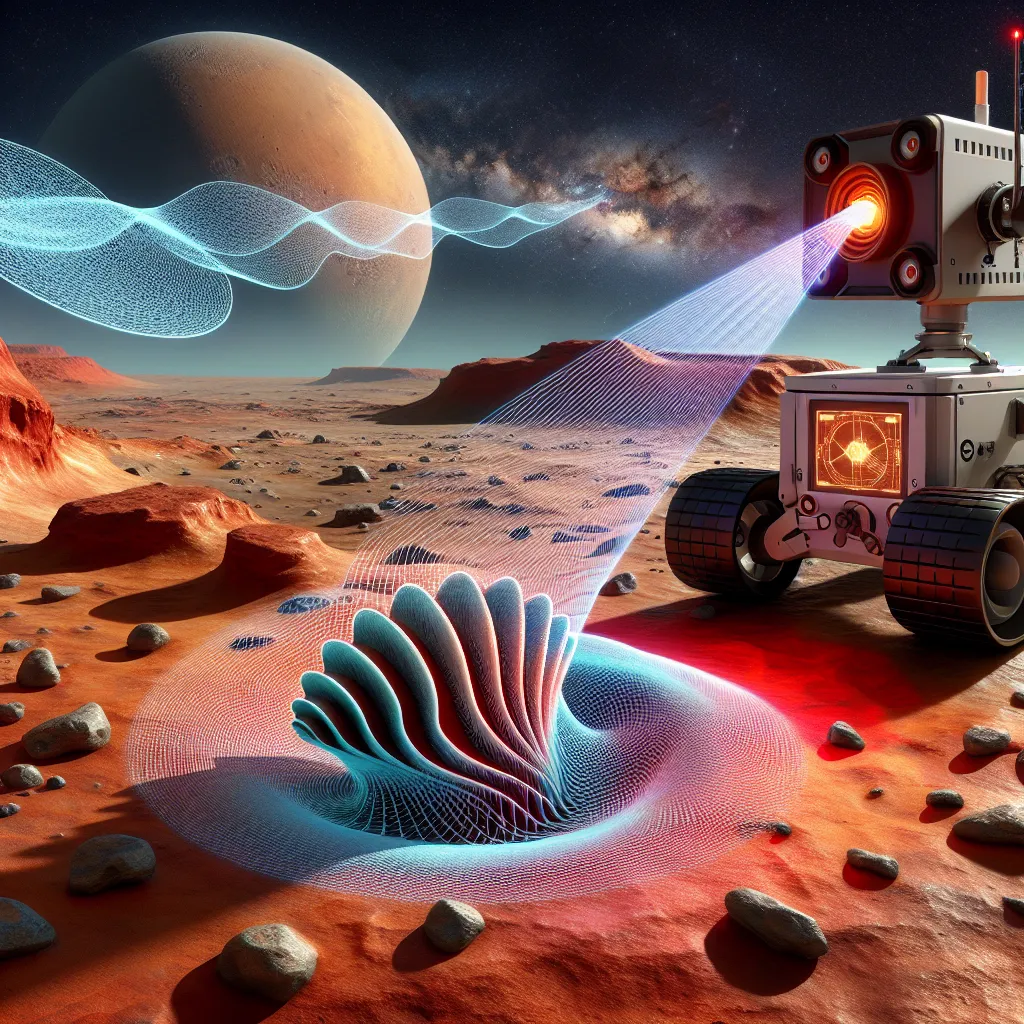
Extraterrestrial rovers (on Mars, Europa, Titan, etc.) are limited by what they can see or dig. Life, fossils, or structures might exist just beneath the surface, but radar and cameras can’t image fine biological shapes through layers of rock or ice. A space-focused startup could use mmNorm-powered mmWave imaging on future rovers to scan just below the surface of alien terrain and reconstruct biological or structural shapes invisible to standard instruments. This is now possible due to mmNorm’s ability to recover complex 3D shapes using diffuse signal reflections—not just direct returns. A rover scanning Martian sandstone might detect the curved structure of a microscopic shell fossil embedded in a rock layer—without breaking it—pushing the boundaries of remote planetary biology and geology.
Description
No additional description provided.
The Pitch
With increasing missions to Mars, Europa, Titan, and other celestial bodies, the quest to uncover extraterrestrial life and unravel geological mysteries is intensifying. Rovers deployed on these missions face limitations due to their current imaging technologies, which restrict them from seeing or analyzing objects and structures just beneath the surface. Existing tools like radar and cameras can capture surface details but struggle to penetrate layers of rock or ice to reveal fine biological shapes or hidden structures.
Identified Problem
Traditional imaging techniques rely heavily on direct signal returns, which are ineffective for imaging subsurface structures that may hold crucial information about past or present life forms. The inability to image below the surface using current technologies means potential discoveries might be missed, limiting our understanding of extraterrestrial environments.
Proposed Solution
The introduction of mmNorm-powered mmWave imaging technology offers a groundbreaking solution. This advanced imaging technique can penetrate beneath surface layers and reconstruct complex 3D shapes by using diffuse signal reflections. Unlike traditional radar, mmWave imaging can detect subtle features hidden within rocky or icy terrains without causing any physical disruption. As a result, extraterrestrial rovers can potentially locate and identify the curved structures of microscopic fossils or other biologically significant shapes embedded in different materials.
Product Details
The proposed system involves integrating mmNorm-powered mmWave imaging capabilities into the design of future rovers. Key attributes include:
1. **Advanced 3D Imaging**: Utilizing diffuse reflections to create intricate 3D models of subsurface formations. 2. **Non-Invasive Exploration**: Safely imaging potentially delicate structures without any digging or drilling. 3. **Enhanced Detection Range**: Ability to scan through various materials, such as Martian sandstone, icy crusts, and more. 4. **Adaptive Imaging Algorithms**: Real-time processing to distinguish biological structures from geological formations.
Tools for MVP Development
To launch this innovative technology as a Minimum Viable Product (MVP), the following tools and strategies can be employed:
- **Prototyping Platforms**: Use simulation software to create and test virtual subsurface environments, allowing iterative design. - **Collaborations**: Partner with space agencies and educational institutions for access to testing facilities and datasets. - **Open-Source Projects**: Integrate open-source machine learning libraries to enhance adaptive imaging algorithms.
Go-To-Market Strategy (GTM)
1. **Partnerships with Space Agencies**: Align with NASA, ESA, and other organizations involved in space exploration to adopt this technology for upcoming missions. 2. **Pilot Programs**: Implement pilot programs on Earth in analog environments to demonstrate proof of concept before extraterrestrial deployment. 3. **Scientific Community Engagement**: Present findings and technological advancements at conferences, and publish research in scientific journals to build credibility and interest.
Business Model
The business model could involve a mix of the following:
- **Technology Licensing**: Offer licensing arrangements to space agencies and private space exploration companies. - **R&D Grants**: Secure funding from governmental and private research grants focused on space technology development. - **Collaborative Ventures**: Form joint ventures with other tech companies in aerospace fields to share costs and developmental risks.
By enabling extraterrestrial rovers with advanced subsurface imaging capabilities, this venture not only paves the way for potentially groundbreaking discoveries but also broadens the scope of human knowledge, contributing significantly to the field of planetary science and exploration.