Stress-Test Simulator for Relationship Resilience
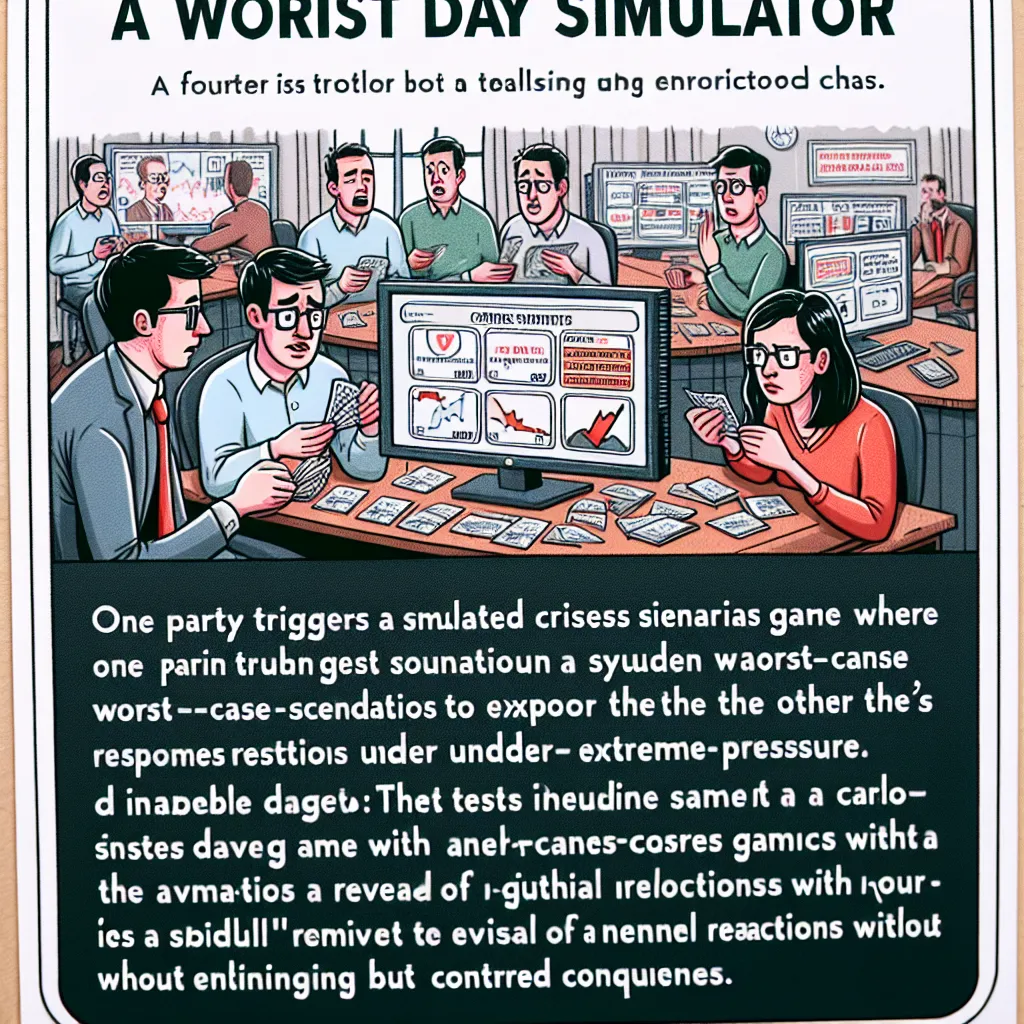
New relationships—whether romantic, business, or team-based—often collapse under stress that wasn't visible during the honeymoon phase. Worst Day Simulator proposes a “black box” stress test: a game or experience where one party secretly triggers simulated worst-case scenarios to gauge the other’s real reactions under pressure. The experience can be analog (like a card-driven game) or digital, generating plausible but controlled chaos to test emotional durability. This reveals true behavior without lasting consequences. Borrowing from emergency drills or UX monkey testing, it ensures partners are ready for bad days, not just good ones. Imagine cofounders navigating a staged investor pullout or product failure before they’ve even incorporated.
Description
No additional description provided.
The Pitch
The concept of entering new relationships, whether they are romantic, professional, or team-based, often carries an air of excitement and optimism. However, many such relationships falter when faced with unforeseen stressors that weren't apparent during the initial phases. Recognizing this challenge, the concept of the Worst Day Simulator emerges as a proactive approach to building resilience and understanding at the inception of a relationship. This concept allows participants to anticipate and prepare for high-pressure situations by simulating worst-case scenarios.
Backstory: In many collaborations, the true test of a relationship’s strength comes not from success but from adversity. Research and experience indicate that many partnerships fail because the individuals involved never had the opportunity to witness each other’s genuine reactions to pressure. Traditional relationship-building exercises often focus on positive scenarios, leaving partners unprepared for the inevitable challenges.
Problem: The primary issue lies in the unpredictability of human responses during high-stress situations. People often react in ways that are different from their anticipated or desired behaviors. This unpredictably affecting trust, decision-making, and overall relationship stability. The lack of an effective method to reveal these stress-induced behaviors before they occur naturally leads to partnerships that aren't fully robust.
Solution: The Worst Day Simulator addresses this problem by offering a controlled environment in which parties can experience stressors similar to emergency drills or UX testing. By simulating potential worst-case scenarios in a safe space, participants gain insight into each other’s reactions and coping mechanisms. This preemptive exposure promotes understanding, resilience, and readiness to tackle real-world challenges.
Product Details: 1. Simulation Experience: The Worst Day Simulator can be designed as both an analog card-driven game or a digital application. In both formats, scenarios will be carefully crafted to simulate realistic stressors such as financial crises, product malfunctions, or unexpected departures of key team members.
2. Feedback Mechanism: Participants receive constructive feedback after scenarios to understand their reactions and potential areas for growth.
3. Scenario Customization: To cater to different relationship types and industries, scenarios can be tailored to reflect specific challenges. For example, tech startups might simulate an investor pullout, while a romantic relationship might face a challenging family situation.
4. Duration and Engagement: Simulations are designed to be short yet impactful, providing valuable insights without being overly burdensome or time-consuming.
Tools for Launching MVP: - Low-Code Platforms: Utilize platforms like Bubble or Adalo to quickly create a digital prototype. - Design Software: Use tools like Figma or Canva for designing the analog game components or the digital user interface. - Feedback Tools: Incorporate feedback software like Typeform or SurveyMonkey to gather participant insights post-simulation.
Go-To-Market Strategy: 1. Target Audience: Identify key demographics such as startup cofounders, HR departments, and relationship counselors. 2. Partnerships: Collaborate with relationship experts, business consultants, and stress management professionals for endorsement and co-development. 3. Pilot Programs: Launch pilot programs with selected partners to gather initial feedback and iterate on the product. 4. Content Marketing: Leverage blogs, webinars, and social media to educate potential users about the benefits of proactive stress testing. 5. Influencer Collaboration: Partner with influencers in the business and relationship coaching spaces to broaden reach.
Business Model: - Subscription: Offer a subscription model for ongoing access to digital content and new scenario updates. - One-Time Purchase: Provide a one-time purchase option for analog game kits or digital scenario packs. - Workshops: Host workshops or seminars for companies or groups interested in intensive experiential learning sessions. - Freemium Model: Allow free access to basic scenarios with premium options for advanced and personalized simulations.
Conclusion: The Worst Day Simulator represents an innovative step towards fostering resilience and understanding in various types of relationships. By simulating stress tests, it empowers partners to confront potential issues proactively, ensuring a more robust and lasting collaboration. This concept not only bridges the gap between what is anticipated and what is real but also prepares participants for a smoother journey through life's inevitable challenges.