Streamlining Security Through Automated Alert Management
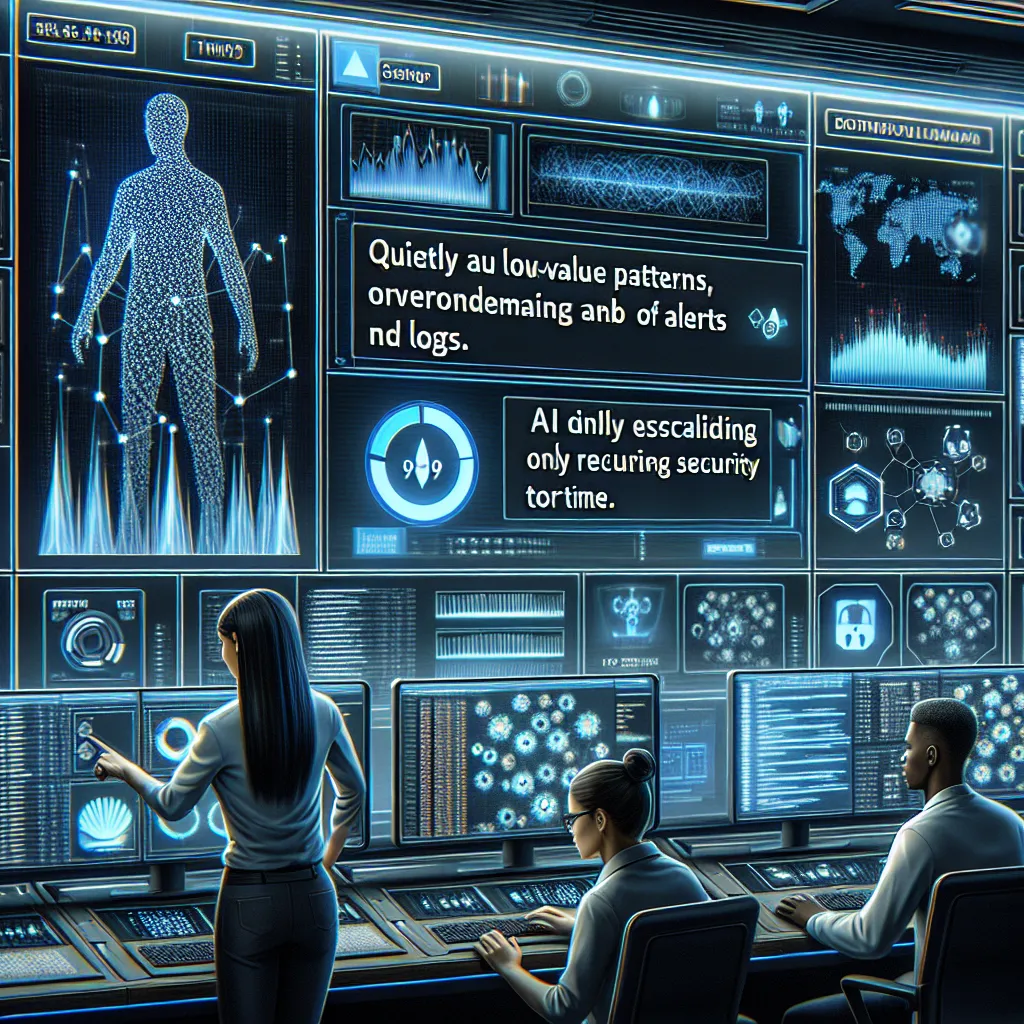
Security teams are overwhelmed not because there’s too much threat activity but because alerts, logs, and false positives bury the actual work. A CyberSRE agent watches the entire security stack, identifies low-value patterns, and silently automates them: deduping alert floods, classifying repetitive anomalies, auto-closing harmless patterns, and escalating only what requires human decision. Instead of drowning in level-1 triage, teams only touch what matters. Why now: AI-native security teams want to chase adversaries, not babysit dashboards. Example: at a mid-sized fintech, CyberSRE eliminates 72% of recurring triage by week three, freeing analysts to handle higher-order investigations.
Description
No additional description provided.
The Pitch
In the rapidly evolving landscape of cybersecurity, security operations teams are inundated with an overwhelming volume of alerts, logs, and false positives. This noise obscures the real threats and forces teams to spend significant time and resources on low-value tasks. Traditional security measures often focus on threat detection, but the sheer volume of alerts generated becomes counterproductive. Security analysts are left drowning in level-1 triage tasks instead of focusing on more strategic responsibilities, such as identifying and mitigating sophisticated threats.
**Introducing CyberSRE**
CyberSRE is a pioneering solution designed to revolutionize security operations. It acts as an intelligent agent that watches over the entire security stack, identifying low-value patterns and automating their management. This reduces the need for human intervention on trivial alerts, allowing security teams to concentrate on what truly matters: chasing adversaries and neutralizing threats.
**Solution Overview**
CyberSRE effectively tackles the problem by:
1. **Deduplication of Alert Floods**: It consolidates repetitive alerts, minimizing the volume of notifications and preventing alert fatigue. 2. **Classification of Repetitive Anomalies**: Through machine learning, it classifies repetitive patterns, differentiating between benign anomalies and those requiring attention. 3. **Auto-closure of Harmless Patterns**: CyberSRE closes tickets that are identified as non-threatening, ensuring that only relevant alerts reach the security team. 4. **Escalation of Critical Alerts**: It escalates alerts that necessitate human decision-making, ensuring no critical threat goes unnoticed.
**Why Now is the Right Time**
With the rise of AI-native security teams, there is a significant push towards optimizing workflows and enhancing efficiency. Teams today are eager to leverage AI and automation to refine their operations, focusing on strategic threat analysis rather than administrative tasks. CyberSRE aligns perfectly with this evolution in cybersecurity operations.
**Impact Example**
Consider a mid-sized fintech company. After deploying CyberSRE, the company witnessed a 72% reduction in recurring triage within just three weeks. This translated into their analysts being able to dedicate more time and resources to investigating complex threats and enhancing overall security posture.
**Product Details**
CyberSRE is built with the latest AI and machine learning technologies to seamlessly integrate with existing security infrastructure. It is designed to be cloud-agnostic, with compatibility across multiple platforms and security tools. The solution is scalable and can accommodate the needs of small to large enterprises.
**Tools for MVP Launch**
To effectively develop and present CyberSRE as a Minimum Viable Product (MVP), consider utilizing:
- **Machine Learning Platforms**: TensorFlow or PyTorch for developing the AI models. - **Cloud Infrastructure**: AWS, Azure, or Google Cloud for scalable deployment. - **Integration Tools**: API-based integration with existing Security Information and Event Management (SIEM) systems like Splunk or IBM QRadar. - **Automation Platforms**: Tools like Ansible or Terraform for automating deployment and configuration.
**Go-to-Market Strategy**
1. **Target Audience**: Focus on mid-sized to large enterprises, particularly those with AI-native security teams. 2. **Value Proposition Communication**: Emphasize cost and time savings, as well as improved security outcomes. 3. **Partnerships**: Collaborate with existing security solution providers and cloud service vendors for integration and co-marketing efforts. 4. **Referral Programs**: Implement referral incentives for early adopters and strategic partners. 5. **Continuous Feedback Loop**: Implement mechanisms for obtaining user feedback to refine and enhance product features in future iterations.
**Business Model**
The business model for CyberSRE will focus on a subscription-based approach, with tiered pricing based on the size of the enterprise and the specific features utilized. A freemium model could be introduced to allow small businesses to experience basic functionalities, with an option to upgrade for more advanced features.
In conclusion, CyberSRE provides a much-needed reprieve for overwhelmed security teams by leveraging AI to streamline operations. By allowing analysts to focus on high-order investigations, CyberSRE not only enhances efficiency but significantly boosts the security capabilities of organizations in a digital-first era.