Strategic Materials Exchange for Domestic Supply Resilience
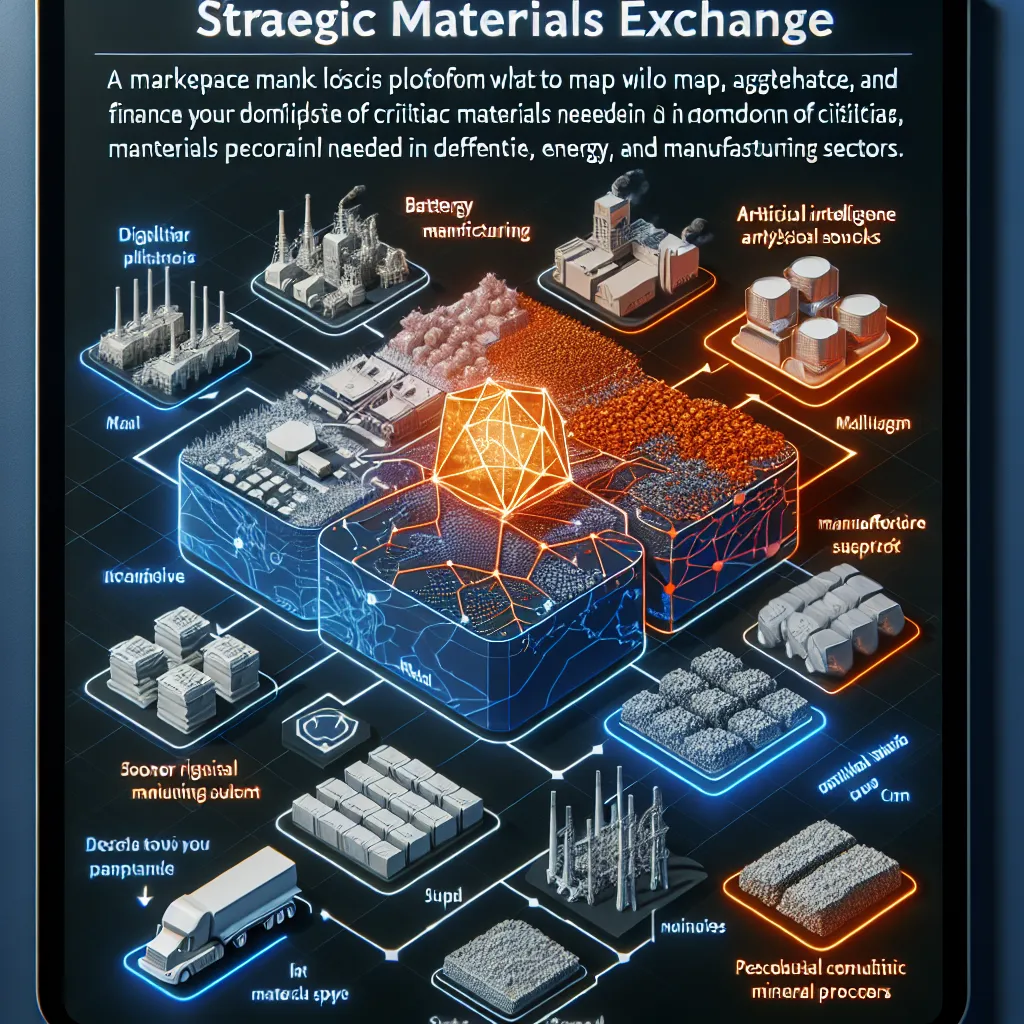
Many critical materials that power modern industries—from rare earth elements to battery minerals—depend on fragile global supply chains concentrated in a handful of countries. Governments and companies want domestic alternatives, but identifying and securing reliable suppliers remains extremely difficult. A startup could build a “Strategic Materials Exchange,” a marketplace and logistics platform that maps, aggregates, and finances domestic sources of critical materials while coordinating buyers across defense, energy, and manufacturing sectors. By combining AI supply intelligence with financing tools and long-term purchasing contracts, the platform would help bootstrap new domestic supply chains that previously seemed too risky to develop. Imagine a battery manufacturer instantly discovering and contracting with small domestic mineral processors that would otherwise remain invisible.
Description
No additional description provided.
The Pitch
Modern industries heavily rely on critical materials such as rare earth elements and battery minerals, which are essential for the production of various high-tech products. However, the supply of these materials is often concentrated in a few countries, leading to fragile global supply chains that are susceptible to disruptions. This geopolitical concentration poses significant risks for industries, prompting governments and companies to search for domestic alternatives. Despite this urgent need, finding and securing dependable domestic suppliers remains a daunting challenge.
To address this problem, a promising opportunity exists for a startup to create a Strategic Materials Exchange. This would be a marketplace and logistics platform designed to revolutionize the way critical materials are sourced domestically. By mapping, aggregating, and financing local sources of these materials, the platform would serve as a central hub that connects buyers from various sectors such as defense, energy, and manufacturing with suppliers.
The heart of the solution is the fusion of AI-driven supply intelligence and innovative financing tools. The platform would utilize advanced algorithms to identify emerging domestic suppliers, even those that are currently under the radar. By integrating long-term purchasing contracts and financial incentives, the platform would de-risk investments in new supply chains, making them viable options for buyers who might otherwise overlook them due to perceived uncertainties.
Product details would include a comprehensive database mapping domestic suppliers of critical materials, real-time analytics for supply chain monitoring, and secure transaction mechanisms to facilitate purchasing contracts. Additionally, the marketplace would offer logistics solutions to ensure the efficient movement of materials from suppliers to buyers.
For those interested in building this platform, several tools and technologies would be crucial to launch a Minimum Viable Product swiftly. Cloud-based infrastructure would be essential for scalability and data storage, while AI and machine learning tools would be necessary to power the supply intelligence features. A user-friendly interface, possibly developed using frameworks like React or Angular, would enhance the user experience for marketplace participants. Blockchain technology could also be explored to ensure secure and transparent transactions.
The Go-To-Market strategy would involve initial partnerships with key industry stakeholders in the defense, energy, and manufacturing sectors. Demonstrating the platform's capabilities through pilot projects could build trust and credibility. Additionally, leveraging industry conferences and trade shows would help create awareness and attract early adopters. Thought leadership initiatives, such as publishing white papers and participating in forums focused on supply chain resilience, would position the startup as an authority in the strategic materials space.
In terms of business model, the platform could generate revenue through subscription fees from suppliers and transaction fees from each successful deal facilitated through the exchange. Premium services, such as data analytics and customized supply chain solutions, could also be offered for additional fees.
In summary, the Strategic Materials Exchange has the potential to revolutionize the sourcing of critical materials by creating a sustainable and secure domestic supply chain ecosystem. By leveraging cutting-edge technology and strategic partnerships, this platform could address a critical gap in the market and drive significant economic and geopolitical benefits.