Story-Based Tax Tool for Freelancers
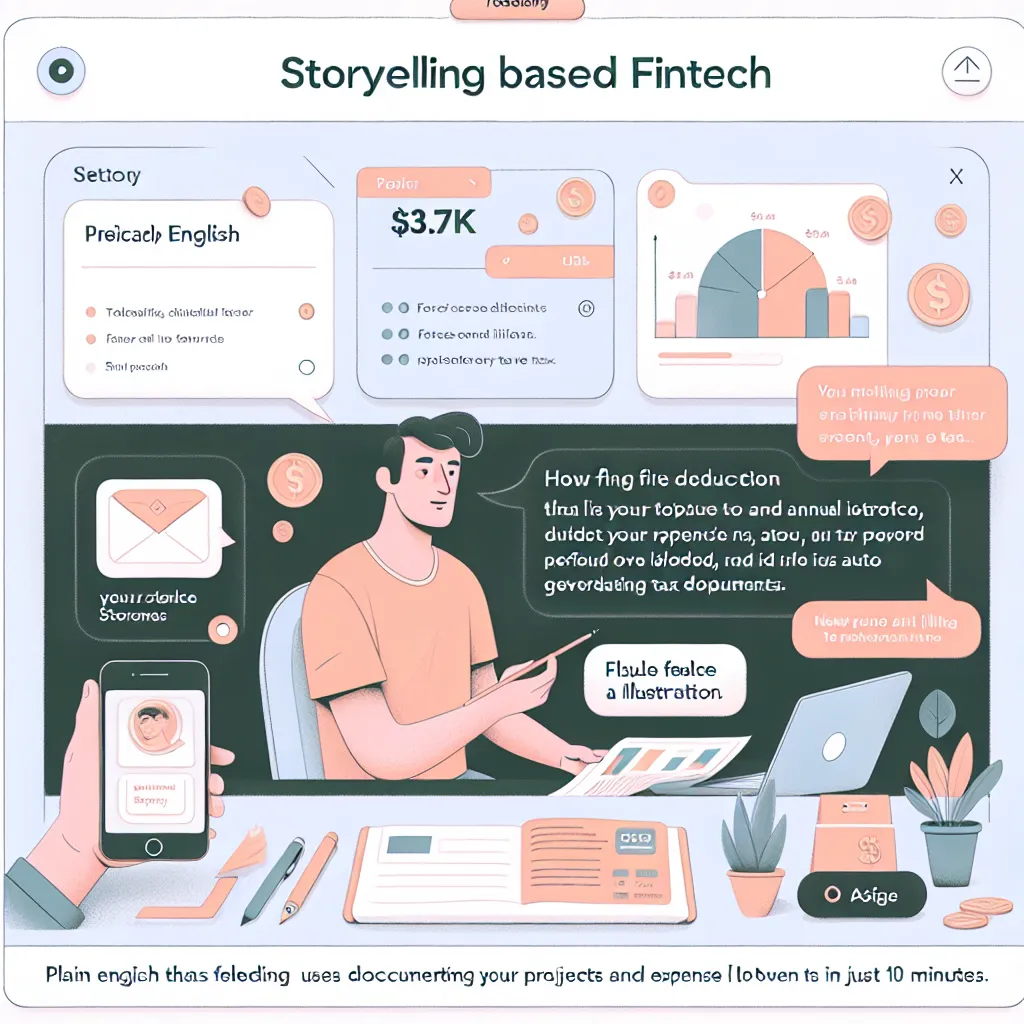
Freelancers hate taxes. They’re stressful, inconsistent, and intimidating. This tool uses a story-based UI where users “walk through” their year: What projects did you do? What did you spend on tools? It auto-generates tax docs and suggests deductions in plain English. The trend: fintech is getting more user-friendly (see Levels, Monarch), but taxes haven’t caught up. For example, a freelance illustrator inputs their year like a journal. The app shows $3.7K in missed deductions and auto-files in 10 minutes.
Description
No additional description provided.
The Pitch
The freelance workforce is booming, offering unparalleled flexibility but also bringing unique challenges, particularly in managing taxes. This concept envisions a transformative tool that revolutionizes the way freelancers handle tax-related tasks, using an intuitive, story-driven user interface to simplify and demystify the process.
Backstory Freelancers often operate without the safety net of a traditional payroll system, which automatically deducts taxes. As a result, many find themselves overwhelmed by the need to track income, expenses, and potential deductions. Navigating tax rules becomes an even greater challenge due to the absence of standardized processes tailored to the freelance lifestyle.
Problem The traditional tax-filing process can be daunting for freelancers. They face the following issues:
1. Complexity and Confusion: Tax codes are notoriously complex, leaving many freelancers unsure about what qualifies as a deductible expense. 2. Time Consumption: Keeping track of receipts and manually calculating deductions consume valuable time that freelancers could otherwise spend on their core work. 3. Financial Losses: Many freelancers miss out on potential deductions, resulting in unnecessarily high tax payments. 4. Stress and Anxiety: The uncertainty and lack of clarity around tax obligations lead to significant stress.
Solution This proposed tool addresses these challenges through a user-friendly, story-based approach. Users walk through their financial year interactively, answering questions about their projects, expenses, and purchases. This step-by-step process:
- Simplifies the documentation of income and expenses by mimicking a journal entry. - Identifies potential deductions and explains them in straightforward language. - Automatically generates necessary tax documents, ready for submission.
Product Details The product offers the following features:
1. Story-driven UI: Users engage with a narrative journey that pairs with their calendar year, making tax documentation feel like storytelling. 2. Smart Deduction Finder: Uses machine learning to identify commonly overlooked deductions, specific to diverse freelance professions. 3. Auto-filer: Automatically completes and submits tax documents, streamlining the filing process. 4. Guided Support: Provides tips and examples to educate users on best practices for maximizing tax efficiency. 5. Data Security: Employs robust encryption to ensure sensitive financial data is protected.
Tools for MVP Launch To build and launch this MVP swiftly, the following tools and technologies are recommended:
1. No-Code/Low-Code Platforms: Tools like Bubble or Adalo to rapidly prototype and iterate the user interface. 2. Machine Learning APIs: Integrate services like Google Cloud AI to enhance the smart deduction finder. 3. Payment and Document APIs: Utilize Stripe for payment processing and HelloSign for digital document handling to make filing easier. 4. Data Security Services: Incorporate solutions like Auth0 and AWS for secure data management.
Go-to-Market Strategy 1. Target Audience: Focus on platforms frequented by freelancers, such as Upwork, Fiverr, and CreativeMarket. 2. Partnerships: Collaborate with co-working spaces and freelance platforms to offer bundled promotions. 3. Educational Content: Develop content that highlights common freelancer tax pitfalls, shared through social media, blogs, and video tutorials. 4. Influencer Engagement: Leverage influencers in the freelance community to endorse the product through their channels. 5. Launch Promotion: Offer a limited-time free trial period or discounted rates for early adopters.
Business Model The business model focuses on a subscription-based service, affording users continuous access to the latest features and updates. Pricing tiers might include:
1. Basic Plan: Access to core features and basic support. 2. Pro Plan: Enhanced features like custom deduction insights and priority support. 3. Enterprise Plan: Tailored solutions for larger freelance teams or agencies, offering multi-user access and advanced analytics.
Conclusion Empowering freelancers with an intuitive tax solution not only eases their financial management but also optimizes their earnings, allowing a greater focus on their creative pursuits. By making the tax process transparent and approachable, this tool aims to transform a traditionally stressful experience into a manageable, even rewarding, aspect of freelance life.