StackWeaver: Seamless Integration for AI-Native Apps
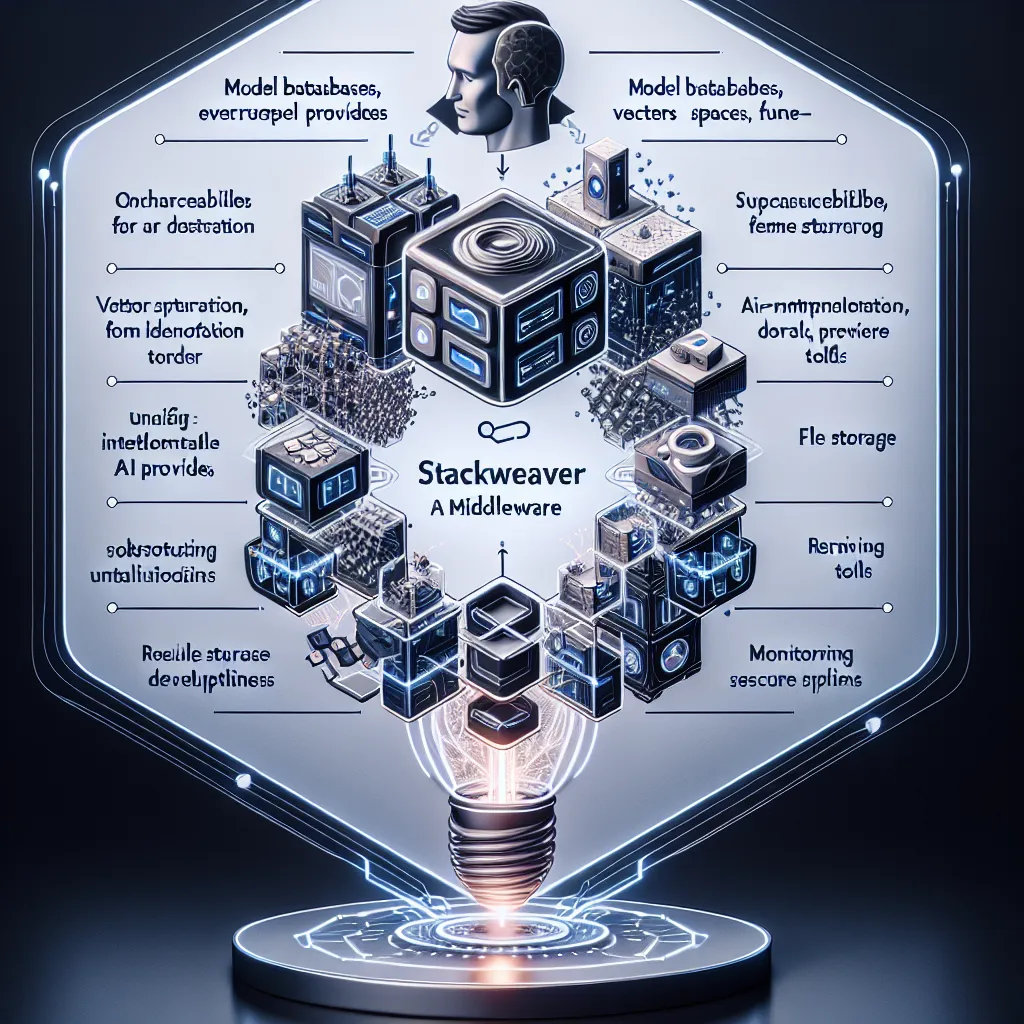
As more companies build AI-native apps, they face a huge integration problem: models, vector databases, embeddings, file storage, retrieval APIs, and monitoring tools all live in separate silos. StackWeaver is a plug-and-play middleware layer that standardizes and links LLM stack components into a cohesive dev environment. It lets teams switch providers (e.g., OpenAI → Claude) and plug in observability tools without rewriting pipelines. Why now? As Coatue points out, winners will be those who “stitch the stack”—and demand is exploding for flexible infra glue. A startup building a legal AI copilot, for instance, could use StackWeaver to swap in a HIPAA-compliant model and attach it to its secure RAG system in hours instead of weeks.
Description
No additional description provided.
The Pitch
Companies increasingly rely on AI-native applications to drive innovation and efficiency. However, as they embrace this shift, they encounter significant integration challenges. Various AI components like models, vector databases, embeddings, file storage, retrieval APIs, and monitoring tools often exist in isolated silos, complicating the development process. This fragmentation delays deployment and increases costs.
The Problem
With a diverse array of tools and services, companies face a daunting task: integrating and managing these components cohesively. When companies wish to change providers or enhance their systems with additional features, they often have to rewrite entire pipelines, leading to delays and resource wastage. This issue is especially pronounced for startups looking to innovate rapidly, as they require flexible infrastructure that accommodates quick iterations and changes.
The Solution
Enter StackWeaver, a middleware solution designed to address this very problem. StackWeaver acts as a plug-and-play layer that standardizes and connects the components of the large language model (LLM) stack. By unifying these disparate elements into a seamless development environment, StackWeaver empowers teams to effortlessly switch providers or integrate new tools without overhauling their existing systems.
Product Details
StackWeaver offers a simplified platform where businesses can connect various AI components through standardized interfaces. Key features include:
1. **Provider Flexibility:** Easily switch between different AI model providers (e.g., transitioning from OpenAI to Claude) without rewriting codebases. 2. **Observability Integration:** Plug in monitoring and observability tools to gain insights into model performance and system health. 3. **Customizable Pipelines:** Modify and adapt data processing pipelines swiftly to meet changing business needs. 4. **Security Compliance:** Incorporate secure components, such as HIPAA-compliant models, allowing for the integration into sensitive use cases like legal or healthcare applications. 5. **Rapid Deployment:** Drastically reduce the time required to integrate and deploy AI technologies within business systems.
Tools for MVP Launch
To help potential builders launch StackWeaver as a minimum viable product (MVP), the following tools and resources can be crucial:
- **Cloud Hosting Services:** Utilize platforms like AWS, Google Cloud, or Azure for scalable and reliable hosting solutions. - **API Management Tools:** Leverage Postman or Swagger for seamless API development and testing. - **Containerization and Orchestration:** Use Docker and Kubernetes for efficient container management and application scaling. - **Continuous Integration/Continuous Deployment (CI/CD):** Implement tools like Jenkins or GitHub Actions for smooth deployment workflows. - **Monitoring and Analytics:** Integrate with platforms such as Prometheus and Grafana for robust system observability.
Go-To-Market Strategy
To successfully launch StackWeaver, consider the following go-to-market strategy:
1. **Market Research and Positioning:** Identify potential customers in industries heavily investing in AI, such as healthcare, finance, and e-commerce. Position StackWeaver as the essential middleware for seamless AI integration. 2. **Partnerships and Alliances:** Form strategic partnerships with AI model providers and cloud service platforms to provide bundled solutions. 3. **Content Marketing:** Develop insightful content such as case studies, white papers, and blog posts that highlight StackWeaver's benefits and real-world applications. 4. **Demonstrations and Webinars:** Conduct live demos and webinars to showcase StackWeaver's capabilities and foster engagement with prospective users. 5. **Early Adopter Programs:** Establish programs to offer incentives for companies willing to implement and provide feedback on the MVP version of StackWeaver.
Business Model
The business model for StackWeaver could be based on a subscription-based pricing strategy. Key components include:
- **Tiered Pricing Plans:** Offer various tiers based on the size of the business, the number of integrations required, and the level of support provided. - **Usage-Based Charges:** Implement a pay-as-you-go model for specific functionalities, such as advanced analytics or premium support. - **Enterprise Solutions:** Provide bespoke solutions for large enterprises with specific customization and integration requirements.
Conclusion
StackWeaver presents a transformative solution for businesses seeking to overcome the integration challenges associated with AI-native applications. By streamlining the development environment and enabling flexibility, StackWeaver empowers companies to innovate more effectively and stay competitive in a rapidly changing technological landscape.