Space-Based Synthetic Blood Production for Crises
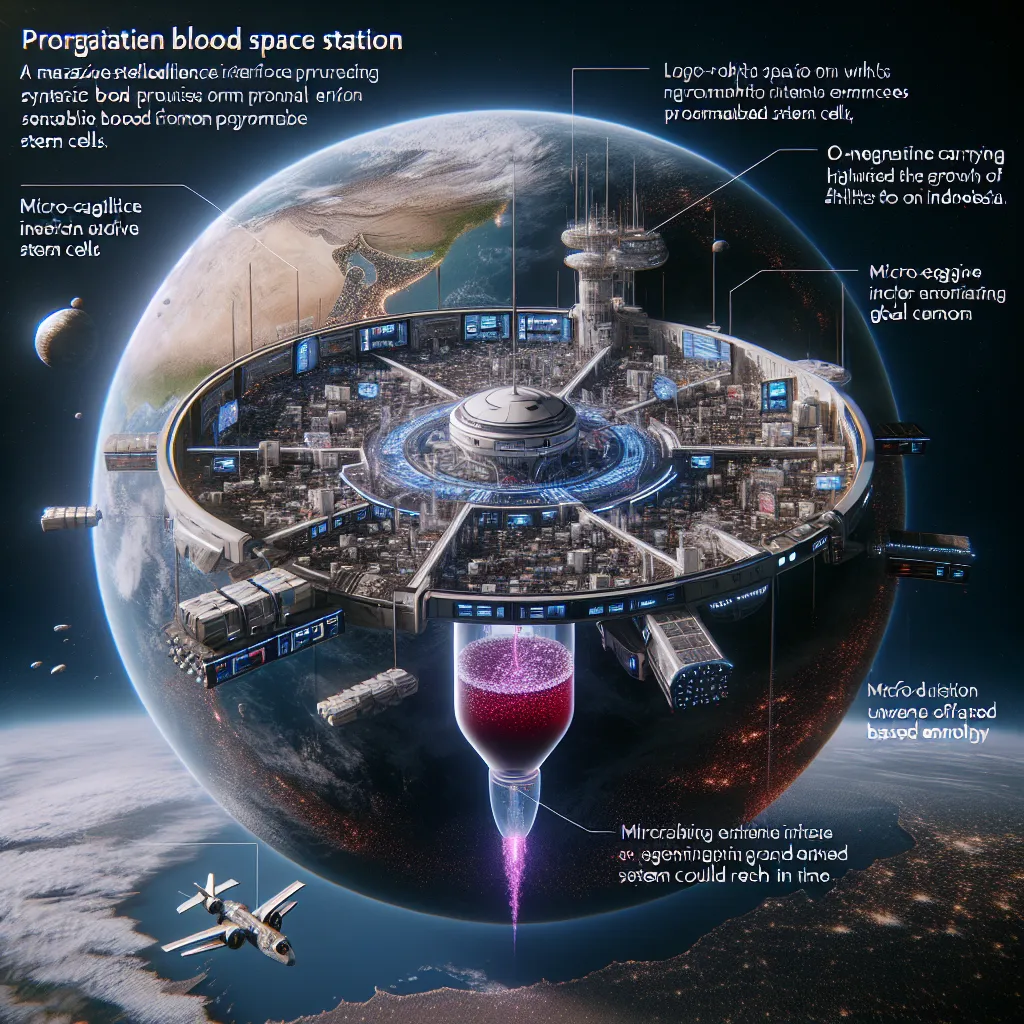
In global crises—pandemics, natural disasters, wars—blood supply chains break down. Blood has a short shelf life and transporting rare types across continents is slow and logistically fragile. This startup would launch a low-orbit synthetic blood facility using programmable stem cells to produce blood on-demand. Space-based microgravity allows better cell growth for certain blood components, and AI models would anticipate global demand shifts. Units would be deployed via rapid-return micro-capsules. This is newly possible thanks to advances in CRISPR, private space stations (e.g., Axiom), and autonomous reentry tech. For instance, during a major flood in Indonesia, synthetic O-negative plasma could be manufactured in orbit and delivered to an isolated hospital within 24 hours—when no ground-based system could have kept up.
Description
No additional description provided.
The Pitch
In times of global crises, such as pandemics, natural disasters, and conflicts, one critical infrastructure that often suffers is the blood supply chain. This is largely due to blood's short shelf life and the challenges associated with transporting rare blood types across great distances. The logistics involved are complex and vulnerable, making it difficult to maintain a stable and responsive supply. To address this, we envision a revolutionary approach: a low-orbit synthetic blood facility designed to produce blood on-demand using advanced biotechnologies and space capabilities.
**Backstory**
The idea stems from the persistent difficulties faced by health services worldwide in ensuring a steady and adequate supply of blood. Traditional methods of collection, storage, and distribution are heavily reliant on continuous donations and are limited by geographical and logistic constraints. Recent advances in biotechnology, such as CRISPR, have opened new possibilities for developing synthetic blood. At the same time, the emergence of private space stations—such as those planned by companies like Axiom Space—and autonomous reentry technologies offer novel environments where biological processes could be optimized.
**Problem**
During crises, the existing global blood supply chain is quickly overwhelmed. Blood's perishability and the intricacies of matching rare types to recipients across borders exacerbate the problem, leading to shortages and delays that can cost lives. For instance, in a country facing a natural disaster, such as a flood or earthquake, the local blood supply can be destroyed or rendered inaccessible, leaving hospitals stranded without critical resources.
**Solution**
The solution is to establish a synthetic blood production facility in low Earth orbit. Utilizing programmable stem cells, the facility will produce various blood components on-demand. Space-based microgravity environments are particularly favorable for cell growth, potentially enhancing the quality and efficacy of the produced blood.
In addition, artificial intelligence models can be deployed to predict global demand fluctuations, aligning production schedules with real-time needs. This system would enable rapid deployment of blood products through micro-capsules that can quickly re-enter Earth’s atmosphere and be delivered to targeted locations. For example, in the aftermath of a major flood in Indonesia, synthetic O-negative plasma could be manufactured in orbit and delivered to an isolated hospital within 24 hours, solving an urgency that ground-based systems could not address.
**Product Details**
- **Synthetic Blood Production**: Utilizing CRISPR and programmable stem cells for a customizable blood supply - **Space-Based Manufacturing**: Leveraging microgravity for optimal cell growth and production quality - **AI-Driven Demand Prediction**: Anticipating needs based on global data analytics and trends - **Rapid Deployment**: Autonomous micro-capsules for swift and precise delivery to affected areas
**Tools for Easy MVP Launch**
- **Biotechnology Platforms**: Utilize existing CRISPR kits and stem cell cultivation techniques for initial trials - **Partnerships with Private Space Stations**: Collaborate with companies like Axiom Space for low-orbit manufacturing space - **AI Analytics Software**: Implement real-time demand forecasting technologies - **Autonomous Reentry Systems**: Secure partnerships with aerospace companies for the development of micro-capsules
**Go-to-Market Strategy**
1. **Pilot Programs**: Start with specific geographic areas prone to natural disasters to test the efficacy of the system. 2. **Partnerships**: Establish collaborations with international health organizations to leverage networks and resources. 3. **Regulatory Approvals**: Work proactively with regulatory bodies to ensure compliance with safety and efficacy standards. 4. **Awareness Campaigns**: Educate potential stakeholders, including governments and NGOs, on the benefits and reliability of synthetic blood production in orbit.
**Business Model**
1. **Subscription Service**: Healthcare systems and international bodies could subscribe to ensure prioritized access during crises. 2. **Per-Unit Sales**: Provide pricing tiers based on urgency and location-specific needs. 3. **Partnership Packages**: Collaborate with global health initiatives, offering integrated solutions across multiple regions. 4. **Licensing and Technology Transfer**: As the platform matures, offer licensing opportunities for other entities to replicate the system in different orbits.
This approach not only addresses the current limitations of the blood supply chain but also pioneers a scalable and sustainable model for future healthcare logistics. By transforming crises into manageable challenges, this initiative could redefine emergency medical response on a global scale.