Solar-Powered Modular Datacenters for AI Expansion
Compute demand is growing faster than grid infrastructure can support. Solar-native modular datacenters combine compute, solar generation, and battery storage into a single deployable unit that doesn’t rely on grid expansion. This is newly possible as solar and storage become modular and cheap. An AI cluster could launch in a rural area without waiting years for transmission upgrades.
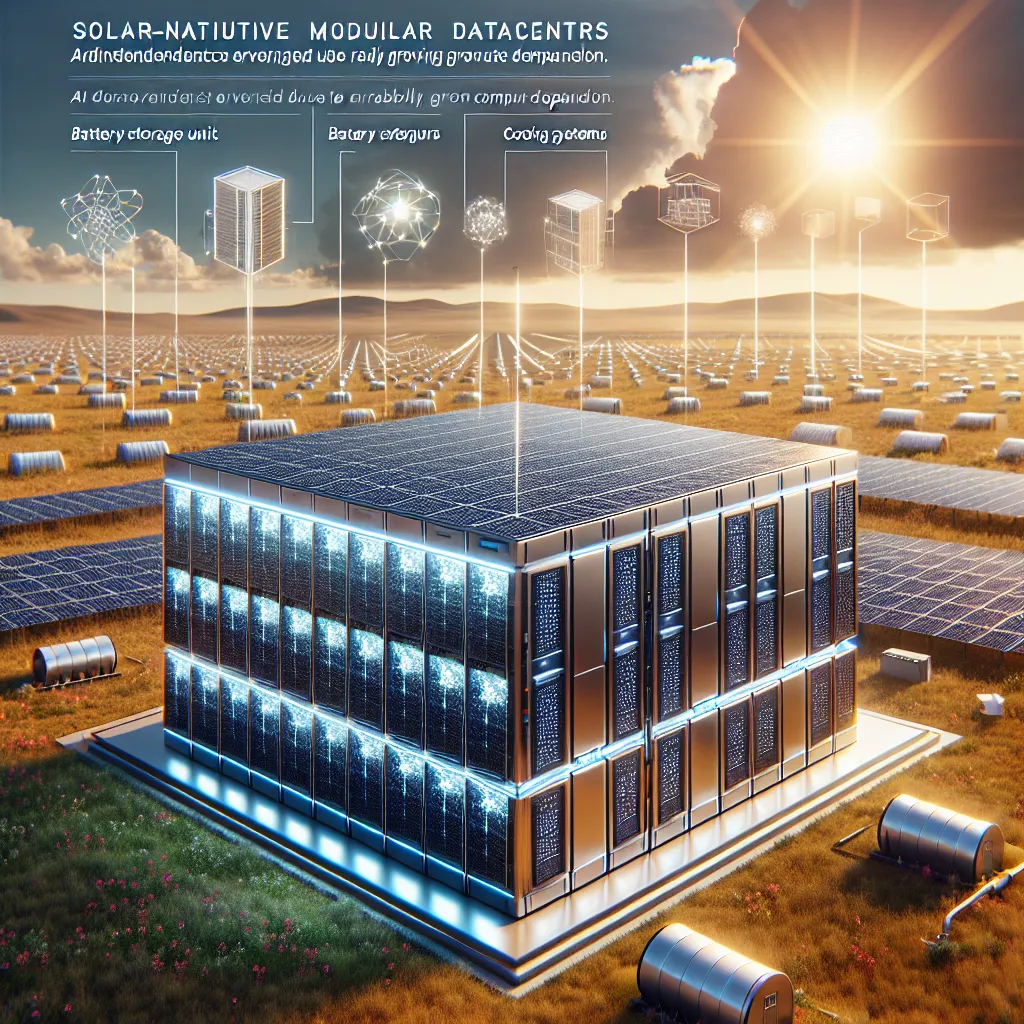
Description
No additional description provided.
The Pitch
In the rapidly evolving digital landscape, the demand for computing power is outpacing the development of traditional grid infrastructure. The emergence of solar-native modular datacenters offers a transformative solution by integrating compute capabilities with solar generation and battery storage into a singular, deployable unit. This advancement mitigates reliance on grid expansion, offering immediate opportunities for launching AI clusters in areas previously constrained by infrastructure.
---
Backstory
As technology advances, the need for computational resources has skyrocketed. However, the traditional approach of expanding grid infrastructure is both costly and time-consuming. This presents a significant bottleneck, particularly in remote or rural locations where access to robust power grids is limited or non-existent. As a result, businesses and researchers in these areas face delays, increased costs, and missed opportunities.
Concurrently, advancements in solar technology and battery storage have made renewable energy systems more affordable and modular. This shift enables the creation of autonomous systems that can operate independently of existing power grids, unlocking new possibilities for tech deployment in underserved areas.
---
Problem
The primary challenge is the gap between the burgeoning demand for computational resources and the sluggish pace of grid infrastructure development. Specific issues include:
- Delays in infrastructure upgrades, leading to deferred technology projects. - High costs associated with traditional energy solutions. - Limited access to computational power in rural or remote locations.
---
Solution
The solution lies in deploying solar-native modular datacenters. These units harness a combination of solar panels, efficient battery storage, and computing power to function autonomously. By being self-sufficient, they negate the need for traditional grid dependence and offer an attractive model for deploying technology solutions rapidly and cost-effectively in any location.
---
Product Details
1. **Modular Design**: These datacenters are built in modular units which can be customized and scaled to fit varying computational needs. This modularity allows for easy transportation and deployment.
2. **Renewable Energy Integration**: Equipped with solar panels and battery storage systems, these units are capable of generating and storing their own power. This ensures 24/7 functionality without reliance on external power sources.
3. **Computational Power**: Each unit can be equipped with high-performance computing resources tailored to the specific needs of the deployment, whether for AI processing, data analysis, or other intensive applications.
4. **Autonomous Operation**: With built-in energy management software, these datacenters can intelligently manage power consumption and ensure optimal operation at all times.
---
Tools for MVP Launch
To expedite the launch of this concept into a minimum viable product, the following tools and resources can be utilized:
- **Prototyping Platforms**: Utilize modular container architectures to simulate the datacenter environment. - **Renewable Energy Systems**: Engage with suppliers of solar panels and battery systems that offer modular solutions. - **Cloud Computing Resources**: Partner with cloud service providers to integrate cloud functionalities for seamless data management and processing. - **IoT Devices**: Deploy real-time monitoring systems to track energy usage and performance metrics.
---
Go-to-Market (GTM) Strategy
1. **Identify Target Markets**: Position these units in regions with high computational demands but limited grid infrastructure, such as rural research facilities, emerging tech hubs, and developing regions.
2. **Partnerships and Alliances**: Establish collaborations with academic institutions, government agencies, and tech companies interested in promoting sustainable and accessible computing solutions.
3. **Pilot Programs**: Launch pilot projects in strategic locations to demonstrate feasibility, gather user feedback, and refine the product.
4. **Awareness Campaigns**: Utilize digital marketing, webinars, and industry conferences to build awareness and showcase the benefits of solar-native modular datacenters.
---
Business Model
- **Subscription Service**: Offer the datacenters as a service with a subscription model, including regular maintenance, software updates, and support. - **Purchase and Lease Options**: Provide a purchase option for organizations wishing to own the units and a leasing alternative for those preferring lower upfront costs. - **Energy Credits**: Monetize excess energy generated by offering energy credits or selling surplus back to the grid where applicable.
---
Conclusion
Solar-native modular datacenters represent an innovative leap in meeting the growing demand for computing resources without the constraints of traditional infrastructure. By offering an autonomous, scalable, and sustainable solution, these units empower underserved areas while promoting environmental stewardship and technological advancement.