Solar-Powered 3D Printing Pods for Infrastructure
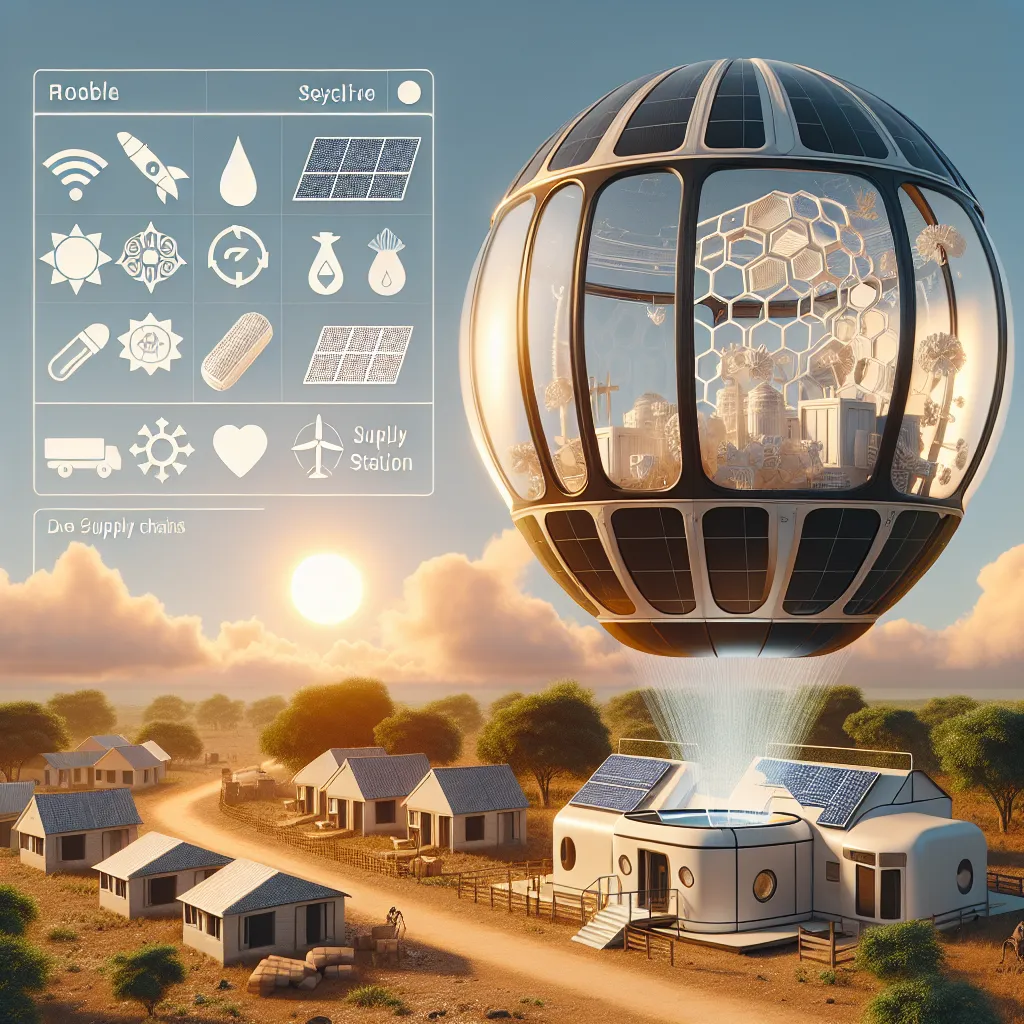
Remote or developing regions often lack infrastructure for essential facilities like clean water systems, clinics, or schools. A novel solution is a network of modular 3D printing pods—solar-powered, mobile units that can print durable building parts on-site using local materials. For example, a pod could be air-dropped into a rural village and begin printing parts for a small water purification station or medical outpost, eliminating the need for complex supply chains. The system would be controlled remotely by engineers and scaled as needed.
Description
No additional description provided.
The Pitch
In many remote or developing areas, the absence of essential infrastructure like clean water systems, clinics, or schools severely limits community development and resilience. Traditional methods of constructing these facilities often involve complex supply chains, high costs, and significant time investments, which are not always feasible in resource-constrained environments. Innovation in technology and renewable energy presents an opportunity to address these challenges in a sustainable and scalable way.
**Problem**
The primary issues facing remote or developing regions include the lack of vital infrastructure and the difficulty in building it due to logistical challenges, limited access to materials, and the absence of skilled labor. These regions often rely on intermittent aid that doesn't provide sustainable or long-term solutions. High transportation costs and time delays further exacerbate these problems, leaving communities without the necessary facilities to improve their quality of life.
**Solution**
A transformative solution is the deployment of modular 3D printing pods. These pods are solar-powered and mobile, capable of being airdropped into remote areas to print durable building parts on-site using locally-sourced materials. This innovative approach eliminates the need for intricate supply chains and provides a means to rapidly construct essential infrastructure like water purification stations or medical outposts. The 3D printing pods can be remotely controlled by engineers, allowing for scalable and flexible deployment.
**Product Details**
The proposed system involves modular 3D printing pods designed for ease of transport and deployment. Key features include:
1. Solar-powered operation to ensure sustainability and operability in off-grid areas. 2. Mobility for ease of relocation and setup across various terrains. 3. 3D printing capabilities using local materials, which reduces dependency on external supplies. 4. Remote operation and monitoring, enabling skilled oversight without needing on-site engineers. 5. Scalable system, allowing for expansion or modification based on the community's evolving needs.
**Tools for MVP Launch**
To create a Minimum Viable Product (MVP), essential tools and technologies include:
1. Open-source 3D printing software to minimize development costs. 2. Solar panels and battery storage systems to ensure a consistent power supply. 3. Basic CAD tools for designing and modifying building plans tailored to specific needs. 4. Lightweight, durable materials for pod construction.
**Go-To-Market Strategy**
1. **Collaborations**: Partner with NGOs, governmental organizations, and international aid agencies to identify priority areas and establish credibility. 2. **Pilot Projects**: Implement pilot projects in select regions to demonstrate feasibility and gather vital data. 3. **Community Engagement**: Involve local communities in the deployment process to ensure buy-in and create local advocates. 4. **Grant Funding and Sponsorships**: Secure financing through grants and sponsorships focused on sustainable development and technology innovation.
**Business Model**
The business model could be framed around a combination of direct sales, leasing, and subscription services for maintenance and software updates. Key components include:
1. **Direct Sales**: Selling the pods to organizations or governments focused on infrastructure development. 2. **Leasing Model**: Offering pods and services on a lease basis to organizations with budget constraints. 3. **Subscription Services**: Providing ongoing support, including remote monitoring, maintenance, and software updates. 4. **Social Impact Investment**: Capitalizing on investments from impact funds focused on sustainable, scalable solutions.
By implementing this innovative approach, we aim to address the acute lack of infrastructure in remote and underdeveloped regions, fostering sustainable development through a blend of cutting-edge technology and renewable energy solutions.