Solar Kiosks Provide Affordable Water to Communities
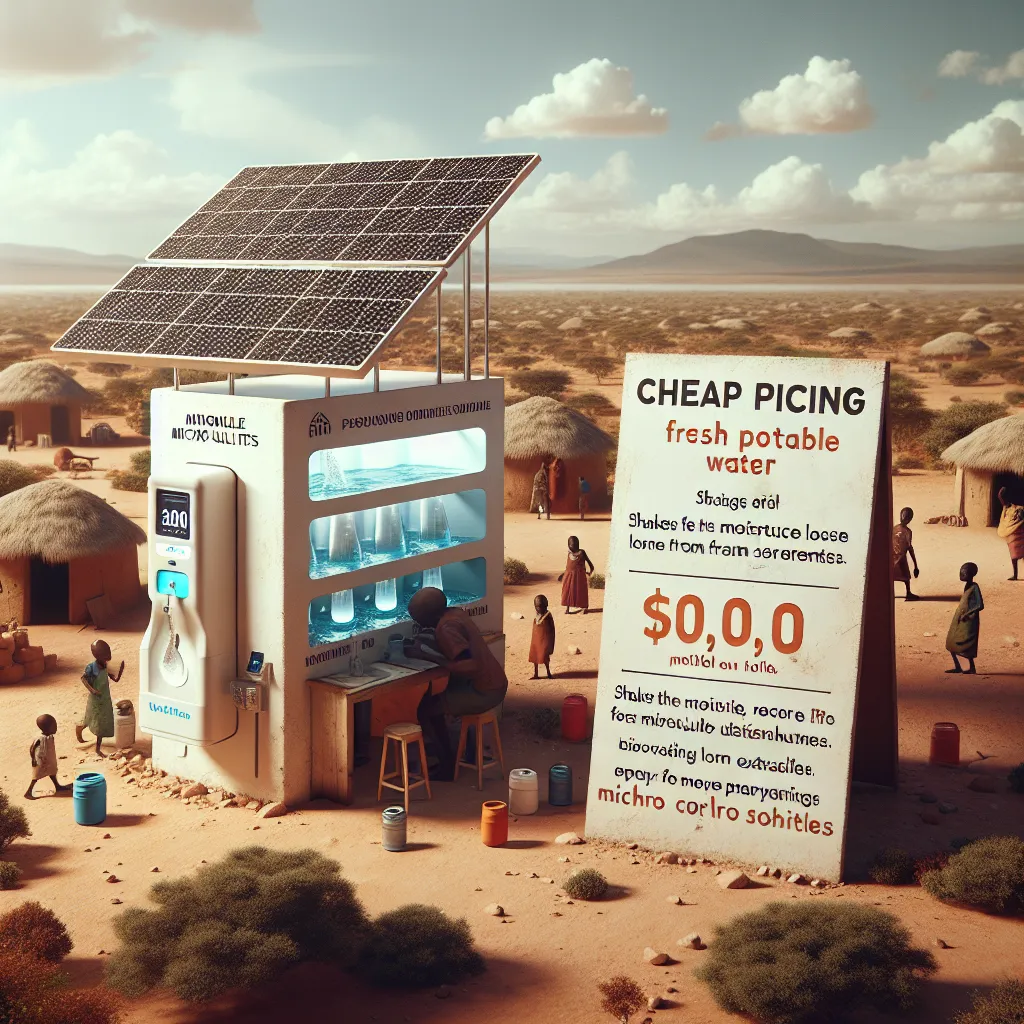
Remote and off-grid communities often lack safe water sources and rely on costly trucking or contaminated wells. Traditional AWH kiosks have failed because they extract too slowly and require intense heat cycles. With MIT’s ultrasonic actuator, small solar-powered kiosks can now produce steady, low-cost potable water by shaking moisture loose from sorbents multiple times per hour. The timing is perfect as many regions pursue decentralized water infrastructure and mobile payments for micro-utilities. A town in rural Kenya could install one kiosk that generates hundreds of liters a day, with residents paying a few cents per liter through M-Pesa — a model that only becomes realistic because extraction no longer takes hours.
Description
No additional description provided.
The Pitch
In many remote and off-grid communities, accessing safe drinking water remains a significant challenge. These communities often depend on either expensive water trucking services or unreliable wells that are prone to contamination. The introduction of traditional atmospheric water harvesting (AWH) kiosks seemed promising but failed to deliver due to their slow water extraction rates and dependency on high heat cycles.
A groundbreaking development from MIT presents a new solution with the potential to transform water access in these regions. By employing an ultrasonic actuator technology, small, solar-powered kiosks can efficiently produce potable water. This system works by shaking moisture loose from sorbents several times per hour, enabling a continuous and cost-effective water supply without the need for intense heat.
This innovation arrives at a critical moment as many regions are exploring decentralized infrastructure solutions for water distribution. The concept aligns well with advancements in mobile payment systems, particularly suitable for micro-utilities. The implementation of such kiosks could mean a reliable and affordable water supply for communities, with residents paying a minimal fee per liter via platforms like M-Pesa.
Consider the impact such a kiosk could have in a rural Kenyan town. With capability of generating hundreds of liters of water daily, it could fundamentally change the landscape of water accessibility. The key to success is in the kiosk's ability to provide water quickly and sustainably, addressing both logistical and financial barriers that have historically hindered similar projects.
To bring this concept to market, a viable initial step is launching a minimum viable product (MVP). Utilizing readily available solar technology and MIT's ultrasonic actuator, a prototype can be developed and tested in a target community. Tools for rapid prototyping such as 3D printers and CNC machines could expedite the development process, while partnerships with local organizations could provide insights into the specific needs and preferences of end-users.
The go-to-market (GTM) strategy would prioritize collaboration with local community leaders and leveraging their insights to customize solutions that meet localized needs. Awareness campaigns can educate residents on the benefits of this new technology, facilitating easier adoption.
From a business model perspective, the focus would be on a pay-as-you-go system, akin to successful mobile payment platforms in these regions. This model not only makes the solution affordable but also creates a sustainable revenue stream that supports maintenance and expansion of the infrastructure.
As this innovative solution moves from concept to reality, there is potential not only to resolve water access issues but also to empower communities by fostering resilience and promoting economic development through sustainable practices.