Solar-Desalination Enables Farming in Coastal Deserts
Water scarcity limits where people can live and farm even as energy becomes abundant. Solar-desalinated land development pairs solar power, desalination, storage, and automated infrastructure to unlock new habitable and agricultural regions. This becomes viable as desalination costs fall with cheap energy. Coastal deserts could support farming or housing at scale for the first time without stressing freshwater ecosystems.
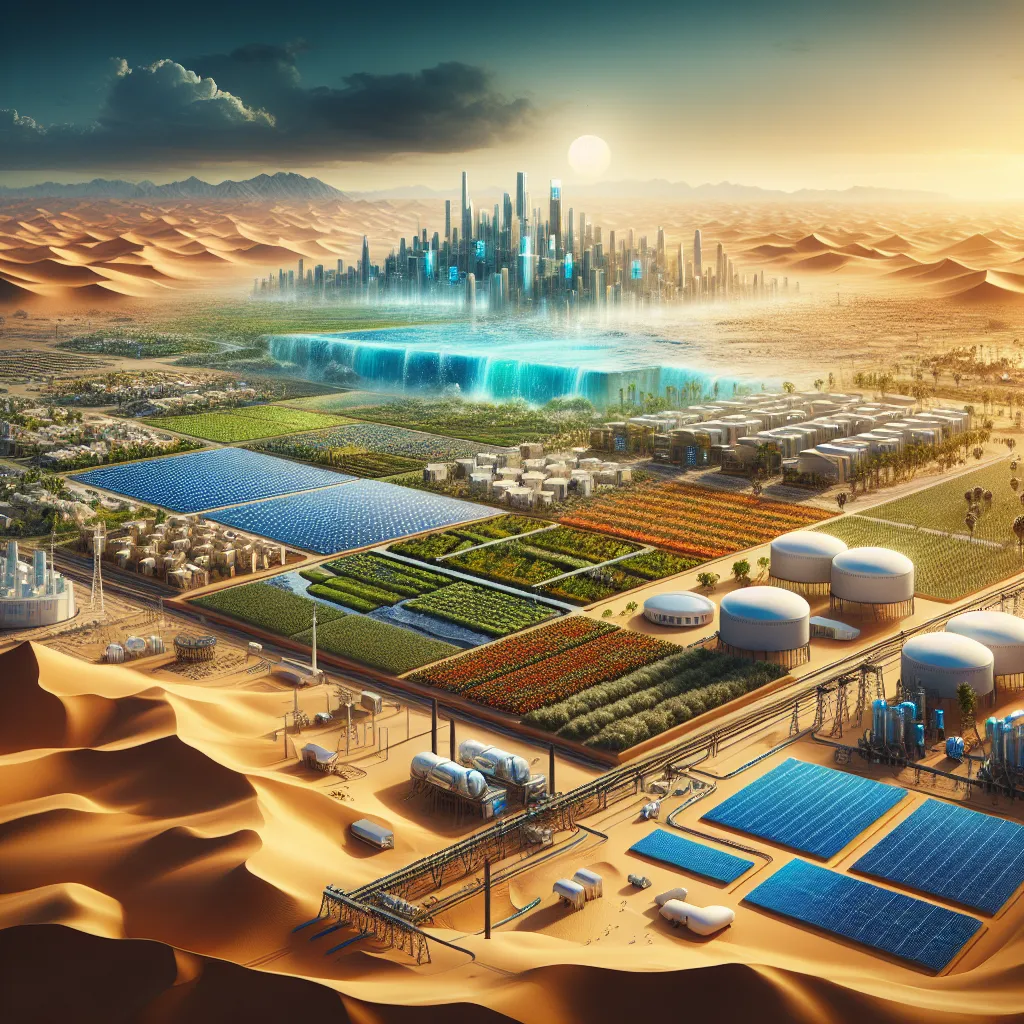
Description
No additional description provided.
The Pitch
Water scarcity has long restricted where people can live and farm, even as energy resources become increasingly abundant. The challenge of accessing fresh water has historically limited the development of certain regions, particularly coastal deserts. However, as advancements in technology drive down the costs of desalination, a new opportunity arises to transform these arid lands into thriving habitats and agricultural hubs. Through the integration of solar power, desalination, storage, and automated infrastructure, we can unlock new habitable and agricultural regions without imposing additional stress on freshwater ecosystems.
Backstory
For decades, water scarcity has posed a significant challenge to global development. Many regions with abundant sunlight and potential for agricultural growth remain underdeveloped due to their lack of fresh water resources. Coastal deserts, despite their proximity to the ocean, have not been able to harness this vast water source due to the high costs and environmental concerns associated with traditional desalination methods.
Problem
The world faces a pressing need to address water scarcity and find sustainable solutions for human habitation and agriculture. Current freshwater resources are limited and cannot support the rapidly growing global population without causing environmental harm. Traditional desalination processes are energy-intensive and costly, making them inaccessible for large-scale development in many regions.
Solution
The solution lies in harnessing solar power to fuel the desalination process, creating an integrated system that combines energy production with water purification. By leveraging modern, efficient solar technologies and innovative water management systems, we can reduce the cost and environmental impact of desalination, enabling new opportunities for land development in previously inhospitable regions.
Product Details
1. Solar Power Generation: Utilize photovoltaic panels to harness sunlight, converting it into electricity to power the desalination process.
2. Desalination Technology: Implement an energy-efficient desalination system, capable of producing fresh water at a competitive cost. Options include reverse osmosis or innovative membrane distillation technologies.
3. Water Storage and Distribution: Develop infrastructure for storing and distributing the desalinated water efficiently, ensuring a stable supply for residential and agricultural needs.
4. Automated Infrastructure: Incorporate IoT and smart technologies to monitor and manage water distribution, energy usage, and system maintenance, optimizing resource utilization.
5. Sustainable Agricultural Practices: Integrate advanced farming techniques, like hydroponics or aquaponics, to maximize agricultural productivity while minimizing water usage.
Tools for Launching an MVP
- Solar panel providers and installers to set up the necessary energy infrastructure. - Desalination technology partners experienced in scalable and cost-efficient solutions. - IoT platform providers to develop automated systems for monitoring and management. - Engineering and construction firms for designing and building water storage and distribution systems. - Agricultural experts to advise on sustainable farming practices adapted to arid conditions.
Go-to-Market (GTM) Strategy
1. Identify Target Regions: Conduct a market analysis to identify potential coastal desert regions where the project can be piloted, considering factors like land availability, sunlight intensity, and local demand for water and food.
2. Partnerships and Collaboration: Establish partnerships with local governments, NGOs, and businesses to facilitate project implementation and gain community support.
3. Pilot Program: Launch a small-scale pilot project to demonstrate the feasibility and benefits of the solar-desalinated land development model.
4. Advocacy and Awareness: Engage in advocacy and awareness campaigns to highlight the environmental and economic benefits, capturing the interest of investors and stakeholders.
5. Scale and Expansion: Use insights from the pilot to refine the model before expanding to other suitable regions, securing investment for large-scale deployment.
Business Model
- Revenue Streams: Generate income through the sale of water, energy, and agricultural products. - Partnership Opportunities: Collaborate with governments and NGOs for funding and support in exchange for technology transfer and shared benefits. - Subscription Models: Offer subscription-based water and energy supply services to local communities and businesses. - Licensing and Consulting: Provide expertise in solar-desalinated land development to other regions, generating additional revenue.
By addressing the water scarcity issue through this innovative approach, we can redefine the potential of coastal deserts, creating vibrant communities and sustainable agricultural enterprises where none existed before. The combination of solar power and desalination technologies promises not only to unlock new frontiers but also to contribute to a more sustainable, resource-efficient future.