Snake-Like Probe Revolutionizes Internal Ultrasound Surgery
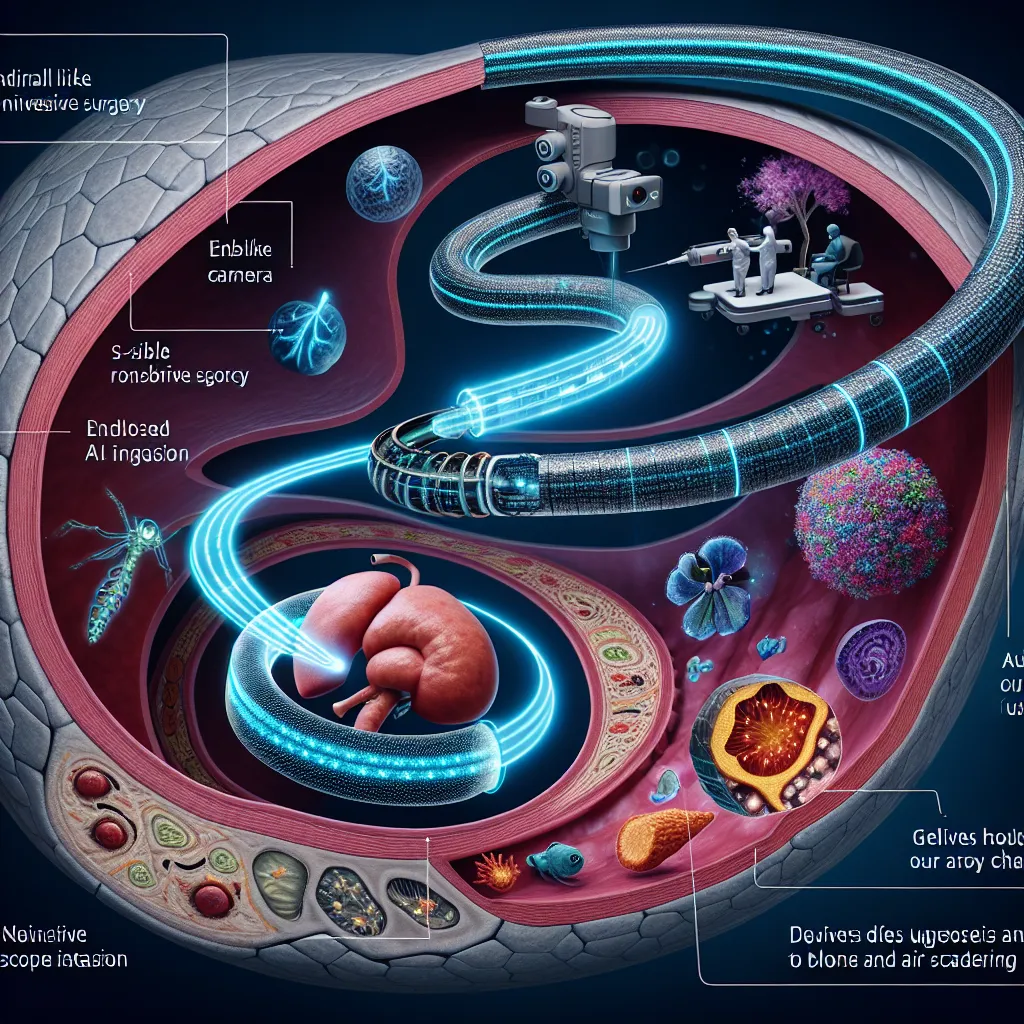
Focused ultrasound struggles to reach deep organs like the pancreas or lungs because bone and air scatter sound. The solution is a robotic endoscopic device — a snake-like probe that moves inside the body and delivers focused ultrasound from within, guided by cameras and AI imaging. It eliminates the need for open surgery yet can reach targets current systems can’t. It’s invasive only by inches, not by scalpel. As robotics miniaturize and flexible actuators advance, this could become the new frontier of “internal noninvasive surgery.” A single clinician could perform what once required a full surgical team — an ultrasound beam that crawls inside the body, finds the tumor, and quietly obliterates it without an incision.
Description
No additional description provided.
The Pitch
The field of medical innovation constantly strives to create less invasive procedures that improve patient outcomes while reducing recovery times. Traditional open surgeries, though effective, often bring prolonged hospital stays, higher risks of complications, and increased costs. Focused ultrasound has emerged as a promising technology in this regard. However, its application is limited when it comes to deep-seated organs such as the pancreas and lungs. This limitation is due to the scattering of sound waves by bone and air, which prevents precise targeting.
Problem: The challenge is delivering therapeutic ultrasound to deep internal organs without resorting to open surgery. Current systems lack the capability to penetrate these areas effectively. The goal is to develop a method that allows ultrasound to reach these organs in a minimally invasive manner, thereby broadening the scope of treatable conditions.
Solution: A groundbreaking concept involves the development of a robotic endoscopic device. This device, resembling a snake-like probe, is designed to navigate inside the body. It delivers focused ultrasound directly to the target area, guided by advanced cameras and AI imaging systems. This approach eliminates the need for open surgery and enables access to organs previously unreachable by existing ultrasound technology. It represents a highly invasive procedure reduced to mere inches rather than full incisions.
Product Details: The proposed device is a sophisticated piece of technology poised at the intersection of robotics, AI, and medical imaging. Key features include:
1. **Robotic Snake-Like Probe**: Engineered for flexibility and maneuverability to navigate through the body with minimal disturbance to surrounding tissues. 2. **Focused Ultrasound Capability**: Effectively targets deep-seated tumors or other medical concerns with precision. 3. **AI-Driven Imaging and Navigation**: Utilizes real-time imaging processed by AI to guide the probe accurately to its target, adapting to anatomical variations. 4. **Single-Operator Design**: Simplifies the procedure, enabling a single clinician to perform complex interventions that traditionally required an entire surgical team.
Tools for MVP Launch: To develop and launch this product as a Minimum Viable Product (MVP), consider the following tools and strategies:
- **Prototyping Platforms**: Utilize platforms such as Arduino or Raspberry Pi for initial electronic prototyping alongside 3D printing for creating mechanical components. - **AI Development Frameworks**: Employ tools like TensorFlow or PyTorch for creating and refining the AI imaging and navigation system. - **Collaboration with Medical Professionals**: Work closely with surgeons and radiologists during the design and testing phases to ensure practical usability and efficacy. - **Regulatory Guidance**: Engage consultants experienced in medical device regulations to navigate the approval process with bodies like the FDA.
Go-To-Market Strategy: 1. **Identify Early Adopters**: Target specialized medical centers known for innovation in minimally invasive procedures. 2. **Partnerships**: Collaborate with hospitals to conduct clinical trials and gather data supporting the device's effectiveness and safety. 3. **Educational Campaigns**: Develop training modules and workshops to educate healthcare professionals on the use of the new technology. 4. **Industry Conferences**: Present findings and demonstrate the device at medical and technology conferences to generate interest and credibility.
Business Model: - **Direct Sales and Leasing**: Offer the device for sale directly to hospitals and medical centers or provide leasing options to lower the initial cost barrier. - **Service Contracts and Training**: Provide ongoing maintenance and training services as an additional revenue stream. - **Data Licensing**: Leverage the AI system's data insights, offering anonymized data for research purposes to academic institutions or healthcare analytics companies.
This project offers a significant opportunity for innovators to redefine the landscape of noninvasive surgery. The convergence of robotics, AI, and focused ultrasound technology holds the promise of expanding treatments to previously unreachable areas, potentially improving outcomes and transforming patient care.