SmartStock: Integrating Seamless Automatic Reordering into POS Systems for Small Business Efficiency
Description
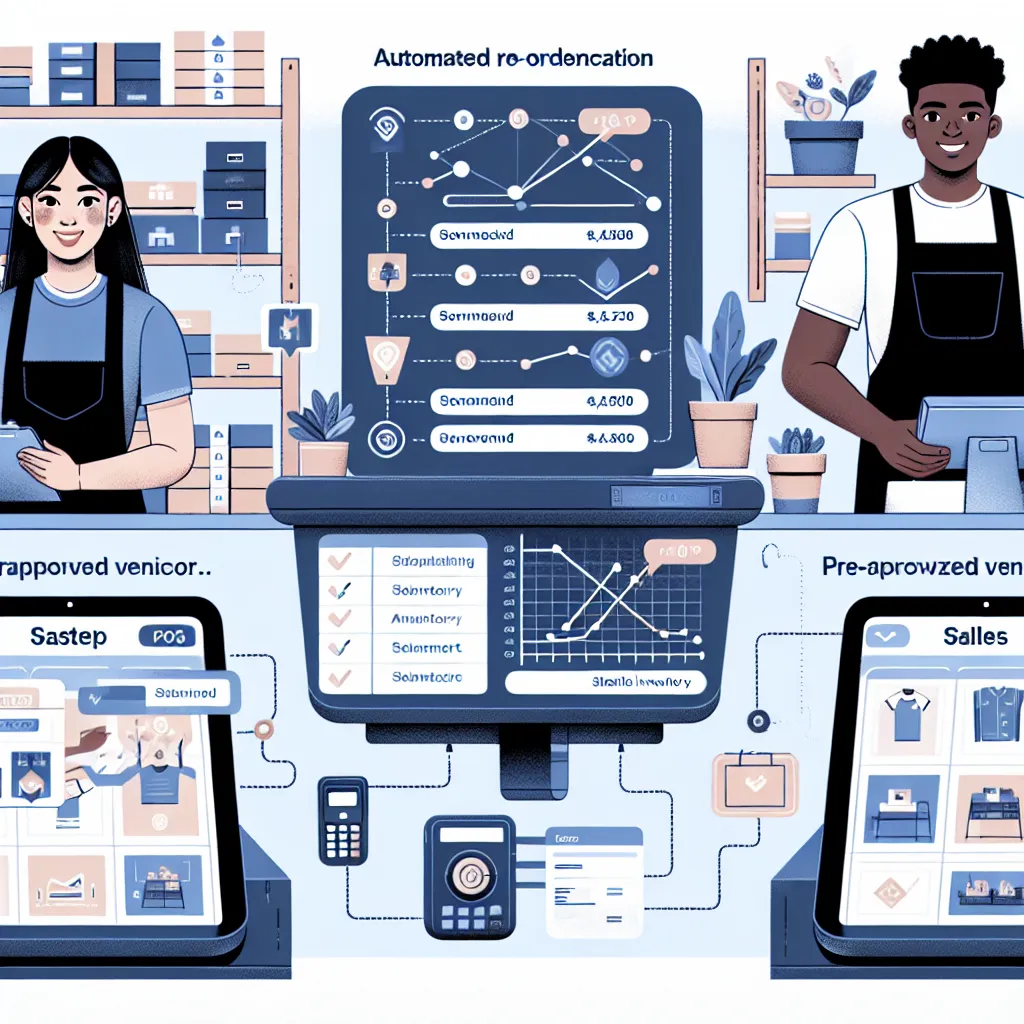
Embed automatic inventory reordering systems into POS systems for small businesses. The system would track sales in real-time and automatically reorder supplies from pre-approved vendors as inventory levels drop below set thresholds.
Small business owners often spend substantial time managing inventory manually, which can lead to errors, overstocking, or stockouts. An automated reordering system would streamline this process, ensuring that supplies are consistently replenished based on actual sales data. This automation reduces the risk of human error, maintains optimal inventory levels, and frees up owners and staff to focus on other critical aspects of the business, such as customer service and growth initiatives. Additionally, it provides better cash flow management by preventing over-purchasing and helps in forecasting demand more accurately, contributing to a more efficient and profitable operation.
The Pitch
Small business owners face substantial challenges in managing inventory effectively. Manual processes are not only time-consuming but are also prone to errors that can result in stockouts or overstock, severely affecting business operations and profitability. Moreover, these inefficiencies hinder the owner's ability to focus on customer service and business growth.
Solution Overview: Our proposed solution is to embed an automatic inventory reordering system into existing POS (Point-of-Sale) systems tailored specifically for small businesses. This advanced system will utilize real-time sales data to automatically reorder stock from pre-approved vendors as soon as inventory levels drop below predefined thresholds. By automating this process, our system minimizes human error and ensures a seamless restocking process.
Target Audience: Our primary target audience includes small to medium-sized retail stores, restaurants, and boutique shops that currently handle inventory management manually or with minimal automation. These businesses often experience the most significant impact from inventory mismanagement and stand to benefit immensely from streamlined processes.
Value Proposition: Our solution offers a bundle of benefits: 1. Time Efficiency: Frees up business owners and staff to focus more on customer engagement and other strategic activities. 2. Cost Reduction: Minimizes the costs associated with overstocking and emergency ordering. 3. Enhanced Cash Flow: Keeps inventory lean and aligned with demand, aiding better cash flow management. 4. Accuracy: Enhances forecasting and planning capabilities by leveraging historical sales data. 5. Scalability: Allows businesses to easily scale operations without proportionally increasing overhead costs related to inventory management.
Market Analysis: The global retail automation market is expected to grow from $11.24 billion in 2018 to $23.58 billion by 2026. Particularly, automation in inventory management is increasingly becoming a focal point for small businesses seeking operational efficiency. Competitive analysis shows a gap in affordable, easy-to-integrate solutions tailored to small enterprises, which presents a significant opportunity for our solution.
Implementation Plan: 1. Development: Collaborate with software developers to design an intuitive and integrative system. 2. Pilot Testing: Launch a pilot program with selected local businesses to refine our system based on real user feedback. 3. Rollout: Gradually deploy the system across various regions, starting with metropolitan areas rich in small businesses. 4. Feedback Loop: Implement a robust feedback mechanism to continually enhance the system based on user experiences.
Monetization Strategy: Our solution will be monetized through a subscription-based model, providing different tiers depending on features and support levels. The basic tier would cater to very small businesses, whereas premium tiers would cater to those needing advanced analytics and integration capabilities. Additionally, commission-based partnerships with vendors could be explored to generate secondary revenue streams.
Impact Assessment: The impact of our system will be measured through customer satisfaction scores, reduction in out-of-stock incidents, decrease in unnecessary overhead costs, and overall improvement in inventory turnover ratios. These metrics will help in continuously adjusting the system to meet client needs effectively and ensure a tangible improvement in their business operations.
This solution not only promises to transform inventory management for small businesses but also equips them to compete more vigorously in their markets by enhancing operational efficiency and customer satisfaction.