Smart Towel Rack for Daily Refreshing
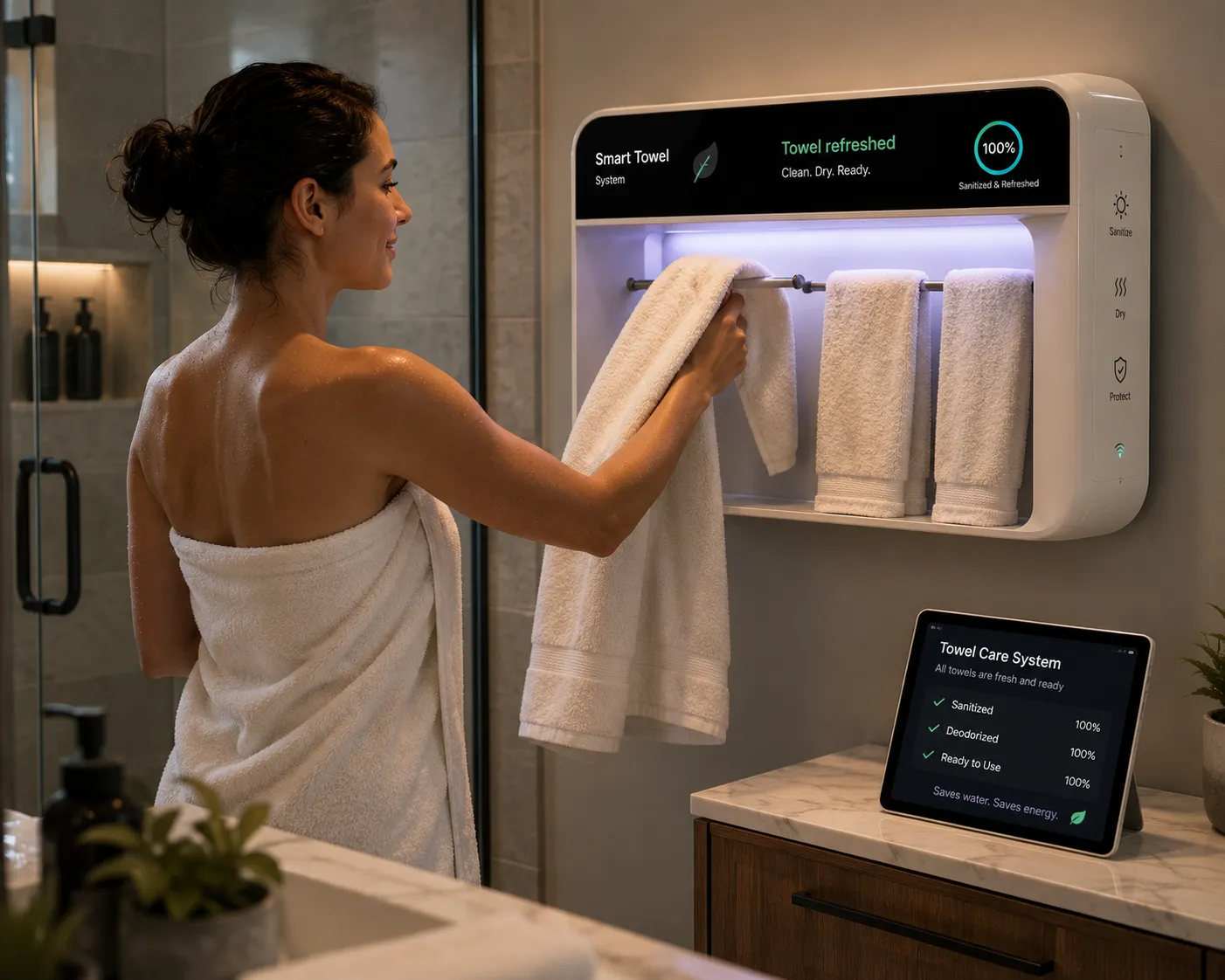
Fresh towels quickly become damp, musty, and unpleasant between washes, yet washing them after every use wastes water, energy, and time. A Self-Refreshing Towel System combines a smart towel rack with built-in sanitization technology that refreshes towels after each shower, reducing odors and bacteria while extending the time between washes. Whether using ozone, UV-C, heated airflow, or another safe sanitization method, the goal is to recreate that "fresh from the dryer" feeling every day without additional laundry. As consumers increasingly adopt smart bathroom products and look for more sustainable ways to reduce water and energy usage, there is growing demand for appliances that automate everyday household maintenance. Imagine stepping out of the shower, hanging your towel on the rack, and returning the next morning to a towel that feels fresh, dry, and clean without ever touching the washing machine.
Description
No additional description provided.
The Pitch
A towel is one of the few household objects that is both intimate and neglected. It touches clean skin, absorbs moisture, hangs in a warm room, and then quietly becomes unpleasant in a way people tolerate because the alternative is friction: more laundry. That gap between how personal the object is and how little infrastructure exists around maintaining it is the opening. The appeal is not that people want a smarter towel rack; it is that they want one less small domestic compromise repeated every day.
The business is compelling because it turns freshness into a household utility rather than a consumable outcome. Today, the “clean towel” experience is bundled with washing, drying, folding, and replacing. If a device can preserve that experience between washes, it captures value from avoided labor as much as avoided water or energy. The strongest household products often win by collapsing an invisible chore into an automatic background process: dishwashers did not make plates better, and robotic vacuums did not make floors new; they made maintenance feel less like maintenance.
Bathrooms are also unusually under-instrumented compared with kitchens and laundry rooms. People have accepted specialized machines for coffee, air purification, teeth cleaning, and skincare, but towel care is still handled by a metal bar on the wall. That is strange because the bathroom has recurring moisture, odor, and hygiene problems that a passive fixture cannot solve. A self-refreshing rack would occupy a category between appliance and fixture, making it more durable and habitual than a gadget while remaining easier to adopt than a full renovation.
The emotional hook is bigger than sanitation. A dry, warm, fresh towel changes the perceived quality of the entire shower ritual, much like a heated seat changes the feeling of a car more than its specification would suggest. Small sensory upgrades become sticky when they attach to daily routines. Once a person gets used to towels that recover themselves overnight, a normal damp towel starts to feel like a defect, not the default.
The most interesting part is that the product could shift towel ownership itself. Fewer washes means towels last longer, smell better, and require less rotation, which makes people more willing to buy better towels and care for them properly. The system would not merely sell a device; it would reframe towels from disposable laundry throughput into maintained personal textiles. That is a subtle but powerful change in how a mundane category can create lasting value.