Smart Sanitation: Dynamic, IoT-Driven Public Hygiene
Public hygiene is still driven by static cleaning schedules that ignore real-time conditions, creating risks in high-traffic spaces during outbreaks. There’s no dynamic system adapting sanitation efforts based on actual contamination or crowd levels. Smart Sanitation Infrastructure solves this by installing IoT-enabled stations and surface sensors in public areas that detect usage, contamination, and people flow, automatically adjusting cleaning protocols. Maintenance teams are dispatched intelligently, and cities get real-time hygiene dashboards. The COVID-19 pandemic highlighted the urgent need for better public health defenses, and with IoT devices now cheaper and more reliable, dynamic sanitation networks are finally feasible. Imagine airports where bathrooms self-sanitize after a set number of uses, or stadiums where seat cleaning is triggered by real occupancy patterns, significantly reducing disease transmission without relying on static, inefficient schedules.
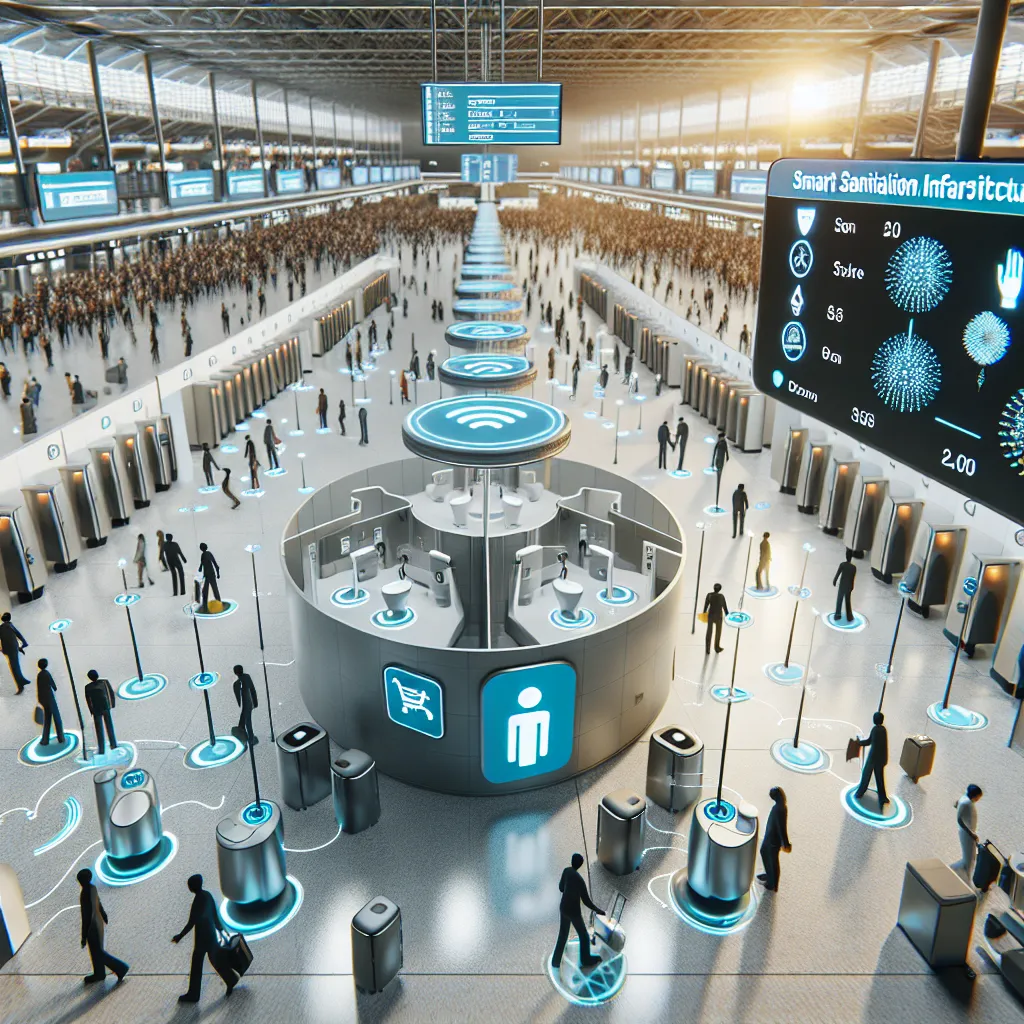
Description
No additional description provided.
The Pitch
In our rapidly evolving world, the emphasis on public health and safety has never been more critical. Recent events, notably the COVID-19 pandemic, underscored the limitations of traditional sanitation practices that rely on predetermined schedules rather than real-time data. These outdated methods often fail to address actual contamination levels or adjust to variations in crowd density. Such rigid systems present significant risks, especially in bustling areas like airports, public transport hubs, and large venues.
Identified Challenge:
The core challenge lies in the lack of dynamic sanitation systems. Traditional cleaning schedules do not account for unexpected surges in foot traffic or spontaneous contamination events. This static approach often leaves public spaces inadequately sanitized, posing health risks to the masses who traverse these environments daily. The absence of real-time adaptability can lead to inefficiencies, with some areas over-sanitized while others remain neglected.
Proposed Solution:
The Smart Sanitation Infrastructure proposes an innovative solution to this pressing problem. By implementing IoT-enabled sanitation stations and surface sensors throughout public spaces, we can monitor real-time data on usage, contamination, and crowd flows. This intelligent system dynamically adjusts cleaning protocols, deploying maintenance teams where and when they are most needed. It provides cities with a real-time hygiene dashboard, empowering decision-makers with precise insights into public hygiene conditions.
Product Details:
- IoT-Enabled Sensors: Strategically installed throughout public spaces to continuously monitor usage patterns, surface contamination levels, and crowd density. - Automated Sanitation Stations: Capable of self-sanitizing based on data received, quickly responding to increases in usage or detected contamination. - Smart Dispatch System: Through artificial intelligence, maintenance teams are deployed more effectively, ensuring personnel and resources are utilized optimally. - Centralized Hygiene Dashboard: Offers real-time insights for city officials, allowing for data-driven decisions on sanitation resource allocation and public safety measures.
Tools for Launching as an MVP:
1. Rapid Prototyping Platforms: Utilize tools like Arduino or Raspberry Pi to develop initial IoT sensor prototypes. 2. Cloud Services: Platforms such as AWS IoT or Microsoft Azure can manage data collection and processing. 3. App Development Suites: Tools like Flutter or React Native can help create the real-time dashboard for mobile and web access. 4. Data Analytics: Leverage platforms like Power BI or Tableau for advanced data visualization and dashboard management.
Go-To-Market Strategy:
1. Target Segments: Focus initially on high-traffic sectors such as transportation hubs, sports complexes, and large event venues. 2. Pilot Programs: Partner with select venues to test and refine the technology with real-world data and feedback. 3. Stakeholder Engagement: Collaborate with government health departments and city planners to advocate for and implement innovative sanitation practices. 4. Educational Campaigns: Raise public awareness about the benefits of dynamic sanitation systems for health and safety.
Business Model:
1. Subscription-Based Model: Offer a tiered subscription for access to real-time hygiene monitoring and analytics services. 2. Licensing Model: Provide the technology to third-party sanitization companies, allowing them to incorporate intelligent cleaning protocols into their services. 3. Partnership Model: Work with device manufacturers and sanitation product companies to integrate IoT capabilities into their existing offerings.
Conclusion:
The Smart Sanitation Infrastructure represents a significant advancement in public health technology, responding to the growing need for adaptive, data-driven sanitation solutions. By leveraging IoT and real-time analytics, we can create safer public environments, significantly reducing the risk of disease transmission and enhancing public confidence in shared spaces. This transformation not only modernizes sanitation but also sets a new standard for public health safety in an increasingly connected world.