Smart Home Assistant for Accessible Item Identification
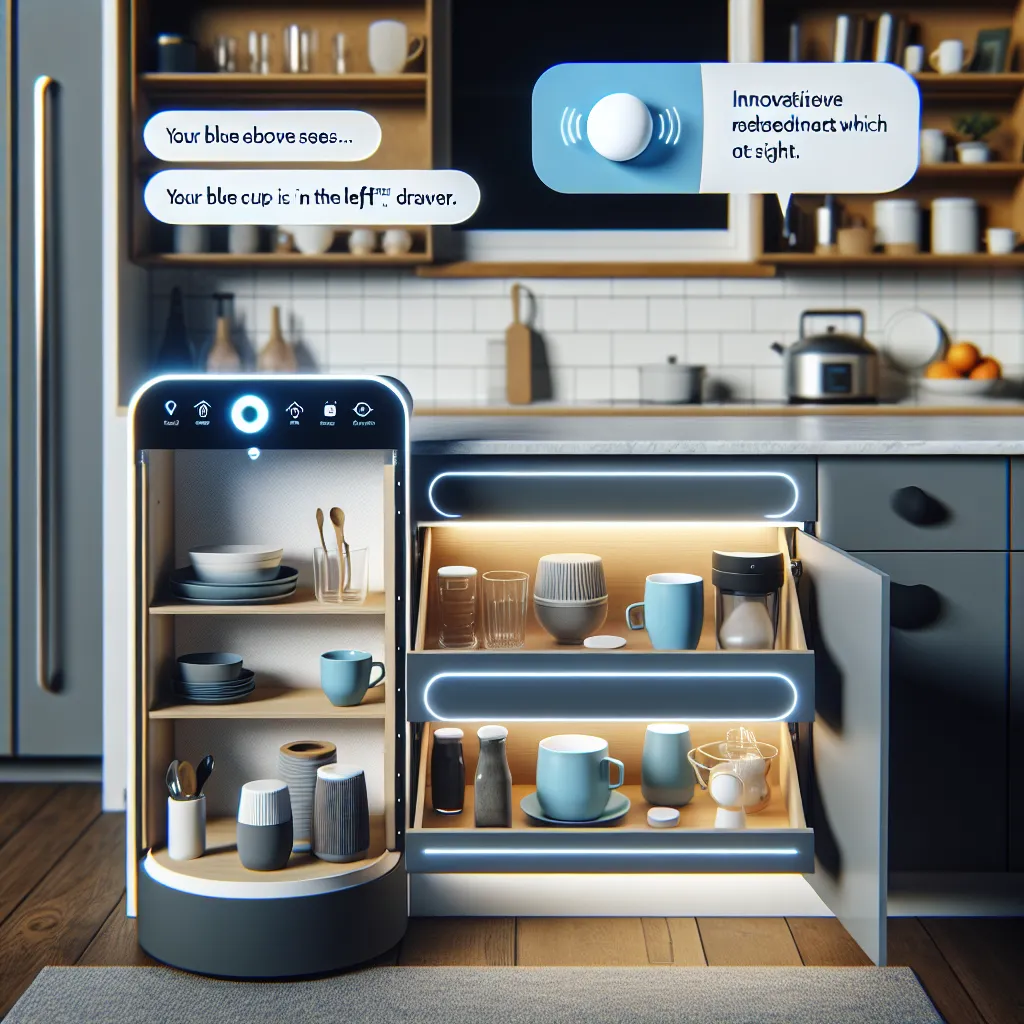
Millions of elderly or disabled individuals struggle with tasks like identifying items in hard-to-reach places, such as drawers or cabinets. Visual impairments, limited mobility, or memory loss can make simple actions like grabbing a mug or medicine bottle difficult. A home assistant using mmNorm sensors could “see” through closed compartments to locate and describe items in natural language—“your blue cup is in the left drawer.” By reconstructing hidden shapes through wood or plastic, this device gives independence back to users. The mmNorm breakthrough makes this possible in everyday homes, where materials are variable and visibility is poor. Imagine a countertop assistant for Alzheimer’s patients that helps them find familiar items without opening every drawer or relying on memory.
Description
No additional description provided.
The Pitch
Millions of elderly or disabled individuals face significant challenges when it comes to performing everyday tasks, such as locating items in hard-to-reach or concealed places like drawers and cabinets. Visual impairments, limited mobility, or cognitive issues like memory loss can transform simple activities—like finding a mug or retrieving a medicine bottle—into overwhelming hurdles. A promising solution lies in a home assistant equipped with state-of-the-art mmNorm sensors, capable of seeing through closed compartments to identify and describe items in natural, conversational language—for example, your blue cup is in the left drawer. By reconstructing the shapes of hidden objects through materials like wood or plastic, this device can restore a level of independence to those in need.
The mmNorm breakthrough technology is designed to function seamlessly in home environments where construction materials vary and visibility is often limited. Picture a countertop assistant developed for individuals with Alzheimer’s, assisting them in locating familiar items without the stress of opening multiple drawers or putting undue reliance on memory.
To bring this vision to life, an MVP (Minimum Viable Product) should focus on pairing effective sensing technology with a user-friendly interface. The initial version could include a compact device equipped with mmNorm sensors, a speech processing unit, and connectivity options for updates and calibrations. The core functionality aims to provide accurate identification and direction for common household items, learning and improving through use and feedback.
Key tools and technologies to facilitate the launch of this MVP might include:
1. Advanced mmWave RADAR sensor modules for the detection and identification processes. 2. An AI-driven language model for natural language processing and user interaction, possibly leveraging existing frameworks like GPT-based systems. 3. Hardware prototyping tools such as Raspberry Pi or Arduino for initial development and testing. 4. Software development kits for machine learning and image recognition to enhance identification accuracy.
For the GTM (Go-To-Market) strategy, initial efforts should target partnerships with organizations focused on aiding the elderly and disabled, such as care facilities and support groups. Developing case studies showcasing the technology’s impact could also prove beneficial. A phased launch beginning with beta testers in real-world settings can provide invaluable insights and testimonials to drive wider adoption.
When it comes to the business model, the solution could operate on a direct-to-consumer basis, with sales driven online and through healthcare suppliers. Subscription options for regular software updates and expanded capabilities could help maintain a steady revenue stream, ensuring device longevity and ongoing improvements. Wholesale options for care facilities might provide another lucrative channel, allowing these organizations to integrate the technology into their day-to-day operations to better serve their residents.
Overall, this device isn’t just about innovative technology—it’s about fostering independence and quality of life for those who struggle with daily tasks, offering them and their loved ones peace of mind and a greater sense of autonomy.